Chemex brewing rewards patience more than expensive kit. This Chemex brewing guide keeps the method practical: the shape, thick paper filter and slower drawdown give you a clean, sweet cup, but only if the grind, pour rate and recipe are working together.
In This Article
- Chemex Brewing Guide: Ratio and Gear
- The Basic Chemex Recipe
- Grind Size, Water and Filters
- Pouring Technique That Actually Changes the Cup
- How to Adjust the Recipe for One Mug or a Full Chemex
- Common Chemex Problems and Fixes
- What I Would Buy First
- Frequently Asked Questions
Chemex Brewing Guide: Ratio and Gear
The safest starting point for a Chemex guide is a 1:16 brew ratio: 30g of coffee to 480g of water. That makes two generous mugs or three smaller cups. If you want a slightly stronger cup, move to 1:15. If you like lighter, tea-like filter coffee, 1:17 can work with naturally processed or very sweet beans.
The Basic Kit List
You do not need a show-off coffee bar to brew a good Chemex, but you do need a few accurate pieces of kit:
- Chemex brewer: the 6-cup classic model is usually £45-£55 from Amazon UK, Coffee Hit or John Lewis.
- Chemex bonded filters: about £9-£13 for 100, depending on whether you buy natural or white filters.
- Digital scales: Timemore Basic 2 is usually £45-£55; Hario scales are often £40-£50; cheap Amazon UK scales around £12 can work if they read in 0.1g steps.
- Gooseneck kettle: a stovetop Hario Buono is about £35-£45; electric temperature-control kettles from Fellow or Timemore are more like £90-£165.
- Burr grinder: the Wilfa Svart sits around £90-£120, while a hand grinder such as the Timemore C3 is usually £55-£75.
The brewer itself is not the expensive part. Filters and grind consistency matter more. If you already own a good scale and grinder from your espresso setup, the Chemex becomes one of the cheaper brew methods to add.
Which Chemex Size Makes Sense
The 3-cup Chemex looks tidy, but I would only buy it for one person in a very small kitchen. The 6-cup version is the practical UK kitchen choice because it can brew one large mug, two normal mugs or enough coffee for guests without changing brewer. Chemex lists the classic 6-cup brewer as a 30oz model in its official product details, which roughly matches that two-to-three-mug real-world use.
The 8-cup and 10-cup versions make sense if you regularly brew for four people, but they are less forgiving when half full. The paper sits higher, the bed is shallower, and tiny changes in pouring show up more. For most homes, the 6-cup model is the one to buy.
How Chemex Differs from Other Pour-Over Brewers
Chemex is not just a prettier V60. The bonded filter is thicker, so it traps more oils and fine particles. The cup tastes cleaner, lighter and less silty than French press coffee, but it also needs a slightly coarser grind than a cone dripper.
If you are deciding between brewers, read our Chemex vs V60 vs Kalita Wave comparison first. This article assumes you already want to brew Chemex well rather than choose between pour-over devices.
The Basic Chemex Recipe
This is the recipe I would use for a first serious Chemex brew: 30g medium-ground coffee, 480g water at 94-96°C, and a total brew time of about 4:00 to 5:00. The exact time matters less than taste, but if your brew finishes in 2:45 or drags past 6:30, something is off.
Recipe for a 6-Cup Chemex
Use this as your baseline before tweaking anything:
- Put the filter in the Chemex with the three-layer side against the pouring spout.
- Rinse the filter with hot water, then tip the rinse water away.
- Add 30g of freshly ground coffee and shake gently to level the bed.
- Start your timer and pour 60g of water over the coffee for the bloom.
- Wait 35-45 seconds while the coffee gases off.
- Pour slowly to 240g by about 1:30, using small circles over the dark coffee bed.
- Pause for 15-20 seconds, then pour to 360g.
- Pause again, then pour to 480g by roughly 3:00.
- Let the water draw down until the bed looks damp rather than flooded.
- Remove the filter, swirl the Chemex gently and serve.
That recipe gives you a clean, balanced cup without asking you to do barista theatre over the sink. If it tastes thin, grind finer or use 32g coffee next time. If it tastes dry and bitter, grind coarser or lower the water temperature by a couple of degrees. Keep this Chemex brewing guide recipe unchanged for two brews before you start tweaking.
Why the Filter Rinse Matters
Chemex filters can taste papery if you skip the rinse. You need enough hot water to soak the whole filter, not just a token splash. The rinse also preheats the glass, which matters in a British kitchen in January when the brewer starts cold.
The Specialty Coffee Association’s brewing control guidance puts filter coffee in a fairly narrow extraction and strength window, which is why recipe consistency matters. You can read the SCA’s overview of coffee standards if you want the technical background, but you do not need a lab chart to improve your cup.
The First Taste Test
Taste the coffee once it has cooled for two minutes. Chemex coffee often tastes sharp when it is too hot, then opens up as it drops closer to drinking temperature. I judge the brew on three things:
- Sweetness: does the coffee taste rounded, or is it hollow?
- Clarity: can you taste the roast and fruit notes, or is it muddy?
- Finish: does the cup finish cleanly, or does it leave dry bitterness?
One good adjustment beats five random ones. Change grind first, then ratio, then water temperature.
Grind Size, Water and Filters
Chemex brewing is less forgiving than French press and more forgiving than V60. That middle ground is why people like it. You can get excellent coffee without obsessive pouring, but grind size still makes or breaks the cup.
Grind Size
Start around medium-coarse: coarser than table salt, finer than cafetiere grind. On a Wilfa Svart, usually £90-£120, that sits near the filter/AeroPress side rather than the French press end. On a Sage Smart Grinder Pro, usually £180-£220 in the UK, you are likely somewhere in the mid-filter range, not espresso-fine.
If your Chemex drains in under 3 minutes, grind finer. If it stalls and the bed looks muddy, grind coarser. Do not solve a stalled brew by pouring faster. That usually digs channels through the coffee bed and makes the cup uneven.
Our coffee grind sizes guide goes deeper on what each texture looks like, but for Chemex the useful test is simple: the coffee bed should look sandy, not dusty.
Water Temperature
For light to medium roasts, use water just off the boil, around 94-96°C. For darker roasts, 90-92°C often tastes better because it pulls less bitterness. If your kettle has no temperature control, boil it and wait 30-45 seconds before pouring.
A temperature-control kettle is nice, not mandatory. I would rather use a £40 Hario stovetop gooseneck and a decent grinder than spend £150 on a smart kettle while grinding with a blade grinder. Priorities matter, and that is the main reason this Chemex brewing guide puts grinder consistency ahead of kettle features.
Filter Choice
Chemex bonded filters are the default for a reason. They fit properly, they drain consistently, and they give the classic clean Chemex cup. Generic square filters can work, but many collapse, slow down oddly or sit badly around the spout.
White filters usually taste cleaner after rinsing. Natural brown filters can work, but I find they need a more thorough rinse to avoid paper taste. If your brew tastes like wet cardboard, blame the filter before blaming the beans.
Beans That Suit Chemex
Chemex suits light and medium roasts with clear flavour notes: washed Ethiopian, Kenyan, Colombian and Central American coffees all work well. Dark Italian-style espresso blends can taste flat in a Chemex because the thick filter removes body and leaves roast bitterness exposed.
For UK buying, expect supermarket speciality beans to start around £4-£7 per 200g, good independent roasters around £8-£13 per 250g, and premium microlots above £15. If you are still learning the method, do not practise on a £20 bag. A £9-£11 bag from a reliable UK roaster is the sensible middle, and our speciality coffee beans guide is a better place to compare roasters than this brewing walkthrough.
Pouring Technique That Actually Changes the Cup
Chemex technique is not about drawing perfect circles for Instagram. The aim is to wet the coffee evenly, keep the bed from collapsing, and avoid pouring so aggressively that you blast a hole through the grounds.
The Bloom
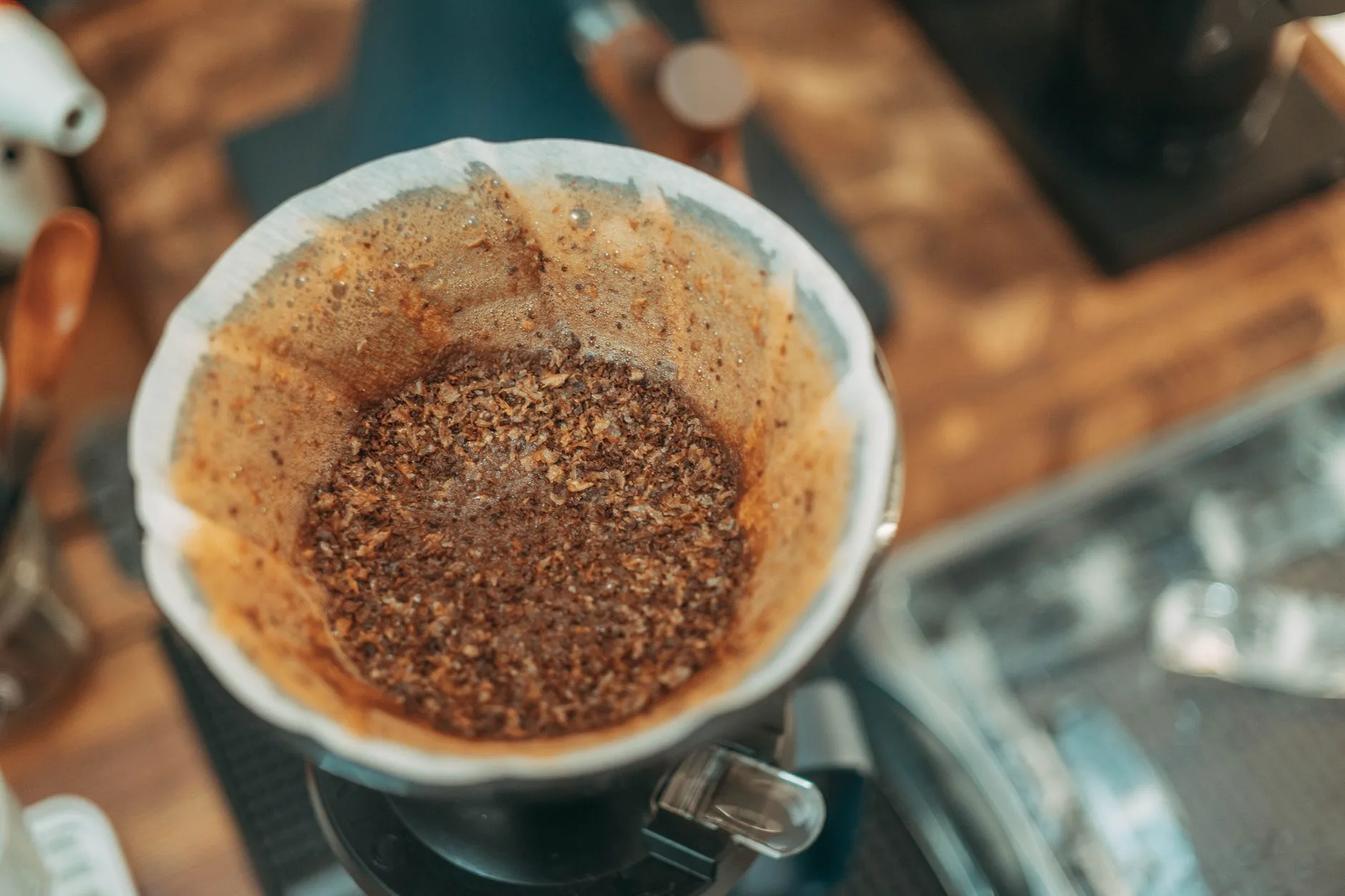
Use roughly twice the coffee weight in water for the bloom. With 30g coffee, pour 60g water. Make sure every dry patch gets wet. If the coffee domes up and bubbles, that is normal, especially with fresh beans.
Do not rush this stage. A 35-45 second bloom gives trapped gas time to escape, which helps the later water move evenly through the bed. If the bloom smells stale or lifeless, the beans may be old, over-roasted or badly stored.
Pulse Pouring
For Chemex, I prefer pulse pours rather than one continuous pour. Pour to a target, pause while the level drops, then pour again. It is easier to control and gives the thick filter time to drain.
Keep the kettle spout fairly low, about 3-5cm above the coffee bed. Pour in small circles across the dark coffee, avoiding the bare paper at the edge. Water poured straight down the filter wall can bypass the coffee and weaken the cup.
Agitation Without Overdoing It
A gentle swirl after the bloom can help flatten the bed. A small stir with a spoon can also work if you have dry clumps. What you do not want is aggressive stirring late in the brew, because it knocks fines down and can slow the final drawdown.
If your bed always finishes with a crater in the middle, your pouring is too central. If one side is much higher than the other, your circles are uneven or your kitchen surface is not level. Chemex is annoyingly honest about wonky technique.
Do You Need a Gooseneck Kettle?
You can brew Chemex with a normal kettle, but it is harder. A gooseneck gives you control over flow rate, and Chemex benefits from that control. If you already own the brewer and filters, a gooseneck is the next upgrade I would buy.
Our gooseneck kettle guide covers the wider buying decision. For Chemex alone, a simple stovetop model is enough unless you also brew V60 every morning.

How to Adjust the Recipe for One Mug or a Full Chemex
The easiest Chemex mistake is scaling the coffee and water but forgetting that the brew bed changes. A tiny single-mug brew drains fast and can taste weak. A full Chemex brew drains slowly and can turn bitter if the grind is too fine.
One Large Mug
For one mug, start with 20g coffee and 320g water. Keep the bloom at 40g and pour in two or three pulses. The total brew time will usually be closer to 3:30-4:15 than 5 minutes.
If it tastes thin, do not just add more coffee. Try grinding slightly finer first. Small Chemex brews have a shallower coffee bed, so water passes through more quickly.
Two Mugs
For two mugs, use the baseline 30g coffee and 480g water. This is the sweet spot for the 6-cup Chemex. The bed depth is enough to extract evenly, but not so deep that the brew stalls.
This is also the easiest serving size for guests because you can pour both mugs straight away rather than leaving half the brew sitting on the counter cooling down.
A Full 6-Cup Brew
For three to four smaller cups, use 45g coffee and 720g water. Grind a touch coarser than the 30g recipe because the deeper bed slows the drawdown. Aim for about 5:00-6:00 total brew time.
This is where cheap grinders show their weakness. Too many fines sink to the bottom, the filter clogs, and the final cup tastes dry. If you often brew larger batches, a better grinder is a more useful upgrade than a bigger Chemex.
Keeping Coffee Warm
Chemex is borosilicate glass, so it loses heat faster than a thermal carafe. You can place it on a low gas flame only if your model has the proper glass design and you are careful, but I prefer not to. It is too easy to forget and scorch the last cup.
For slow breakfasts, decant into a preheated thermal jug. A basic stainless jug from Lakeland or John Lewis is usually £18-£35 and does the job without changing the brew method.
Common Chemex Problems and Fixes
Most Chemex problems come from one of four things: grind, filter rinse, pour rate or bean choice. The brewer is simple, which is good news. It also means there is nowhere to hide.
The Brew Tastes Weak
Weak Chemex usually means the water passed through too quickly or the ratio is too light. Grind finer first. If that does not fix it, move from 30g coffee to 32g for 480g water.
Also check your pour pattern. If you pour around the edge of the filter, some water bypasses the coffee bed. You paid for the beans; make the water go through them.
The Brew Tastes Bitter or Dry
Bitter Chemex often means the grind is too fine, the brew ran too long, or the water was too hot for dark beans. Grind coarser and aim to finish before 5 minutes for a 30g brew. If using a dark roast, drop the water temperature closer to 90°C.
Dark supermarket espresso blends are the usual culprit here. They can be fine in a moka pot, but Chemex exposes roast bitterness. Try a medium roast filter blend before writing off the brewer.
The Filter Stalls
A stalled Chemex looks like a swamp: water sits on top, the bed looks muddy, and the final cup tastes harsh. Grind coarser, pour more gently, and avoid stirring after the halfway point.
If you use a cheap grinder, fines may be the issue. Sifting coffee is too much faff for normal mornings, so the better fix is a burr grinder. Even a £55-£75 hand grinder can outperform many cheap electric grinders for filter coffee.
The Cup Tastes Papery
Rinse the filter more. Use hot water, soak the full paper, then discard every bit of rinse water. If you use natural brown filters, rinse twice. It feels wasteful, but it is cheaper than ruining a £10 bag of beans.
Also check where you store the filters. A half-open box near spices, cleaning products or the hob can pick up smells. Keep them in a dry cupboard or a sealed bag.
What I Would Buy First
If you are starting from scratch, buy the 6-cup Chemex, bonded filters, a scale and a grinder before you spend money on premium accessories. You can brew very good coffee with a basic kettle if your grinder and recipe are sound.
Sensible Starter Setup
This is the setup I would recommend for most UK kitchens:
- Chemex 6-cup brewer: £45-£55.
- Box of bonded filters: £9-£13.
- Timemore C3 hand grinder or Wilfa Svart: £55-£120 depending on manual or electric.
- Basic 0.1g scale: £12-£25 if budget is tight.
- Hario Buono stovetop gooseneck: £35-£45 if you do not already have one.
That puts a proper starter setup around £160-£250, depending on the grinder. You can spend less by using existing scales and a normal kettle. I would not save money by buying poor filters.
Where to Upgrade Later
Upgrade the grinder first. A better grinder improves every brew method, from Chemex to AeroPress to cafetiere. A better kettle is pleasant, but it mostly improves control and repeatability.
If you already own a pour-over setup, you may only need the brewer and filters. The Chemex then becomes a £60-ish experiment, which is fair for a brew method that can serve two or three people at once.
A Quick Buying Priority
For a new Chemex user, I would rank the purchases like this:
- 6-cup Chemex and proper filters.
- Accurate scales.
- Decent burr grinder.
- Gooseneck kettle.
- Thermal jug if you brew for slow breakfasts.
If your budget is limited, read our best coffee scales guide before buying. A scale that drifts or responds slowly makes Chemex recipes frustrating.
Beans and Ongoing Cost
A 30g Chemex brew uses about 12% of a 250g bag. At £10 per bag, that is roughly £1.20 of coffee per two-mug brew before filters. Add a 10p-13p filter and you are around 65p per mug.
That is not cheap compared with instant coffee, but it is much cheaper than two flat whites from a cafe, which are often £3.20-£4.20 each in UK towns. The main ongoing cost is beans, not equipment. Buying good beans and brewing them badly is the expensive mistake.
Frequently Asked Questions
What is the best Chemex ratio? Start with 1:16, which means 30g coffee to 480g water. Move to 1:15 for a stronger cup or 1:17 for a lighter, cleaner cup.
How long should a Chemex brew take? A 30g brew usually works best around 4:00 to 5:00 total time. Under 3:00 is often weak; over 6:00 usually means the grind is too fine or the filter has clogged.
Can I use normal filter papers in a Chemex? You can try, but Chemex bonded filters fit better and give the clean cup people expect from the brewer. Generic filters often collapse or drain oddly.
Is Chemex coffee stronger than cafetiere coffee? Not usually. Chemex tastes cleaner and lighter because the thick filter removes more oils and sediment. Cafetiere coffee tends to feel heavier and fuller.
Do I need a gooseneck kettle for Chemex? No, but it helps. A gooseneck kettle gives better flow control, especially during the bloom and pulse pours. A basic stovetop model is enough for most people.
Why does my Chemex taste bitter? The common causes are grinding too fine, brewing too long, using water that is too hot for dark beans, or using a roast that suits espresso better than filter coffee.