You’ve just pulled a decent shot of espresso — crema looks right, timing was spot on — and now you’re standing there with a portafilter full of wet, compacted coffee grounds. You tap it against the edge of the bin, grounds fly everywhere, a few wet clumps stick to the basket, and there’s a brown smear across the rim of your kitchen bin that your other half will definitely notice. Sound familiar?
A coffee knock box solves this exact problem, and once you’ve used one for a week, you’ll wonder why you ever bothered with the bin-tapping routine. But they come in different shapes, sizes, and materials — and some are much better than others. Here’s everything you need to know before buying one.
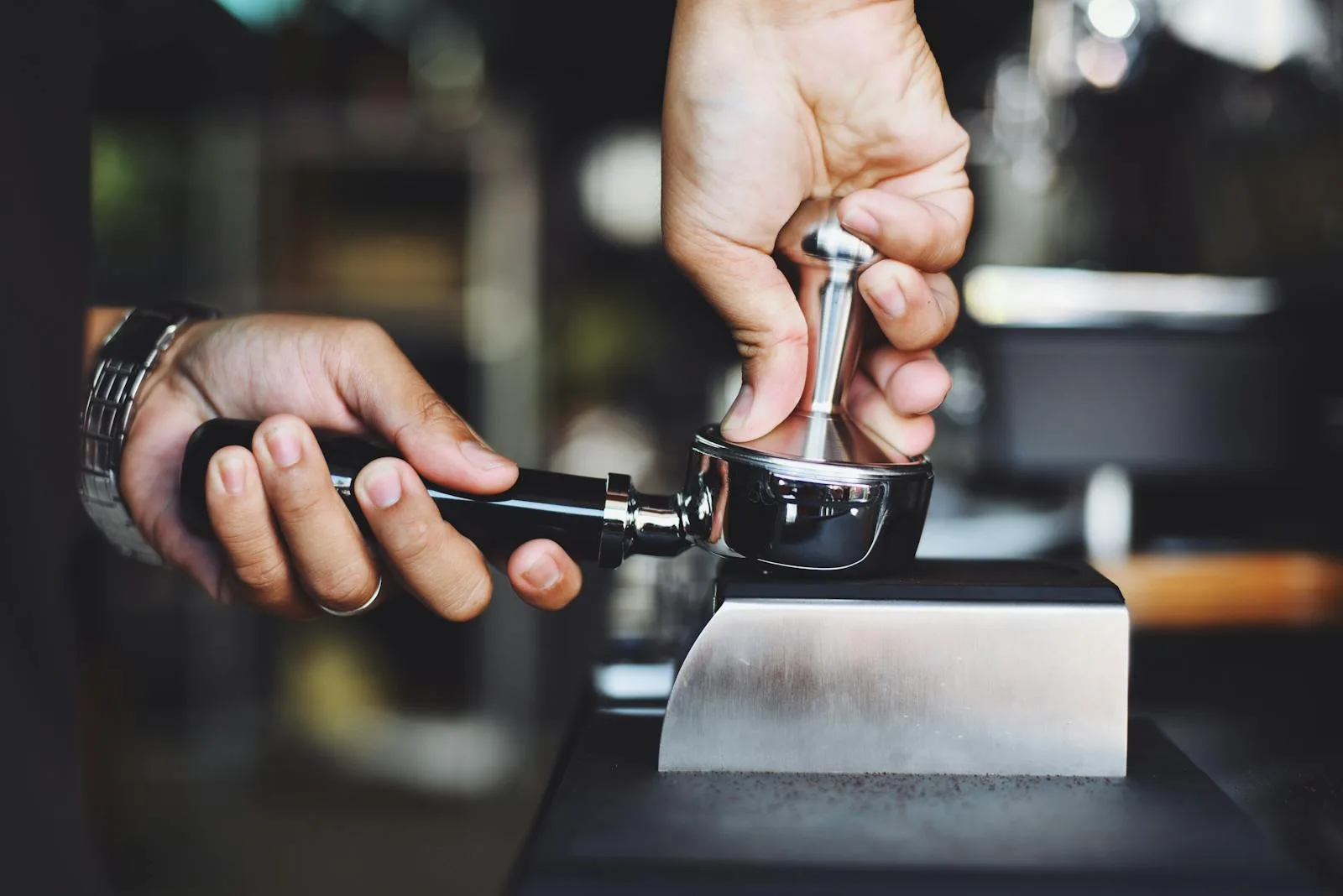
What Is a Knock Box and How Does It Work?
A knock box is a container — usually a sturdy tub or drawer — with a rubber-coated bar across the middle. After pulling your espresso shot, you hold the portafilter upside down and give it a firm tap against the bar (the “knock”). The spent coffee puck drops cleanly out of the basket and into the container below.
That’s it. No mess on the counter, no grounds in the sink, no scraping pucks out with a spoon. The rubber bar absorbs the impact so you don’t damage your portafilter basket, and the container collects the grounds until you empty it.
The concept is borrowed from commercial coffee bars, where baristas are knocking out dozens of pucks per hour and need speed and cleanliness. Home versions are scaled down but work on exactly the same principle.
I started using one about three years ago after upgrading to a Sage Barista Express, and the difference in my daily workflow was immediate. What used to be a messy two-minute faff became a single satisfying thwack. The puck drops, you move on.
Types of Knock Box
Not all knock boxes are equal. The right style depends on your counter space, how many coffees you make daily, and whether you want the knock box hidden or on display.
Countertop Tub Style
This is the most common design — a freestanding container (usually round or square) that sits on your worktop next to your espresso machine. The knock bar stretches across the top, and used pucks collect in the tub below.
- Best for: Most home setups with decent counter space
- Capacity: Typically holds 10-20 pucks before emptying
- Price range: £12-40
The Rhinowares Knock Box (around £25 from Amazon UK or Bella Barista) is the one I’d recommend at this level. It’s been the default choice in the UK home barista community for years, and for good reason — it’s the right size for most kitchens, the rubber bar is firm without being harsh on your baskets, and the non-slip base actually works. I’ve used mine almost daily for two years and the rubber bar shows no sign of deteriorating.
If you want something cheaper to start with, the Dreamfarm Grindenstein (about £18) is a compact option that works well if you’re only making one or two coffees a day. It holds fewer pucks, but the build quality is decent for the price.
Drawer Style
These sit under or beside your coffee grinder and look like a pull-out drawer. You knock the portafilter against a bar inside the drawer, and the grounds collect in a removable tray.
- Best for: Clean-looking setups where you want everything tucked away
- Capacity: Usually 15-25 pucks
- Price range: £30-80
The Breville knock box drawer (around £35 from Currys or Amazon UK) fits neatly under Sage machines and looks like it belongs there. If you’ve got a Sage Dual Boiler or Barista Pro, this is the natural choice — it matches the aesthetic and slots right into your workflow. For a premium option, the ECM knock drawer (about £65-80 from Bella Barista) is built like a tank and works with any machine brand.
Built-In and Counter-Mount Options
Some espresso setups include a knock box built into the counter or mounted below a cut-out. These are typically for dedicated coffee stations and require a bit of DIY.
- Best for: Permanent coffee stations, kitchen renovations
- Capacity: Large — often 30+ pucks
- Price range: £50-150+
If you’re planning a dedicated coffee setup with a proper espresso machine, a built-in knock box is worth considering during the design phase. Cutting a rectangular hole in a worktop and fitting a knock box insert underneath creates a seamless look that’s practical and easy to clean.
What to Look for When Buying a Knock Box
Not all knock boxes are worth the money. Here’s what actually matters when choosing one — and what’s just marketing fluff.
Bar Material and Firmness
The knock bar needs to be firm enough to dislodge a compacted puck in one hit, but soft enough not to dent your portafilter basket. Most use silicone or rubber-coated steel bars.
Avoid the very cheap models (under £10) where the bar is just hard plastic with a thin rubber sleeve. I’ve seen these crack the chrome plating on portafilter baskets after a few months of daily use. A properly rubberised steel bar, like on the Rhinowares or the Motta knock box (around £30), will last years.
Size and Capacity
Think about how many espresso drinks you make per day. If it’s two to three, a compact knock box that holds ten pucks is fine — you’ll empty it every few days. If you’re making six or more (or if friends come round for coffee regularly), you’ll want something with a 20+ puck capacity unless you enjoy emptying it constantly.
Base Stability
This is the one feature that separates good knock boxes from annoying ones. You’re hitting the bar with reasonable force, and a knock box that slides across your worktop with every knock is infuriating. Look for a weighted base or a good-quality non-slip rubber bottom.
The Rhinowares and the Motta both nail this. Some of the cheaper Amazon options look identical in photos but slide around like they’re on an ice rink.
Noise
Knock boxes are not quiet. You’re physically banging metal against rubber inside a container — there’s no way to make that silent. But some designs are louder than others.
Tub-style knock boxes tend to be louder because the container amplifies the sound. Drawer-style ones are generally quieter because the drawer housing absorbs some of the impact. If noise matters (early morning espresso while the family sleeps, or a flat with thin walls), a drawer style is worth the extra cost.
Cleaning
Spent coffee grounds get sticky and funky if left sitting for more than a couple of days, especially in warm weather. A knock box with smooth, rounded internal corners is much easier to rinse clean than one with sharp angles where old grounds accumulate.
Look for a removable knock bar — this makes deep cleaning much simpler. Most decent models allow you to pop the bar out, rinse everything under the tap, and reassemble in under a minute.
Do You Actually Need a Knock Box?
Let’s be direct: if you own an espresso machine and use it more than twice a week, yes, you need a knock box. Or at least, you’ll be much happier with one than without.
Here’s why. Without a knock box, you have three options for disposing of spent pucks:
- The bin tap — banging the portafilter against the kitchen bin. This works, but it’s messy, risks denting your basket edge, and leaves wet coffee grounds stuck to the inside of your bin lid. After a few days in summer, it smells terrible.
- The spoon scrape — digging the puck out with a spoon or your finger. Slow, messy, and you end up with grounds under your fingernails. Not a great start to the morning.
- The sink rinse — running the portafilter under the tap and washing the grounds down the drain. This blocks your sink over time. Coffee grounds don’t dissolve — they accumulate in the U-bend and create clogs that need a plumber. Ask me how I know.
A knock box eliminates all three problems. One tap, the puck drops out cleanly, and you’re back to dosing and tamping your next shot. Over the course of a week, it probably saves ten minutes of faffing and cleaning. Over a year, that adds up.
The only scenario where you genuinely don’t need one is if you’re using a pour over, French press, or AeroPress — these brew methods don’t produce a compacted puck, so there’s nothing to knock out.
Where a Knock Box Fits in Your Espresso Workflow
Understanding where the knock box sits in your routine helps you decide on placement and size. A typical home espresso workflow looks like this:
- Grind your beans into the portafilter
- Distribute and tamp the grounds evenly
- Lock the portafilter into the group head
- Pull your shot
- Knock the spent puck into the knock box
- Rinse the portafilter basket briefly
- Repeat or move on to steaming milk
The knock box sits between extraction and cleanup. Ideally, it lives right next to your machine — within arm’s reach so you’re not carrying a dripping portafilter across the kitchen. If you’re setting up a proper coffee station with features that matter for home baristas, plan the knock box position as part of the layout.
Most home baristas put the knock box to the left of their machine (if right-handed), so the workflow flows naturally: grinder on the right, machine in the centre, knock box on the left. But there’s no rule — wherever feels natural in your kitchen is the right spot.
Knock Box Recommendations by Budget
After testing several models and reading through years of UK coffee forum discussions, here’s what I’d actually buy at each price point.
Budget: Under £20
Dreamfarm Grindenstein (about £18) — compact, solid build for the price, works well for one to two coffees a day. The smaller size means you’ll empty it more often, but it takes up very little counter space. Available from Amazon UK and Coffee Hit.
Mid-Range: £20-40
Rhinowares Knock Box (about £25) — the one to buy for most people. Good size, stable base, durable rubber bar, and it looks decent sitting on a worktop. This is what I use daily. You can find it at Bella Barista, Amazon UK, or Coffee Hit.
Motta Knock Box (about £30-35) — slightly more premium feel with a stainless steel body. Heavier, which means it stays put when you knock. The extra weight is actually a feature, not a drawback. Available from Bella Barista and Amazon UK.
Premium: £40+
Breville Knock Box Drawer (about £35-45) — crosses into premium territory with the drawer design. Looks clean, quieter than tub styles, and matches Sage/Breville machines perfectly. Currys, John Lewis, and Amazon UK stock it.
ECM Knock Drawer (about £65-80) — if you’ve invested in a serious machine like a dual boiler or heat exchanger, this matches the quality. Built from heavy-gauge stainless steel with a removable grounds tray. Bella Barista is the main UK stockist.
Maintaining Your Knock Box
A knock box is low-maintenance, but not zero-maintenance. Neglect it and you’ll end up with a funky-smelling tub of decomposing coffee that puts you off your morning espresso.
Daily
Empty the grounds into your food waste bin or compost caddy every day or two. Coffee grounds are brilliant for compost — they’re high in nitrogen and worms love them. If you’ve got a garden, scatter them around acid-loving plants like blueberries, azaleas, and rhododendrons.
Weekly
Give the knock box a proper rinse with hot water and washing-up liquid once a week. Pull out the knock bar if it’s removable and clean underneath where grounds tend to build up. A quick scrub with a bottle brush gets into the corners.
Monthly
Check the rubber coating on the knock bar for wear. After a year or two of daily use, you might notice the rubber getting smooth or compressed where you typically hit it. Most manufacturers sell replacement bars for a few quid — much cheaper than a new knock box.
Also check the non-slip base. If the rubber feet have picked up coffee residue, they lose grip. A wipe with a damp cloth restores them.
Common Mistakes to Avoid
A few things that trip people up with knock boxes:
- Knocking too hard — you don’t need to smash the portafilter down. A firm, controlled tap is enough to release the puck. Excessive force wears out the knock bar faster and can damage your basket over time.
- Not emptying often enough — a full knock box with a mound of pucks above the knock bar defeats the purpose. The next puck can’t fall cleanly if there’s a pile blocking it. Empty it before it gets to that point.
- Putting it in the dishwasher — most knock boxes have rubber or silicone components that degrade in the dishwasher. Hand wash only, unless the manufacturer specifically says otherwise.
- Ignoring the drain — if your knock box has a drain hole (some do), make sure it’s not blocked. Standing water at the bottom of a knock box creates mould surprisingly quickly.
- Buying the cheapest option — the difference between a £8 knock box and a £25 one is significant. The cheap ones slide around, the bar loosens within months, and the plastic cracks. This is one area where spending a little more saves frustration. According to the Speciality Coffee Association, proper equipment maintenance — including waste management — is part of producing consistently good espresso.
The Bottom Line
A knock box won’t make your espresso taste better. It won’t improve your grind or perfect your extraction. What it will do is make the entire process of making espresso cleaner, faster, and more enjoyable — every single day.
For most people, the Rhinowares at around £25 is the answer. It’s well-built, the right size for home use, and it’ll last years. If you want something that tucks away more neatly, the Breville drawer is worth the extra tenner.
Buy one, put it next to your machine, and forget about the bin-tapping days. Your kitchen worktop (and your partner) will thank you.