Bad water can make good coffee taste flat, sharp or chalky. Water quality changes coffee taste because it controls how flavour is extracted and what minerals sit behind the cup. You do not need a lab kit, but you do need to know whether your tap water is helping the coffee or bullying it.
In This Article
- Water Quality, Coffee Taste and the Short Answer
- What Water Does During Brewing
- Hard, Soft and Filtered Water in UK Kitchens
- How to Test Your Coffee Water Without Getting Weird About It
- Best Fixes: Filter Jugs, Bottled Water and Remineralising Sachets
- When Water Is Not the Real Problem
- Frequently Asked Questions
Water Quality, Coffee Taste and the Short Answer
Yes, water quality makes a difference to coffee. Not in a tiny, snobby, “only baristas can tell” way. In hard-water areas, it can mute sweetness, leave a chalky finish and scale up a machine quickly. In very soft water, it can make coffee taste sharp, thin or strangely hollow.
The change is easiest to spot in black coffee
Milk hides a lot. If you drink flat whites or cappuccinos every day, you may notice machine scale before you notice water flavour. Black filter coffee, AeroPress, long black and espresso without milk show water problems much faster.
The easiest test is to brew the same coffee twice:
- One cup with normal tap water: use your normal recipe, normal grinder setting and normal kettle.
- One cup with filtered water: use a fresh jug filter or a known low-to-medium mineral bottled water.
- Taste them warm, not boiling: water faults are harder to spot when the cup is too hot.
If the filtered-water cup tastes sweeter, cleaner or less drying, water is part of your problem. If both cups taste the same, look at beans, grind, brew ratio or cleanliness before spending more money.
Water matters more once the basics are right
Water will not rescue stale coffee, a dirty grinder or a recipe that is miles off. If your coffee is sour because the grind is too coarse, switching to a £45 specialist jug will not fix it. Start with the basics: fresh beans, sensible dose, clean kit and repeatable water temperature.
There is a useful overlap with the coffee-to-water ratio guide. The ratio decides strength. Water quality changes how pleasant that strength tastes.
What Water Does During Brewing
Coffee brewing is extraction. Hot water dissolves acids, sugars, aromatic compounds, oils and bitter compounds from ground coffee. Minerals in the water affect how that extraction feels in the cup.
Minerals are not automatically bad
Pure distilled water is bad for coffee. It tastes empty because there are no minerals to help carry flavour. Hard tap water is not automatically bad either; some mineral content helps coffee taste rounded. The problem is too much hardness, the wrong balance, or high alkalinity that flattens acidity.
The Specialty Coffee Association coffee standards give target ranges for brewing water because coffee professionals care about repeatability, not because home brewers need a chemistry degree. The practical point is simple: good coffee water sits between empty and chalky.
Hardness and alkalinity are different
Hardness is mainly about calcium and magnesium. Alkalinity is about the water’s buffering power: how much it resists acidity. High alkalinity can make bright coffee taste dull. Low alkalinity can make acidity feel spiky.
That is why two hard-water homes can get different coffee results. One tap water may make coffee taste rounded but scale the kettle. Another may make the same beans taste dusty and muted.
Chlorine and stale water matter too
UK tap water is treated to make it safe. That is a good thing. It can still carry a faint chlorine smell, especially if water sits in a jug, pipework or kettle for a while. The Drinking Water Inspectorate explains UK drinking-water quality from a safety perspective; coffee drinkers are usually dealing with taste and minerals, not unsafe water.
For better coffee, use fresh cold water. Do not keep reboiling the same half-kettle all morning. Reboiled water is not dangerous, but it can taste flat and concentrate scale in hard-water areas.
Hard, Soft and Filtered Water in UK Kitchens
UK water varies by region. London, Oxfordshire, much of the South East and parts of the East Midlands often have hard water. Scotland, Wales, Cornwall and parts of the North West often have softer water. Local variation still matters, so use your water supplier’s postcode checker rather than assuming from a map.
Hard water
Hard water is the classic kettle-furring, espresso-machine-scaling problem. You see white flakes in the kettle, scale around the tap and cloudy marks on glassware. In coffee, hard water can taste:
- Chalky: a dry mineral finish at the back of the tongue.
- Muted: sweetness and fruit notes feel covered up.
- Heavy: the cup tastes dull even when the recipe is right.
If you use an espresso machine in a hard-water area, water is also a maintenance issue. Descaling sachets cost about £5-£15, but repeated scale build-up can become far more expensive if it damages boilers, valves or flow meters. The dedicated coffee machine water filters guide covers that machine-protection angle in more detail.
One warning from experience: do not judge hard-water coffee only on the first sip. Hard water often shows itself in the finish. The cup may smell fine and taste acceptable at first, then turn dry and chalky as it cools. That is why I test water changes with a full mug of filter coffee, not a single espresso sip while rushing out of the kitchen.
Very soft water
Soft water has less scale risk, but it is not always perfect for taste. Very soft water can produce coffee that tastes bright but thin, as if the flavours never quite join up.
If your filter coffee tastes sharp even with a sensible grind and ratio, try a modest mineral bottled water for one brew. Something in the low-to-medium mineral range often gives a rounder cup than very soft tap water. Avoid using distilled water on its own unless you add minerals back in.
Filtered water
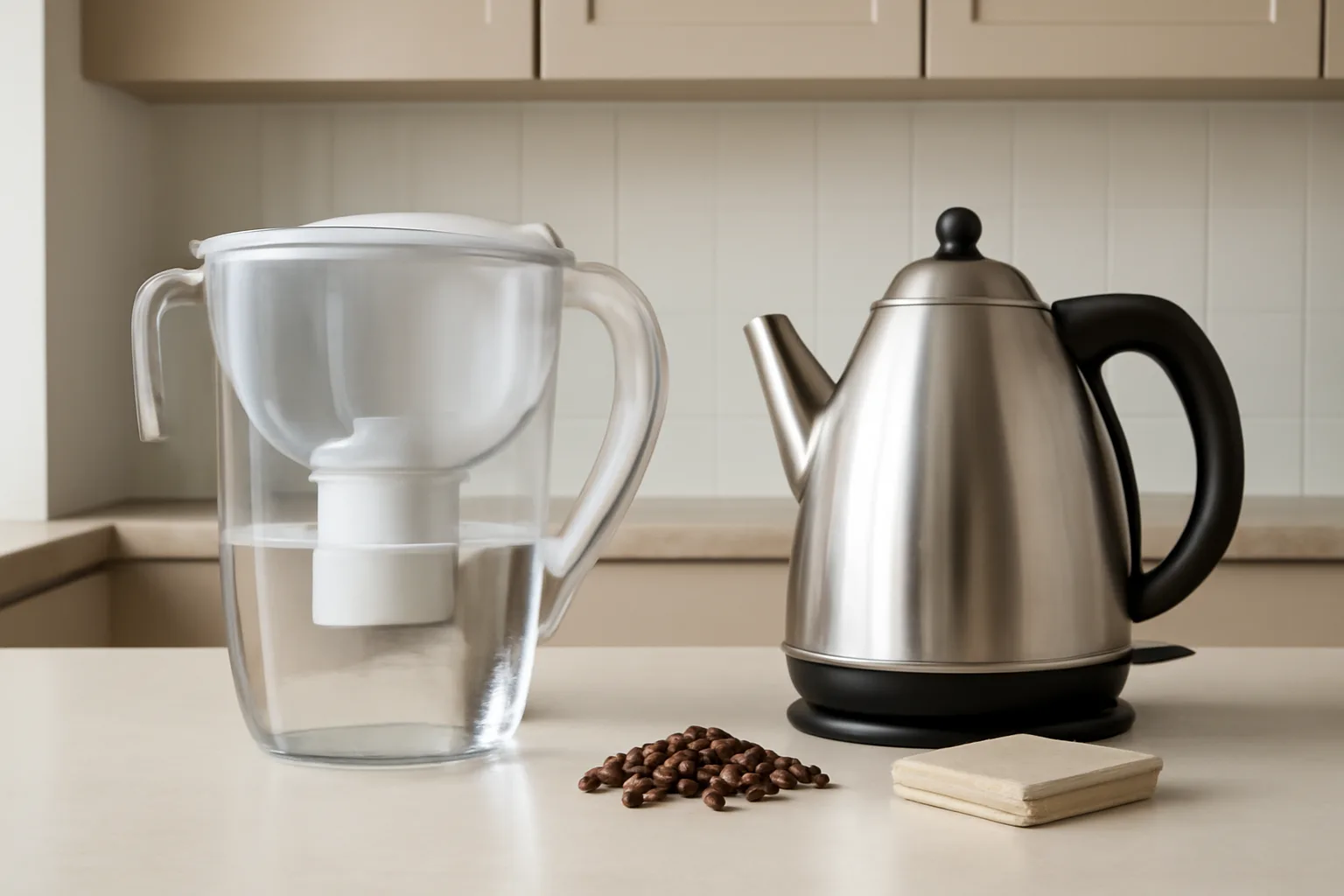
Jug filters usually reduce chlorine taste and some hardness. They are cheap, convenient and good enough for many homes. They are not magic. A Brita Marella-style jug is often about £18-£30 in the UK, and Maxtra-type cartridges are often about £15-£25 for a multi-pack depending on offers. BWT magnesium cartridges usually cost about £20-£35 for multi-packs and aim to soften while adding magnesium character.
I like jug filters for everyday filter coffee because they are low-effort. The trade-off is cartridge discipline. If you forget to change the cartridge, the taste benefit fades and the jug becomes another thing taking up fridge space.
How to Test Your Coffee Water Without Getting Weird About It
You can go deep on water chemistry, but most home brewers only need three checks: taste, hardness and repeatability.
Taste the water cold
Pour your tap water into a glass and smell it. Then taste it cold. If it smells like a swimming pool, tastes metallic, or leaves a chalky finish, it will probably show up in coffee.
Do the same with filtered water. If the filtered water tastes cleaner, brew with it. If you cannot taste a difference in plain water, coffee may still show a small difference, but it is less likely to be your biggest issue.
Use cheap hardness strips
Hardness test strips cost about £5-£10 for a pack. They are not lab-grade, but they tell you whether you are in soft, medium or hard territory. That is enough for choosing between tap, jug filter, machine filter and bottled-water experiments.
For espresso machines, some brands include test strips in the box. Use them. Do not guess, especially if your machine lets you set water hardness for descale reminders. A Sage, De’Longhi, Gaggia or Lelit machine will behave better if you tell it the correct water hardness rather than pressing whatever button gets you through setup fastest.
Brew a three-water comparison
Use the same coffee and brew method. Keep the grind, dose and brew time as steady as you can.
- Tap water: your normal baseline.
- Filtered tap water: a fresh jug filter or machine tank filter.
- Bottled water: a low-to-medium mineral still water, not sparkling and not distilled.
Do not run this with a fancy coffee you are saving for the weekend. Use a coffee you know well. If you use a £9-£12 bag from a UK roaster, the test may cost £2 in beans. That is enough to tell whether a £25 jug is worth trying.
Best Fixes: Filter Jugs, Bottled Water and Remineralising Sachets
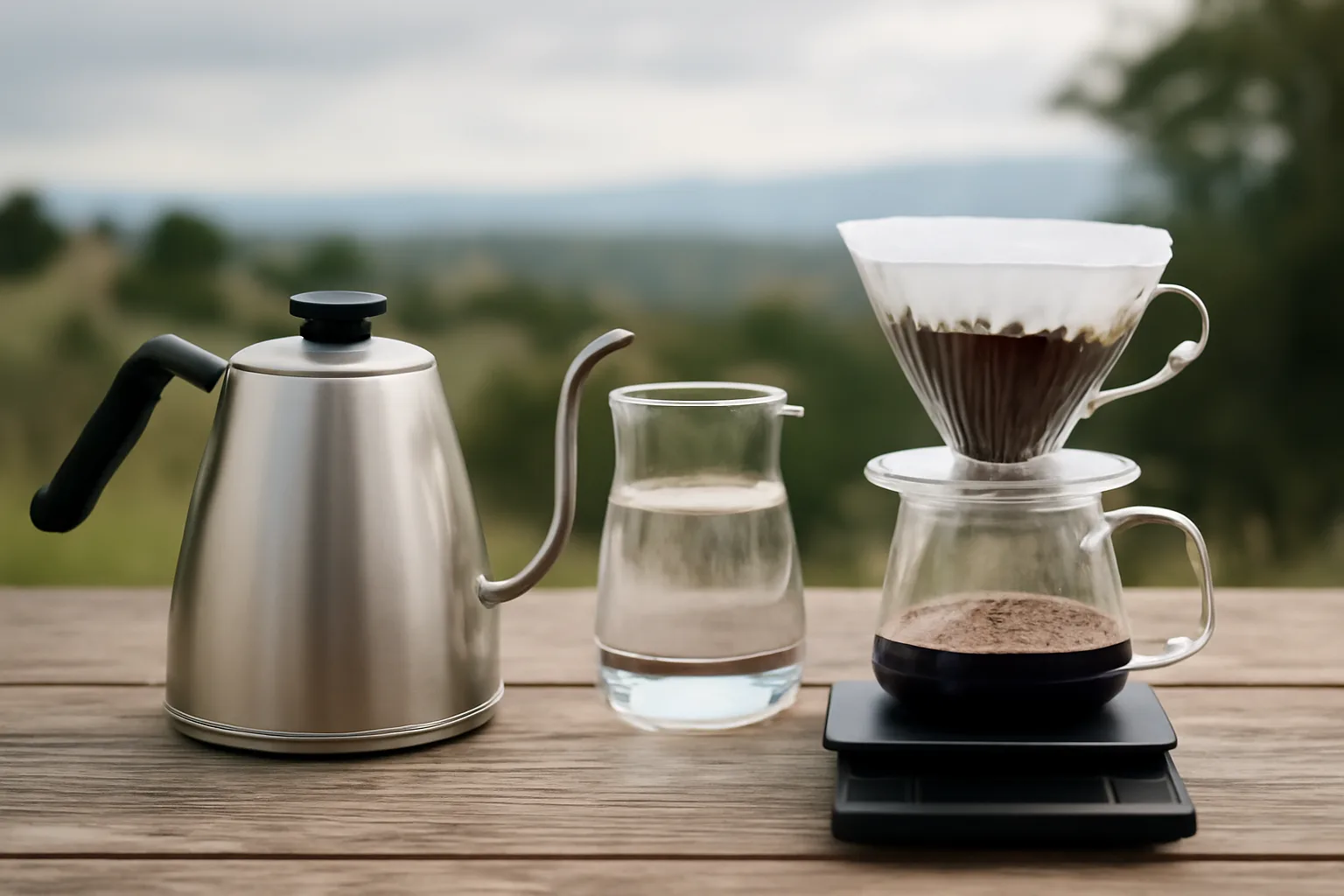
The best fix depends on your home water and how serious your coffee setup is. Spending £300 on water treatment for a £60 cafetiere habit would be daft. Ignoring hard water in a £1,200 espresso setup is also daft.
Cheapest useful fix: fresh filtered water
For most UK homes, a jug filter is the first thing to try. A basic Brita-style jug costs about £18-£30. Replacement filters usually work out around £3-£6 each depending on pack size. BWT jugs and magnesium cartridges cost a little more, but some coffee drinkers prefer the taste.
Use filtered water for two weeks and keep the rest of the recipe the same. If the coffee tastes cleaner and the kettle scales less quickly, keep doing it. If nothing changes, water was not your main problem.
There is a running-cost angle too. If a cartridge costs £4 and lasts roughly four weeks in your household, that is about £52 a year. For daily coffee, that is reasonable if the flavour improves and your kettle scales less. If you brew once on Saturdays, bottled-water tests or doing nothing may make more sense.
Best for espresso machines: match taste with scale protection
Espresso machines need taste and scale control. Tank filters from brands such as Sage, De’Longhi and Jura often cost about £10-£18 each. Inline or in-tank softening pouches for some machines can cost about £8-£15. They are not exciting purchases, but they are cheaper than service work.
The catch is that machine filters are designed for machine protection as much as flavour. They may not produce your favourite filter coffee water. That is fine. You can use machine-safe water for espresso and a separate jug or bottled water for occasional pour-over if you care enough.
Best for tasting experiments: bottled water
Bottled water is useful for testing, not as the default answer. A 2-litre bottle of still mineral water from a UK supermarket is often 60p-£1.50. That is cheap for a comparison brew and annoying as a permanent habit because of plastic waste and storage.
Avoid very hard mineral waters and avoid distilled water on its own. If the bottle tastes obviously minerally to drink, it may dominate delicate coffee. If it tastes empty, it may brew empty coffee.
Best for control: remineralising sachets
Remineralising sachets such as Third Wave Water are popular with coffee people because they start with distilled or reverse-osmosis water and add a controlled mineral recipe. UK packs vary, but expect roughly £15-£25 depending on count and supplier. Distilled or deionised water adds another cost, often £1.50-£3 for 5 litres.
This is the most repeatable route, but it is not where I would start. It makes sense if you brew expensive beans, compare coffees often, or want the same water every time. For normal weekday coffee, a decent jug filter is less faff.
Reverse-osmosis systems are the bigger step. Under-sink units can cost about £150-£400 before fitting, and replacement filters add ongoing cost. That can be sensible for a serious espresso setup in a very hard-water area, but it is overkill for most cafetiere, AeroPress and pod-machine drinkers.
When Water Is Not the Real Problem
Water is an easy rabbit hole. Before blaming it for every bad cup, check the boring stuff.
Beans age faster than you think
If beans are stale, water cannot bring back aroma. Coffee that tasted lively in week one can taste flat by week five, especially once opened. Keep beans sealed, away from heat and sunlight, and only buy what you will drink in a few weeks.
The coffee storage guide covers this in more detail. A £20 filter jug will not fix beans that have sat open next to the hob since Easter.
Grind and ratio still drive the cup
If the cup is sour, bitter, muddy or weak, check grind before replacing every water source in the house. The grinder adjustment guide and grind sizes explainer are better first stops for obvious extraction problems.
If your brew ratio is all over the place, water testing will only confuse you. Use scales. A £15-£35 scale and a repeatable recipe beat a guessy scoop and expensive bottled water.
Dirty kit ruins good water
Old oils in a grinder, stale water in a machine tank and dirty shower screens all add bad flavours. Water quality cannot hide rancid coffee oil. Clean the kit first.
For espresso machines, follow a sensible cleaning routine and use the right descaler for the machine. The coffee machine cleaning guide is the better place for cleaning steps. For filter brewers, rinse paper taste from filters, clean cafetieres properly and do not leave yesterday’s coffee oils in a server.
The useful verdict
If you are in a hard-water area, water quality is worth fixing early. Start with a jug filter or machine filter, then test bottled water if flavour still feels dull. If you are in a soft-water area and coffee tastes sharp or thin, try a low-to-medium mineral bottled water once before buying specialist sachets.
The sweet spot is boring: fresh water, moderate minerals, clean kit and repeatable brewing. Nail those and your coffee will taste better without turning the kitchen into a water lab.
Frequently Asked Questions
Does tap water ruin coffee? Not always. Many UK homes can make decent coffee with tap water, but very hard, chlorinated or very soft water can make coffee taste dull, chalky, sharp or thin.
Is filtered water better for coffee? Often, yes. A fresh jug filter can reduce chlorine taste and some hardness, which usually helps in hard-water areas. It will not fix stale beans or poor grind settings.
Should I use bottled water for coffee? Bottled water is useful for testing. It is not ideal as a permanent habit unless your tap water is poor and you have no better option, because cost, storage and plastic waste add up.
Can I use distilled water for coffee? Do not use distilled water on its own for normal brewing. It usually tastes flat and can be unsuitable for some machines unless minerals are added back in.
Does hard water damage coffee machines? Hard water can cause scale inside kettles and espresso machines. Filters, softening pouches and regular descaling help reduce the risk, especially in hard-water UK regions.
What is the cheapest way to improve coffee water? Try a fresh jug filter first. A basic jug costs about £18-£30 and replacement filters often work out around £3-£6 each, which is cheaper than specialist water sachets.