The De’Longhi Dedica Style is the best compact coffee machine for most small UK kitchens. At only 14.9cm wide, it leaves useful preparation space while still making espresso and steaming milk. Choose the Philips Baristina if you want freshly ground beans without a separate grinder, or the Nespresso Essenza Mini when every centimetre matters.
Our top 5 picks
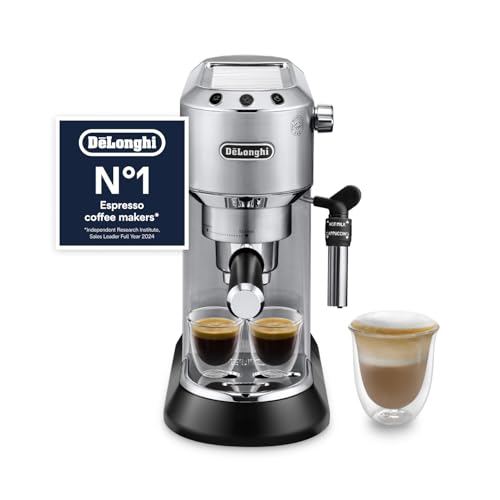
De’Longhi Dedica Style
Best overall
It balances a narrow footprint with manual espresso and milk steaming.

Philips Baristina
Best fresh-bean option
It grinds, tamps and brews in one narrow machine, with no separate grinder to find room for.

De’Longhi Stilosa
Best budget espresso
It is a lower-cost route to manual espresso, with a steam wand for milk drinks.
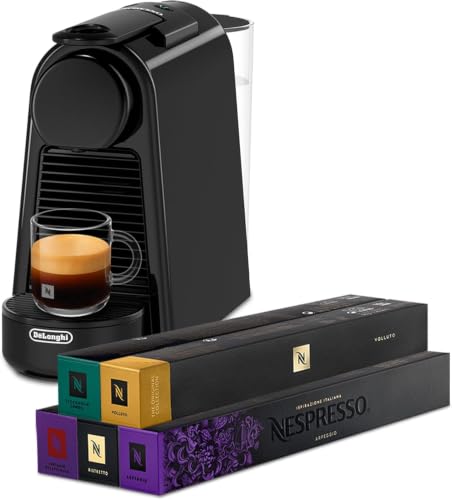
Nespresso Essenza Mini
Smallest pod machine
At just 8.4cm wide, it is the easiest fit when worktop width is tight.

Philips L’OR Barista Sublime
Best-value pod machine
It gives you capsule choice and single or double servings without taking up much width.
For larger machines and more advanced espresso control, see our guide to the best espresso machines in the UK.
In this guide
- Comparison at a glance
- The five best compact coffee machines
- Head-to-head recommendation
- How to measure your space
- Choosing the right machine type
- Milk, noise and maintenance
- How we chose
- The bottom line
- Frequently asked questions
Comparison at a glance
| Machine | Our verdict | Type | Footprint | Main compromise |
|---|---|---|---|---|
| De’Longhi Dedica Style | Best overall | Manual espresso | 14.9 × 33cm | Needs separate ground coffee or a grinder |
| Philips Baristina | Best fresh-bean option | Automatic grind-and-brew | Narrow all-in-one body | No built-in milk system |
| De’Longhi Stilosa | Best budget espresso | Manual espresso | 20.5 × 34.3cm | Wider and slower than the Dedica |
| Nespresso Essenza Mini | Smallest pod machine | Nespresso Original pod | 8.4 × 33cm | Espresso and lungo only |
| Philips L’OR Barista Sublime | Best-value pod machine | L’OR/Nespresso-compatible pod | 16.2 × 36.9cm | Deeper than the Essenza Mini |
Footprints use width × depth and should be treated as the machine body only. Leave extra room for handles, cables, filling the tank and removing the drip tray. Prices and bundles change, so compare the machine and included accessories rather than relying on one headline price.
The five best compact coffee machines
1. De’Longhi Dedica Style: best overall
The Dedica Style earns the top spot because its 14.9cm width solves the most common small-kitchen problem without reducing the machine to pod-only coffee. It uses ground coffee or ESE pods, heats through a thermoblock and includes an adjustable cappuccino system for steaming milk. De’Longhi lists a 1.1-litre tank and 33cm depth, so it gives you more capacity than the smallest pod machines while remaining unusually narrow. The catch is the wider workflow: freshly ground coffee requires a separate grinder, tamper space and somewhere to deal with used grounds. If you buy pre-ground coffee, it becomes a much tidier setup.
- Buy it if: you want proper manual espresso and milk drinks on a narrow worktop.
- Skip it if: you want one-button coffee or have nowhere to store a grinder.
- Main compromise: the 15cm machine can create a much wider coffee station once accessories are included.
2. Philips Baristina: best fresh-bean option
The Baristina is the compact answer for someone who wants freshly ground beans but dislikes a traditional bean-to-cup machine’s bulk. Swipe the portafilter-style handle and the machine grinds, tamps and brews automatically. Cleanup is also simpler than on many full automatic machines because the removable portafilter is rinsed after use. Its narrow body makes better use of limited width than the 23cm-wide De’Longhi Magnifica S previously featured. It does not steam milk, however, so cappuccino and flat-white drinkers need the matching frother or another separate solution. That extra appliance must be included in your space calculation.
- Buy it if: fresh beans and a short, repeatable routine matter more than manual control.
- Skip it if: you mainly drink milk-based coffee and want one integrated machine.
- Main compromise: the all-in-one coffee workflow still needs a separate milk frother for milk drinks.
3. De’Longhi Stilosa: best budget espresso machine
The Stilosa gives you a 15-bar pump, one-litre tank, stainless-steel boiler and manual milk frother at a lower entry price than the Dedica. At 20.5cm wide and 34.3cm deep, it is compact beside many full-size espresso machines but not genuinely slim. The removable drip tray accepts taller cups, and the filter holder supports ground coffee and ESE pods. It suits a first manual setup where budget matters more than heat-up speed, materials or a minimal footprint. Buyers with a very narrow gap should spend more on the Dedica; buyers with modest width but a strict budget get more flexibility here than from a capsule machine.
- Buy it if: you want low-cost espresso and milk steaming with enough room for a 20.5cm machine.
- Skip it if: you need the narrowest manual machine or faster thermoblock heating.
- Main compromise: it saves money but takes more width and feels more basic than the Dedica.
4. Nespresso Essenza Mini: smallest pod machine
The Essenza Mini is the easiest recommendation for an exceptionally narrow space. Nespresso specifies a width of 8.4cm, a 0.6-litre removable tank and two programmable servings: espresso and lungo. Heat-up takes around 25 seconds, and used capsules collect in an internal container rather than creating loose grounds around the machine. The selected bundle includes 50 capsules, but check the current pack contents before ordering. There is no milk system and little drink customisation beyond volume, so it is best viewed as a fast black-coffee machine. An Aeroccino or another frother adds both cost and worktop width.
- Buy it if: minimum width, speed and simple espresso or lungo are the priorities.
- Skip it if: you want fresh beans, manual control or an integrated milk system.
- Main compromise: the machine is tiny, but capsules cost more per drink and milk needs another appliance.
5. Philips L’OR Barista Sublime: best-value pod machine
The L’OR Barista Sublime is wider than the Essenza Mini but more flexible. Its 16.2cm width remains small-kitchen friendly, while the dual spout can prepare two small coffees or one double serving with L’OR XXL capsules. It also works with standard L’OR and compatible Nespresso Original-style capsules. A 1.2-litre tank means fewer refills than the Essenza Mini, although the 36.9cm depth needs checking carefully on a shallow counter. Choose it for value and capsule choice rather than absolute compactness. Like the Essenza, it makes black coffee; milk drinks require a separate frother.
- Buy it if: you want an affordable pod machine with a larger tank and broad capsule choice.
- Skip it if: your main constraint is depth or you only need the smallest possible machine.
- Main compromise: it is narrow but deeper than its front view suggests.
Head-to-head: which compact coffee machine should you buy?
Buy the De’Longhi Dedica Style if you want the best balance for a small kitchen. It is narrower than the Stilosa, makes espresso without capsules and includes a steam wand. It rewards a little practice but does not dominate the worktop.
Choose the Philips Baristina for fresh beans with fewer manual steps. Pick the Essenza Mini when width is the hard limit, or the L’OR Barista Sublime when pod value, tank size and double servings matter more. The Stilosa is the budget manual choice. The biggest mistake is measuring the machine but forgetting the grinder, frother, overhead tank access and the space needed to work around it.
How to measure your space
Measure width, depth and height
Measure the available gap at its narrowest point, then check that the machine feet and cable sit fully on the worktop. Depth figures often exclude a protruding plug or portafilter handle. Leave working room at the front for a cup and drip tray, and avoid placing a hot machine tight against a wall or splashback unless its manual permits it.
Check tank and bean access
A rear tank may require the machine to slide forwards for every refill. A top-loading bean hopper needs clearance beneath wall cabinets. Front-removable tanks and drip trays are easier in a fixed alcove. A lightweight pod machine is simple to move, while a heavier coffee station becomes annoying if it must be pulled out daily.
Choosing the right machine type
Manual espresso
Manual machines such as the Dedica and Stilosa offer the most control and can steam milk, but they create the widest overall workflow. You need coffee, a tamper and somewhere to knock out the puck. Fresh grinding improves control but adds another appliance. Our guide to choosing an espresso grinder explains what changes between brew methods.
Fresh-bean automatic
The Baristina combines grinding and brewing without the large internal brew group used by many conventional bean-to-cup machines. Traditional full automatics remain convenient, but their depth, water tank and grounds-bin access can be awkward in a shallow kitchen. Compare the workflows in our bean-to-cup versus espresso-machine guide.
Pod machines
Pods minimise preparation and loose grounds. The trade-offs are higher drink cost, packaging waste and less control over dose. Check capsule availability and whether you want espresso only or larger servings. Refillable capsules can reduce waste, but results vary; our guide to reusable coffee pods covers the compromises.
Milk, noise and maintenance
Plan for milk drinks
A built-in steam wand saves the footprint of a separate frother but adds wiping and purging after every use. Pod machines and the Baristina need another device for textured milk. Measure the complete setup before buying. If milk quality matters more than having one appliance, compare compact options in our guide to the best milk frothers.
Noise in a small room
Pumps, grinders and steam wands are more noticeable in an open-plan flat than in a separate kitchen. Bean grinding is usually the sharpest sound; pod machines avoid it but still vibrate during extraction. A rubber mat can reduce transmitted vibration, provided it does not block ventilation or make the machine unstable.
Keep the routine realistic
Empty the drip tray, rinse removable parts and wipe steam wands before residue hardens. Descale according to the machine instructions and local water hardness rather than an arbitrary calendar. Coffee oils and limescale affect taste and reliability. Our coffee-machine cleaning guide covers a practical routine, while De’Longhi publishes exact dimensions and care information for the Dedica range.
How we chose
We compared machines by their actual worktop demands rather than accepting “compact” as a marketing label. Width matters in a narrow kitchen, but depth, overhead clearance, removable-tank access and the need for a separate grinder or milk frother can change the real footprint. We also considered drink range, warm-up routine, cleaning effort, capsule or bean costs and how much control each machine gives the user.
This is a specification-led buying guide, not a claim that we laboratory-tested every model. Manufacturer dimensions and functions were checked against current product information, then assessed for realistic small-kitchen use. Our shortlist deliberately mixes manual espresso, fresh-bean and capsule machines because the right answer depends on the drink and workflow you want—not just the narrowest number on a spec sheet.
The bottom line
The De’Longhi Dedica Style is the best compact coffee machine for most small UK kitchens because its 14.9cm width leaves room for preparation while retaining manual espresso and milk steaming. Choose the Philips Baristina for fresh beans with less mess, the Stilosa for budget espresso, the Essenza Mini for the narrowest footprint or the L’OR Barista Sublime for flexible pod value. Measure the complete workflow—not just the machine—before ordering.
Frequently asked questions
What is the smallest coffee machine for a UK kitchen?
The Nespresso Essenza Mini is the narrowest machine in this shortlist at 8.4cm wide. Remember to allow for its 33cm depth and tank access.
Which compact coffee machine is best for milk drinks?
The De’Longhi Dedica Style is the best compact choice here because it combines a 14.9cm body with a manual steam wand.
Do I need a grinder with a compact espresso machine?
Only if you want to grind fresh beans. Manual machines can use pre-ground coffee, while the Philips Baristina has its own grinder and pod machines need none.
Are pod machines better for small kitchens?
They usually require the least preparation space, but capsules cost more per drink and milk-based coffee often needs a separate frother.
How much clearance should I leave above a coffee machine?
Leave enough room to remove or fill the tank and hopper as described in the manual. Measure beneath cabinets before buying.
Can a compact coffee machine make café-style espresso?
A narrow manual machine can make strong espresso when the coffee, dose and preparation are right, but machine width alone does not determine cup quality.