The De’Longhi Rivelia is the best bean-to-cup coffee machine for most UK households. It combines a compact body, automatic milk preparation, 16 one-touch drinks and swappable bean hoppers. Choose the Magnifica S for lower-cost black coffee and manual milk, Philips 3300 for a simpler milk-cleaning routine, Siemens EQ500 for a busy household, or Jura E6 for a more polished premium experience.
Our top 5 picks
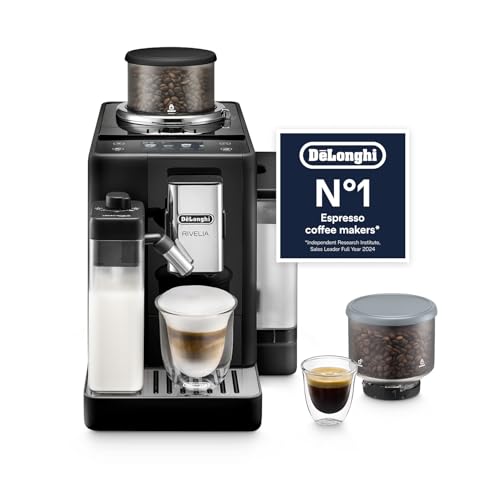
Bean-switching all-rounder — De’Longhi Rivelia
Two interchangeable hoppers, automatic milk and 16 one-touch drinks.
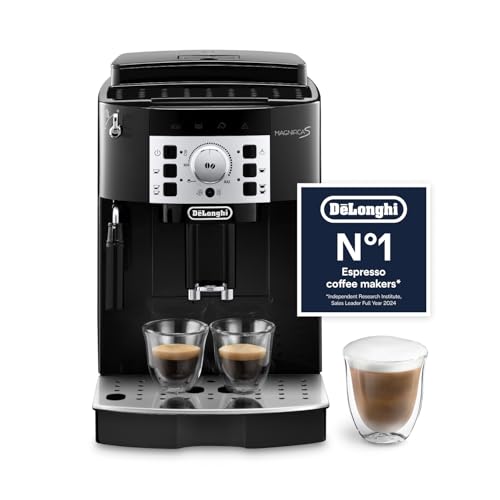
Lower-cost black coffee — De’Longhi Magnifica S
Espresso and coffee with manual milk frothing and simpler controls.

Simpler milk cleanup — Philips 3300 LatteGo
A two-part automatic milk carafe and six hot and iced selections.
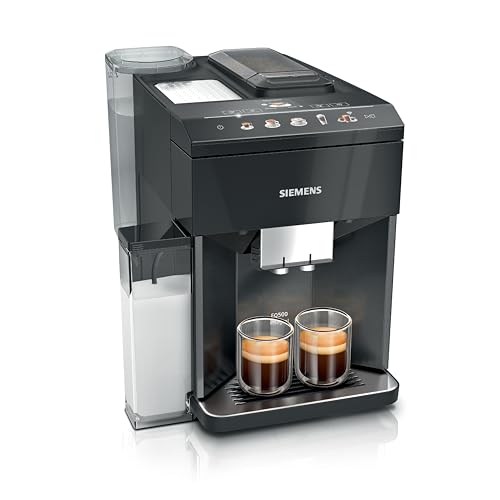
Two milk drinks together — Siemens EQ500
Prepare two milk drinks together with oneTouch DoubleCup; ten programmes cover different tastes.

Premium guided workflow — Jura E6
A polished interface and guided care; check ownership costs and availability.
In This Guide
- Comparison at a glance
- Five bean-to-cup machines reviewed
- Which machine should you buy?
- Choosing a bean-to-cup machine
- Cleaning, water and running costs
- How we chose
- The bottom line
- Frequently asked questions
Comparison at a glance
| Machine | Best for | Drink menu | Milk system | Main reason to buy |
|---|---|---|---|---|
| De’Longhi Rivelia | Best overall | 16 one-touch drinks | Automatic LatteCrema carafe | Bean switching and broad menu |
| De’Longhi Magnifica S | Best budget | Espresso and coffee | Manual steam wand | Lower entry cost |
| Philips 3300 LatteGo | Best for easy cleaning | 6 hot and iced drinks | Two-part LatteGo carafe | Two-part milk carafe |
| Siemens EQ500 TQ518GB3 | Best for families | 10 programmes | Integrated automatic system | Shared-household convenience |
| Jura E6 | Best premium | Coffee and milk specialities | Automatic fine-foam system | Premium interface and workflow |
The Rivelia and Siemens offer broader one-touch milk-drink menus, while the Philips has a smaller menu and a simpler milk-cleaning routine. The Magnifica S asks you to texture milk manually but costs less and keeps the internal workflow simpler. Jura’s E6 is the luxury option here. Its higher price buys a more refined interface and guided care, but does not guarantee a better-tasting cup for every buyer.
The five best bean-to-cup coffee machines
1. De’Longhi Rivelia: best overall
Rivelia is the most rounded recommendation because it combines a wide one-touch menu with a body that remains manageable on a domestic worktop. The 3.5-inch colour display guides drink selection, and the automatic LatteCrema system handles milk without asking you to learn steam-wand technique. Sixteen programmed drinks give households room to switch between espresso, longer coffee and milk-based options, as set out on De’Longhi’s Rivelia range page.
Its defining feature is the pair of removable bean hoppers. You can move between regular and decaffeinated beans, or between two roast styles, without emptying one hopper by hand. Bean Adapt settings are intended to tailor preparation to the selected beans. That makes the machine particularly useful when two people have different preferences rather than simply adding another screen menu.
- Buy it if: you want broad one-touch choice and regularly switch beans.
- Skip it if: you mainly drink one black coffee and do not need an automatic milk system.
- Main compromise: more convenience and variety than the budget machines, with more parts and prompts to manage.
2. De’Longhi Magnifica S: best budget
The Magnifica S is the sensible lower-cost route into genuine bean-to-cup coffee. It grinds and brews espresso or longer coffee, can prepare two black coffees together and provides 13 grinder settings. Its controls are simpler than the colour displays used by the Rivelia, Philips and Siemens, which is an advantage if you want a repeatable morning drink rather than a large recipe library.
Milk preparation is manual through the steam wand. That adds a skill step, yet it also lets you control how much air enters the milk and avoids storing an automatic milk carafe. Buyers who mostly drink black coffee can ignore the wand entirely. The machine accepts whole beans and pre-ground coffee, useful when an occasional decaffeinated drink is needed.
- Buy it if: espresso and black coffee matter more than one-touch milk drinks.
- Skip it if: several people expect cappuccino or latte at one press.
- Main compromise: strong value and simple controls, but milk requires manual work.
3. Philips 3300 LatteGo: best for easy cleaning
Philips earns this category because the LatteGo milk container uses two main pieces and no narrow internal milk tube. It can be separated for rinsing after a drink, reducing the fiddly part of maintaining an automatic milk system. The machine provides six hot and iced selections, covering the core choices without the deeper menus of the Rivelia or higher Philips ranges.
The ceramic grinder offers 12 adjustment steps, while the touch display lets you alter strength, drink length and milk level. Those controls are enough for useful personalisation, but this is still an automatic machine: it prioritises repeatability over the fine manual control of a separate grinder and espresso machine. The iced selections alter the recipe; they do not actively chill the drink.
- Buy it if: automatic milk drinks appeal but cleaning tubes does not.
- Skip it if: you want a very large recipe menu or manual milk-texture control.
- Main compromise: an unusually simple milk system paired with a more focused drink list.
4. Siemens EQ500: best for families
The EQ500 TQ518GB3 suits households where several people want different drinks. Siemens lists its programmes and oneTouch DoubleCup function. Its colour interface provides ten programmes, and the oneTouch DoubleCup function can prepare two milk-based drinks together. Home Connect adds access to additional recipes and remote controls, although the machine remains usable without making an app central to every coffee.
The integrated milk system automatically rinses with steam after preparation, but that does not remove all user maintenance. The milk container and relevant parts still need care according to the instructions. This is also a larger machine than the most compact options, so check worktop depth, overhead cupboard clearance and access to the water tank before ordering.
- Buy it if: a shared household wants varied black and milk drinks with minimal queueing.
- Skip it if: worktop space is tight or you will never use two-drink preparation.
- Main compromise: excellent shared-use convenience in a larger, more involved appliance.
5. Jura E6: best premium
The Jura E6 is for buyers who value a polished interface, guided workflow and extensive adjustment more than lowest purchase price. It uses Jura’s Professional Aroma Grinder and Pulse Extraction Process, with programmable coffee strength, volume, temperature and milk foam. The colour display and guided maintenance routines are central to the experience.
Unlike machines with a removable brew group, the E6 relies on integrated cleaning programmes and Jura maintenance products. Some owners will prefer that guided closed-system approach; others will want direct access to rinse the mechanism themselves. The E6 is therefore a premium workflow choice, not an automatic recommendation for everyone with a larger budget.
- Buy it if: interface quality and guided automatic ownership justify a premium.
- Skip it if: value or a removable brew group matters more.
- Main compromise: guided daily operation with higher purchase and maintenance costs.
Head-to-head: which machine should you buy?
Choose the De’Longhi Rivelia for the strongest all-round balance. It is the best fit when a household wants one-touch milk drinks, a broad menu and the ability to swap between two beans. The Magnifica S is the better value decision for espresso and black-coffee drinkers who are happy to froth milk manually.
Choose the Philips 3300 when automatic milk matters but the cleaning routine is the main concern. Choose Siemens when several people will use the machine and two simultaneous milk drinks are genuinely useful. Choose Jura only when its interface, guided care and premium ownership experience matter enough to outweigh the price gap.
Think about the busiest part of the day rather than an occasional weekend recipe. A couple sharing one cappuccino each may value a removable carafe and quick rinse more than twenty drink icons. A household making several coffees in sequence benefits more from generous water, bean and grounds capacity, plus controls that different users can understand without resetting the machine.
None of these machines removes the need to choose suitable beans, adjust the grinder gradually and maintain the appliance. If you prefer hands-on dosing, tamping and milk texturing, compare a bean-to-cup machine with a traditional espresso setup before spending more on automation.
How to choose a bean-to-cup machine
Start with the drinks you make
Black-coffee drinkers should not pay automatically for a milk carafe. A steam wand is enough for occasional cappuccino, while a one-touch carafe is worthwhile when milk drinks are made every day. Check whether “iced coffee” means a changed extraction over ice rather than active chilling, and whether two-cup mode works for milk drinks or only espresso.
A machine with many recipes often builds them from the same basic variables: coffee volume, strength, milk and foam. Look beyond the headline number and identify the drinks you will actually use. Our guide to coffee-machine features that matter explains the difference between useful control and menu padding.
Profiles are useful when people prefer different strengths and volumes, but only if the exact model saves those settings in a convenient way. Do not assume an app guarantees better coffee. Remote controls are mainly valuable for recipe discovery and settings; someone still needs to place a cup, supply milk and maintain the machine.
Treat grinder adjustment with care
More grinder settings allow smaller changes, but adjustment should normally be made gradually and while following the machine instructions. Very oily beans can leave more residue in an automatic grinder. Medium roasts are a practical starting point, then taste the coffee before changing several variables at once. Read our guides to coffee grind sizes and roast levels for the underlying trade-offs.
Bean freshness matters, but filling a large hopper to the brim is not automatically helpful if it takes weeks to empty. Add an amount that suits your usage and keep the rest sealed away from heat, moisture and strong light. A bypass chute for pre-ground coffee can be useful for occasional decaf without changing the main hopper.
Measure space and access
Measure width, depth and height with enough clearance to remove the water tank, bean hopper and brew group where applicable. A machine can fit beneath a cupboard yet still be awkward to refill. Front-access tanks help in shallow spaces, while top-loading hoppers need overhead room. Do not forget the milk container when measuring the full working footprint.
Also consider where the machine will be cleaned. A removable brew group, drip tray or milk container is easier to manage when the sink is nearby. If the machine must be pulled forward for every refill or rinse, a compact specification on paper may still produce an awkward daily routine.
Cleaning, water and running costs
Match the cleaning routine to your habits
Milk residue needs prompt attention. Rinse removable milk parts after use and follow the machine’s cleaning prompts rather than assuming an automatic rinse replaces manual care. Empty the drip tray and grounds container before they overflow. Removable brew groups can usually be rinsed according to the manual; closed Jura systems use programmed cleaning cycles instead.
Maintenance varies by model, so use the supplied instructions and approved products. Our guide to cleaning and maintaining a coffee machine covers the general routine, but the exact manual takes priority.
Account for water hardness
Hard water increases scale, which can affect heating and water flow. Use the machine’s hardness setting, filter option and descale prompt correctly. A filter does not make descaling permanently unnecessary. Replacement-filter and cleaning-tablet costs also belong in the ownership budget, particularly for machines with proprietary care programmes.
Think beyond electricity
Electricity is only one running cost. Beans, milk, water filters, descaler and cleaning products usually matter more over time, and consumption depends heavily on drink size and daily volume. Avoid fixed annual-cost promises that assume every household uses the machine in the same way. For a broader framework, see how much coffee machines cost to run.
How we chose
We compared the five exact UK machine variants by drink menu, milk system, grinder adjustment, interface, cleaning routine and daily effort. Recipe counts matter less than the drinks you will actually make and the parts you will need to clean.
This is a research-led comparison of manufacturer-supported features, not a hands-on brewing test. We favour a clear fit for a type of household over the longest feature list. Check the current offer, delivery estimate and model variant before ordering.
The bottom line
The De’Longhi Rivelia is the best bean-to-cup machine for most buyers in this comparison. Pick the Magnifica S for lower-cost black coffee, Philips 3300 for easier milk-system cleaning, Siemens EQ500 for a busy shared household, or Jura E6 when premium workflow and guided maintenance justify the extra spend.
Frequently Asked Questions
Which bean-to-cup coffee machine is best overall?
The De’Longhi Rivelia is the best all-round choice here because it combines 16 one-touch drinks, automatic milk preparation and swappable bean hoppers in a relatively compact format.
What is the best budget bean-to-cup machine?
The De’Longhi Magnifica S is the best budget choice in this shortlist. It focuses on espresso and coffee, with a manual steam wand instead of an automatic milk carafe.
Which bean-to-cup machine is easiest to clean?
The Philips 3300 LatteGo has the simplest milk system here because its carafe uses two main pieces and no narrow milk tube. The rest of the machine still requires routine cleaning and descaling.
Are bean-to-cup machines good for lattes?
Models with automatic milk systems can make convenient latte-style drinks consistently. They offer less control over milk texture than a skilled user with a steam wand.
How often should a bean-to-cup machine be cleaned?
Rinse milk-contact parts promptly, empty the drip tray and grounds container as needed, and follow the machine’s cleaning and descaling prompts. The exact schedule depends on the model, water and usage.
How long does a bean-to-cup coffee machine last?
There is no dependable fixed lifespan. Build, water hardness, cleaning, drink volume, parts availability and servicing all affect longevity, so maintenance matters more than a broad year estimate.