The “15 bar” badge on a coffee machine does not mean your espresso should be brewed at 15 bar. It usually means the vibration pump can generate up to 15 bar before the machine, basket and coffee puck bring the actual brewing pressure down. For a home buyer, pressure matters, but a bigger number on the box is not the shortcut to better espresso.
In This Article
- The Short Answer: 15 Bar Is Mostly a Pump Rating
- Coffee Machine Bar Pressure Explained
- Why Espresso Usually Wants About 9 Bar
- Why So Many Home Machines Advertise 15 Bar
- What Pressure Means on Different Machine Types
- What to Look For Instead of a Bigger Bar Number
- Bottom Line
- Frequently Asked Questions
The Short Answer: 15 Bar Is Mostly a Pump Rating
If a £150 De’Longhi Dedica says 15 bar and a £500 Gaggia Classic E24 also says 15 bar, they are not suddenly equal machines. The number tells you the pump has enough pressure headroom. It does not tell you how stable the machine is, what pressure reaches the coffee, how good the basket is, or whether the temperature holds steady through the shot.
The useful question is not “does it have 15 bar?” It is: can the machine deliver controlled water through a properly prepared coffee puck at roughly espresso pressure, without choking, spraying, overheating or relying entirely on pressurised baskets?
For a quick buying filter, pressure claims should sit behind:
- Temperature control: the machine has to keep water hot enough without scorching the shot.
- Basket choice: pressurised baskets are forgiving; single-wall baskets give better control with a proper grinder.
- Grinder pairing: a good espresso grind matters more than chasing a bigger pump number.
- Serviceability: seals, baskets, shower screens and steam parts should be replaceable without drama.
What the badge is really saying
Most domestic espresso machines use a small vibration pump. These pumps are cheap, compact and capable of high pressure, which is why 15 bar appears everywhere from budget machines to better entry-level models. It is a maximum pump capability, not a target recipe.
Think of it like a car speedometer. A car that can show 140mph on the dial is not meant to be driven at 140mph through a town centre. The extra range gives headroom; control is what matters.
Why buyers get misled
Pressure is easy to print on a box. Temperature stability, basket quality and grind sensitivity are harder to explain in a shop listing. That is why budget machines often lead with “15 bar pump pressure” even when the rest of the machine is fairly basic.
For context, the De’Longhi Dedica EC685 is often around £149.99 direct from De’Longhi UK or roughly £160-£180 at Amazon UK, depending on colour and offers. It can make enjoyable coffee, especially with pressurised baskets, but it is not competing directly with a Sage Bambino Plus at about £399 or a Gaggia Classic E24 around £507-£519. Pressure is only one line in a much longer spec sheet.
Coffee Machine Bar Pressure Explained
Start with the word “bar”. One bar is roughly atmospheric pressure at sea level. Nine bar is about nine times that. Espresso uses pressure to push hot water through finely ground coffee, extracting oils, soluble compounds and crema in a short time.
The tricky bit is that machines have several pressure points, and product pages often blur them together.
Pump pressure
Pump pressure is what the pump can generate under resistance. A 15-bar pump can push hard enough to meet domestic espresso-machine needs, but that does not mean the shot is brewed at 15 bar from start to finish.
On many machines, the pump is capable of more pressure than the coffee actually needs. Better designs control that pressure through an over-pressure valve, internal programming, basket design or the hydraulic resistance of the puck.
Brew pressure
Brew pressure is the pressure at or near the coffee puck during extraction. This is the number home baristas care about because it affects flow, flavour and consistency.
If pressure is too low, water can run through weakly and pull sour, thin shots. If it is too high, especially with a fine grind and poor puck prep, the machine can choke, channel or produce harsh bitterness. The puck is not a brick; it changes as water hits it.
Pressure on a gauge
Some machines show a pressure gauge. Useful? Sometimes. A gauge can help you see if the shot is choking or running freely, but cheap gauges often show pump pressure rather than accurate puck pressure. They are a clue, not a laboratory instrument.
If you are buying your first machine, do not pay extra just for a gauge. Spend on a decent grinder, fresh beans and a machine with good temperature control first. CoffeeSetupUK’s guides to dialling in espresso and choosing a grinder for espresso vs filter will help more than staring at a needle.
Why Espresso Usually Wants About 9 Bar
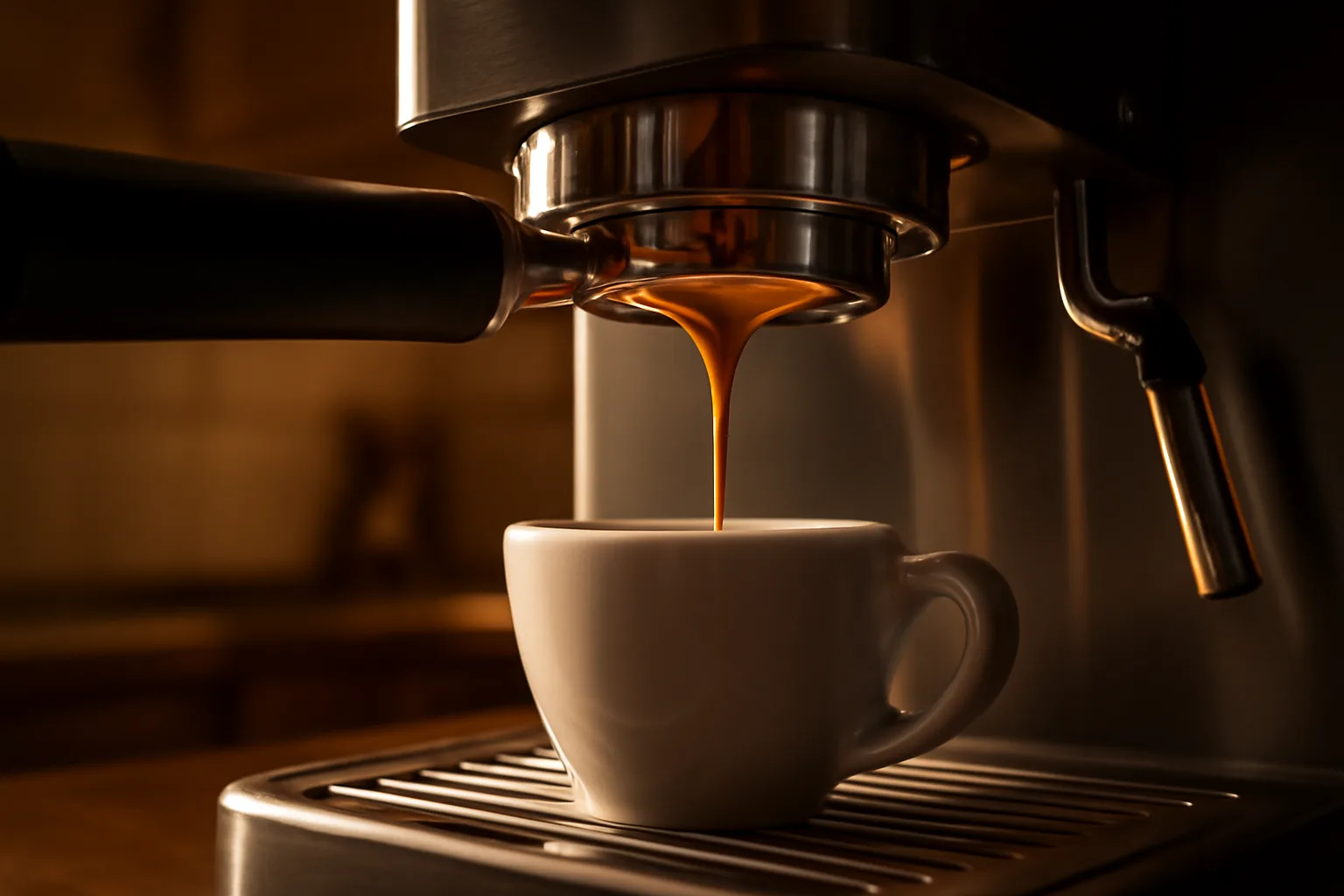
Nine bar is the pressure figure you will hear most from baristas and home-espresso people. It is not a magical law of physics, but it is a proven working target for classic espresso extraction.
The Specialty Coffee Association’s discussion of modern espresso describes common espresso practice around an 18-20g dose, 25-30 second extraction and 9 bar pressure. That lines up with what most home users are trying to achieve when they talk about “proper” espresso.
Why not just use 15 bar?
More pressure does not automatically extract more good flavour. It can push water through weak spots in the puck, make channeling worse and exaggerate bitterness. If the grind is too fine, higher pressure can also stall the shot, leaving you with a few angry drips and a muddy puck.
Pressure works with grind size, dose, basket shape and tamping. Change one and the others move. That is why a machine advertised as 15 bar can still produce poor espresso if the grinder cannot go fine enough or the basket encourages uneven flow.
Why some machines use lower pressure
Some modern machines use pre-infusion, pressure profiling or lower-pressure phases to wet the coffee before full extraction. That is not a weakness. It can make shots more forgiving, especially with lighter roasts.
You do not need pressure profiling on a first machine. It is useful for enthusiasts, but beginners usually need the basics nailed: fresh beans, a burr grinder, consistent dose, sensible temperature and a machine that does not wildly overshoot.
What this means in the cup
At the cup level, pressure shows up as flow and balance. Too little resistance and the shot runs pale and sharp. Too much resistance and the shot crawls, tastes bitter, or arrives as a tiny syrupy mess. The sweet spot is a shot that flows steadily, tastes balanced and repeats when you do the same thing again.
If your current machine has no gauge, do not panic. Time, yield and taste are better guides. A 36g espresso from an 18g dose in about 25-30 seconds is a useful starting point, then adjust from there.
Why So Many Home Machines Advertise 15 Bar
Fifteen bar sells because it sounds powerful. It also happens to be a common rating for the small pumps used in domestic espresso machines. That makes it both technically true and commercially convenient.
The pump needs headroom
A machine does not operate in perfect lab conditions. Water has to move through pipes, valves, heating blocks, baskets and coffee. A pump with headroom can still deliver useful pressure when the puck resists flow.
The issue is what the machine does with that headroom. A good over-pressure valve, often shortened to OPV, bleeds off excess pressure so the shot does not slam the coffee too hard. Some machines are set closer to classic espresso pressure out of the box; others are designed around pressurised baskets and broader supermarket-coffee use.
Pressurised baskets change the game
Many budget machines use pressurised baskets. These have a restricted outlet that creates artificial back pressure and helps produce crema even when the grind is not perfect. They are useful if you buy pre-ground coffee from Tesco, Sainsbury’s or a local roaster and do not own a grinder.
The downside is flavour ceiling. A pressurised basket can hide weak grind quality, but it also gives you less control. If you later buy a proper espresso grinder, you will want a non-pressurised basket and a machine that behaves well at real espresso pressure.
Marketing keeps the number alive
Once buyers learned to look for 15 bar, brands kept printing it. You now see it on machines from De’Longhi, Gaggia, Sage listings, cheaper Amazon brands and some bean-to-cup machines. It has become a reassurance signal rather than a quality ranking.
The official Gaggia Classic E24 product page also highlights a 15-bar pump, yet buyers choose that machine for its build, brass boiler, serviceability and upgrade path, not because 15 is somehow better than 9. That distinction matters.
What Pressure Means on Different Machine Types
The same pressure claim behaves differently depending on the machine. A £120 pressurised-basket machine, a £399 Sage Bambino Plus and a £519 Gaggia Classic E24 may all mention pressure, but the user experience is not the same.
Budget manual machines under £200
This is De’Longhi Dedica, De’Longhi Stilosa, Swan-style espresso machines and many Amazon UK own-brand-looking models. Expect prices from about £90 to £180.
These machines often work best with pressurised baskets. They are small, quick and friendly for milk drinks, but they can struggle when you expect café-style control. The pressure claim is less important than the basket system, temperature consistency and steam power.
I would buy in this band only if counter space and budget are tight. Pairing a £150 machine with stale pre-ground coffee and no scales will not beat a good moka pot by much. Pair it with fresh beans and realistic expectations, and it can be fun.
Better entry-level machines from £300-£550
This is where espresso starts making more sense. The Sage Bambino is usually around £299-£329, the Bambino Plus around £399, and the Gaggia Classic E24 around £507-£519 from UK coffee retailers. These machines still use compact pumps, but they tend to give you better temperature behaviour, baskets, steam power or upgrade potential.
The Sage route suits people who want fast heat-up and a tidier beginner experience. The Gaggia route suits people who like tinkering, traditional parts and the idea of keeping a machine for years. Neither decision should be made from the 15-bar line alone.
For broader context, CoffeeSetupUK already has guides to the best espresso machines in the UK, espresso machines under £500 and compact coffee machines for small kitchens.
Prosumer single-boiler and heat-exchanger machines
Machines like the Lelit Anna, Rancilio Silvia and heat-exchanger models move the conversation away from headline pressure. Buyers in this bracket care about boiler design, group stability, parts availability, portafilter size and steaming power.
Expect roughly £450-£800 for serious single-boiler machines and more for heat-exchangers. At that point, pressure is assumed to be manageable. The better question is how easily you can control it, service it and pair it with a grinder that does the machine justice.
Bean-to-cup machines
Bean-to-cup machines often advertise 15 bar too, but the brewing system is different. They dose, grind, tamp and brew internally, so you have less direct control over puck prep. A good bean-to-cup machine can be convenient and consistent, especially for milk drinks, but the pressure number is not a promise of manual espresso quality.
If you are choosing bean-to-cup, look at grinder adjustment, brew-unit cleaning, milk system maintenance and drink temperature before worrying about the pump badge.
What to Look For Instead of a Bigger Bar Number
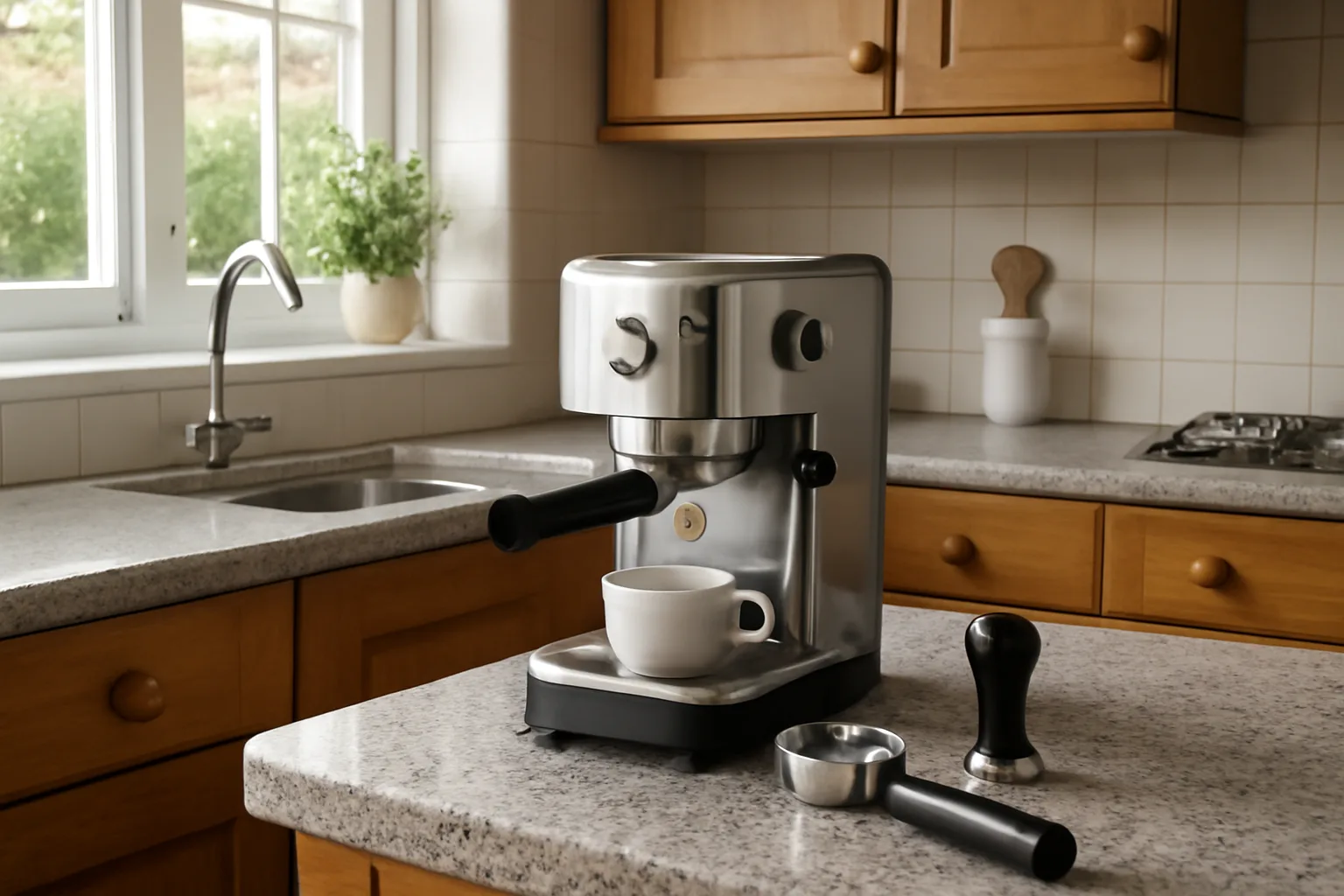
Once a machine has enough pressure capability, the buying decision moves elsewhere. This is where people save themselves from bad purchases.
An OPV or sensible pressure control
An over-pressure valve is useful because it controls excess pressure rather than letting the pump blast away unchecked. Not every beginner needs to modify or measure this, but machines known for sensible pressure control are easier to live with.
If a machine claims 19 or 20 bar but says nothing about baskets, temperature, OPV, pre-infusion or serviceability, I would be sceptical. Big pressure numbers are cheap to advertise.
Basket type and upgrade path
Check whether the machine includes single-wall and dual-wall baskets. Dual-wall means pressurised. Single-wall means the coffee grind and puck prep do more of the work.
For a beginner using supermarket pre-ground coffee, dual-wall baskets are forgiving. For someone buying a Baratza Encore ESP around £140-£170, a Sage Dose Control Pro around £160, or a Eureka Mignon around £300+, single-wall baskets make more sense. Pressure only pays off when the puck is prepared well enough to resist it evenly.
The basket check is simple:
- Dual-wall only: fine for convenience, but it limits how far you can push fresh beans and better grinding.
- Single-wall included: better for learning espresso properly once you own a capable burr grinder.
- Standard basket size: easier to upgrade later, especially around the common 58mm ecosystem.
Temperature stability
Temperature changes flavour as much as pressure does. A machine that wobbles between too cool and too hot will make inconsistent shots even if the pump number looks impressive.
Thermoblock machines can be fast and convenient. Boiler machines can feel more traditional and stable, though they take longer to heat. Neither design is automatically best. The issue is implementation.
CoffeeSetupUK’s guide to coffee machine features that actually matter goes wider on this, but for pressure specifically, temperature is the spec people underestimate.
Grinder and puck prep
If you have £500 to spend, I would rather see £300 on the machine and £150-£200 on the grinder than £500 on a machine with pre-ground coffee. Pressure cannot rescue a bad grind.
Uneven puck prep causes channeling, where water finds weak paths through the coffee. Then the gauge may show pressure, but the cup tastes thin and harsh at the same time. That is not a pressure shortage; it is a preparation problem.
For practical fixes, use the existing espresso troubleshooting guide once you start pulling shots.
Bottom Line
Fifteen bar on a coffee machine usually means the pump has enough headroom. It does not mean better espresso, and it does not mean the coffee should be brewed at 15 bar. For classic espresso, about 9 bar at the puck is the usual target.
If you are buying under £200, treat 15 bar as a basic capability claim and focus on baskets, size and realistic expectations. If you are spending £300-£550, look for pressure control, temperature stability, included single-wall baskets and a machine that pairs well with a real espresso grinder. If you are spending more than that, the pressure number should be near the bottom of your list.
My simple rule: never pay extra for a bigger bar number. Pay for control, consistency and the parts that make pressure useful.
Frequently Asked Questions
Is 15 bar good for a coffee machine? It is enough pump pressure for a home espresso machine, but it is not a quality guarantee. The machine still needs pressure control, stable heat and suitable baskets.
Is 9 bar or 15 bar better for espresso? About 9 bar at the coffee puck is the usual espresso target. Fifteen bar is normally a pump rating, not the pressure you want through the whole shot.
Why do cheap espresso machines say 15 bar? Many domestic machines use vibration pumps capable of around 15 bar, and the number is easy to market. It does not tell you how well the machine controls extraction.
Do I need a pressure gauge on a home espresso machine? No, but it can help once you understand dose, grind and shot timing. Taste, yield and flow are better beginner guides than a cheap gauge.
Can too much pressure make coffee bitter? Yes. High pressure through a poor puck can encourage channeling, choking or harsh extraction. Grind quality and puck prep matter as much as pump capability.
Should I buy a 20 bar coffee machine? Not for the pressure number alone. A well-controlled 15-bar pump machine is usually a better buy than a basic 20-bar machine with weak temperature control.