The Baratza Encore ESP is the best coffee grinder for most UK homes because it can handle espresso and filter brewing without making either feel like an afterthought. Choose the standard Encore if you mainly brew filter, the Sage Smart Grinder Pro for convenient timed espresso dosing, or the Fellow Ode Gen 2 when premium filter clarity matters more than espresso range.
In This Article
- Grinders compared
- Six grinder reviews
- Flat vs conical burrs
- Choose by brew method
- Features that matter
- Cleaning and dialling in
- Final verdict
- Frequently Asked Questions
Best Coffee Grinders at a Glance
Choose for the brewing method you use most, not the widest advertised range. Espresso needs small, repeatable adjustments; filter brewing benefits from fewer fines and an even coarse-to-medium grind. One grinder can cover both, but specialist designs usually make one side easier.
| Grinder | Verdict | Burr type | Best use |
|---|---|---|---|
| De’Longhi KG79 | Best budget grinder | Flat burr | Filter, cafetière and entry-level use |
| Baratza Encore | Best for filter coffee | Conical burr | Pour-over, AeroPress and cafetière |
| Baratza Encore ESP | Best overall | Conical burr | Espresso and filter |
| Sage Smart Grinder Pro | Best for timed dosing | Conical burr | Espresso-focused hopper workflow |
| Fellow Ode Gen 2 | Best premium filter grinder | 64mm flat burr | Pour-over, batch brew and cafetière |
| Wilfa Uniform | Best quiet flat-burr all-rounder | 58mm flat burr | Filter and broad home brewing |
All six are burr grinders. That matters because burrs control particle size more predictably than a blade chopping chamber. Bean age, dose, roast and calibration still affect the correct setting, so copied dial numbers are only starting points.
The Six Best Coffee Grinders in the UK
1. De’Longhi KG79 — Best Budget Grinder
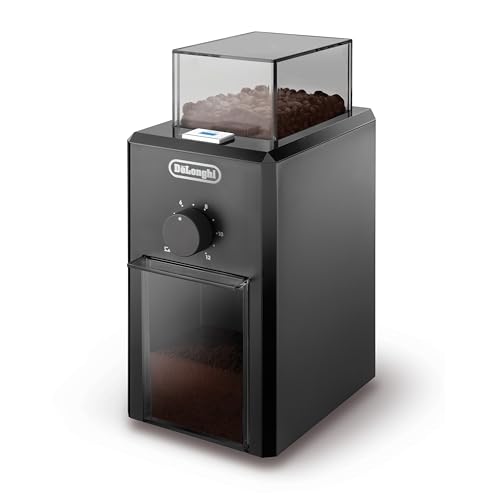
The KG79 is the entry point for someone moving away from pre-ground coffee or a blade grinder. It offers 16 grind settings, a cup selector and a removable grounds container. The compact body suits a small kitchen, and the simple controls make sense for cafetière, moka pot and basic filter brewing.
Its adjustment range is not fine or consistent enough to be the first choice for demanding unpressurised espresso baskets. The plastic grounds box can also attract static. Buy it for a clear budget improvement, not as a forever espresso grinder.
- Best for: Filter, cafetière and entry-level use.
- Main trade-off: its adjustment range is not fine or consistent enough to be the first choice for demanding unpressurised espresso baskets.
2. Baratza Encore — Best for Filter Coffee

The standard Encore is a proven filter-first design with 40 stepped settings and conical burrs. It is easy to understand, parts support is a major attraction, and the range covers pour-over, AeroPress and cafetière well. The front pulse button is handy for topping up a dose.
It can grind fine, but its wider steps make precise espresso dialling awkward. If an espresso machine is part of the plan, pay for the ESP version rather than trying to force the standard Encore into a job it was not designed to do.
- Best for: Pour-over, AeroPress and cafetière.
- Main trade-off: it can grind fine, but its wider steps make precise espresso dialling awkward.
3. Baratza Encore ESP — Best Overall

The Encore ESP keeps the approachable Baratza format but divides its adjustment range so the finer settings provide closer control for espresso. The included dosing cup and filter-coffee range make it the most convincing one-grinder solution here for households that switch brew methods.
It is still a stepped grinder, and changing repeatedly between espresso and filter means recording settings and purging a small amount. A dedicated specialist grinder can beat it at either extreme, but few buyers need two machines on the worktop.
- Best for: Espresso and filter.
- Main trade-off: it is still a stepped grinder, and changing repeatedly between espresso and filter means recording settings and purging a small amount.
4. Sage Smart Grinder Pro — Best for Timed Dosing

The Sage is built around a hopper workflow. It offers 60 settings, an LCD interface and programmable timed doses, with cradles intended to grind towards a portafilter. That makes repeated weekday espresso faster than weighing and single-dosing every portion.
Timed dosing is convenient rather than inherently exact: different beans and hopper levels can change output. The larger body and electronics also add complexity. It suits someone who values a repeatable routine more than minimal retention.
- Best for: Espresso-focused hopper workflow.
- Main trade-off: timed dosing is convenient rather than inherently exact: different beans and hopper levels can change output.
5. Fellow Ode Gen 2 — Best Premium Filter Grinder

The Ode Gen 2 uses large 64mm flat burrs and 31 settings in a compact single-dose grinder. Its anti-static features, magnetically aligned catch cup and automatic stop address the mess and fuss that often accompany premium filter grinding.
It is deliberately a filter grinder rather than an espresso solution. That focus is a strength for pour-over and batch brew, but a poor value if an espresso machine is the main appliance. Buy it for filter clarity and workflow, not for maximum versatility.
- Best for: Pour-over, batch brew and cafetière.
- Main trade-off: it is deliberately a filter grinder rather than an espresso solution.
6. Wilfa Uniform — Best Quiet Flat-Burr All-Rounder

The Uniform combines 58mm flat burrs, 41 settings and automatic stop in a restrained metal-bodied design. It is particularly appealing for filter drinkers who want a slower, quieter-feeling workflow and broad adjustment without a screen full of dosing options.
The exact listing is currently scarce, and its adjustment claims extend finer than the use case where it is strongest. Treat it as a premium filter-led grinder; espresso buyers wanting easy micro-adjustment should prefer the Encore ESP or Sage.
- Best for: Filter and broad home brewing.
- Main trade-off: the exact listing is currently scarce, and its adjustment claims extend finer than the use case where it is strongest.
Flat vs Conical Burrs
Burr shape influences grind distribution and workflow, but it does not decide quality on its own. Alignment, burr geometry, motor speed and adjustment design matter just as much.
Conical Burrs
Conical grinders such as the Baratza models and Sage are compact and commonly offer a broad brew range. They often produce a wider particle distribution, which can contribute body. They are not automatically quieter, lower-retention or better for espresso; those outcomes depend on the complete grinder.
Flat Burrs
The Fellow and Wilfa use flat burrs, which are often chosen for filter clarity and a tighter particle distribution. Large burr diameter is not a guarantee of better coffee, and flat-burr grinders can retain grounds around the chamber. Choose the grinder’s intended brew range before choosing a burr shape.
Choose by Brew Method
- Espresso: prioritise close adjustment steps and repeatability. The Encore ESP and Sage are the sensible choices here.
- Pour-over and batch filter: choose the standard Encore for value or the Ode Gen 2 for a premium single-dose workflow.
- AeroPress: most burr grinders work; the standard Encore offers the best balance unless you also make espresso.
- Cafetière and cold brew: look for an even coarse grind and low mess rather than an enormous setting count.
- Mixed espresso and filter: the Encore ESP is the clearest one-grinder compromise.
A separate hand grinder can make sense for occasional espresso or travel, but this guide focuses on electric grinders. Our hand coffee grinder guide covers that route in detail.
Features That Actually Matter
Adjustment Resolution
Setting count is useful only when the steps cover the range you need. Espresso benefits from small changes because a single click can alter shot time. Filter brewing tolerates wider steps, making clear repeatability more valuable than headline numbers.
Hopper vs Single Dose
A hopper is fast when one bag stays loaded; single dosing is better when beans change often. Weighing each dose also keeps stale beans out of the hopper. The Sage favours hopper convenience, while the Fellow is designed around single doses.
Retention, Static and Mess
Grounds left inside the grinder make switching beans and settings less precise. Static scatters chaff around the counter, especially in dry winter air. Anti-static design helps, but no home grinder is perfectly clean. A small brush and sensible catch-cup workflow matter more than marketing claims.
Cleaning and Dialling In
- Change one variable: hold dose and recipe steady while adjusting grind.
- Move in small steps: large changes make it harder to understand what improved.
- Purge sparingly: after a major adjustment, run only enough coffee to clear retained grounds.
- Brush the chamber: unplug first and follow the manufacturer’s burr-removal instructions.
- Avoid water on burrs: clean removable plastic parts separately and dry them fully.
Do not copy another person’s dial number as if it were universal. Burr calibration, roast level and bean age vary. For food-appliance care, follow the manufacturer’s manual and the Food Standards Agency’s general cleaning principles: keep equipment clean, dry and free from residues that can taint food.
Final Verdict
Buy the Baratza Encore ESP if you want one grinder for espresso and filter. It is the most balanced choice here. Choose the standard Encore if espresso is not part of the plan, or the De’Longhi KG79 if budget matters more than fine control.
The Sage Smart Grinder Pro wins for convenient timed espresso dosing. The Fellow Ode Gen 2 is the premium filter choice, while the Wilfa Uniform suits buyers who prefer a restrained flat-burr workflow and can find the exact model in stock.
Frequently Asked Questions
Is a burr grinder worth it?
Yes. A burr grinder gives more repeatable particle size than a blade grinder, making extraction easier to control.
Which grinder is best for espresso and filter?
The Baratza Encore ESP is the best one-grinder compromise here because its adjustment range gives extra control at the espresso end.
Are flat burrs better than conical burrs?
Not automatically. Burr geometry, alignment and the grinder’s complete design matter more than shape alone.
How often should a coffee grinder be cleaned?
Brush accessible grounds regularly and deep-clean according to the manual when oils and retained coffee build up. Frequency depends on use and roast level.
Can the Fellow Ode Gen 2 grind espresso?
It is designed primarily for filter brewing. Espresso buyers should choose a grinder with finer adjustment intended for that job.
Should coffee beans stay in the hopper?
Only if they will be used promptly. For changing beans or preserving freshness, weigh single doses and keep the bag sealed away from heat and light.