You’ve just spent £60 on a decent hand grinder, loaded it with freshly roasted beans, and cranked away for two minutes — only to tip out a pile of grounds that looks like a mix of boulders and dust. Your pour over tastes sour and bitter at the same time, which shouldn’t even be possible. The grinder isn’t broken. Your technique is.
Getting a hand grinder consistent grind is less about the equipment and more about how you use it. The good news: a few small adjustments to your routine can transform those uneven grounds into something that actually extracts properly. The bad news: nobody tells you this when you buy the thing.
Why Consistency Matters More Than Grind Size
Most coffee advice obsesses over finding the “right” grind size — coarse for French press, fine for espresso, medium for filter. That matters, but it’s secondary to consistency. If your grounds are a mix of fine powder and chunky fragments, you’re brewing two different coffees at once. The fines over-extract (bitter, harsh) while the coarse bits under-extract (sour, thin). The result sits somewhere in the middle and satisfies nobody.
A hand grinder with consistent output at a slightly “wrong” size will produce a better cup than one set perfectly but throwing out a wide range of particle sizes. Once you nail consistency, dialling in the actual size becomes simple — you’re adjusting one variable instead of fighting chaos.
If you want a deeper understanding of how different particle sizes affect your cup, our guide to coffee grind sizes from coarse to fine breaks the whole thing down.
Choosing the Right Beans (Yes, This Affects Your Grind)
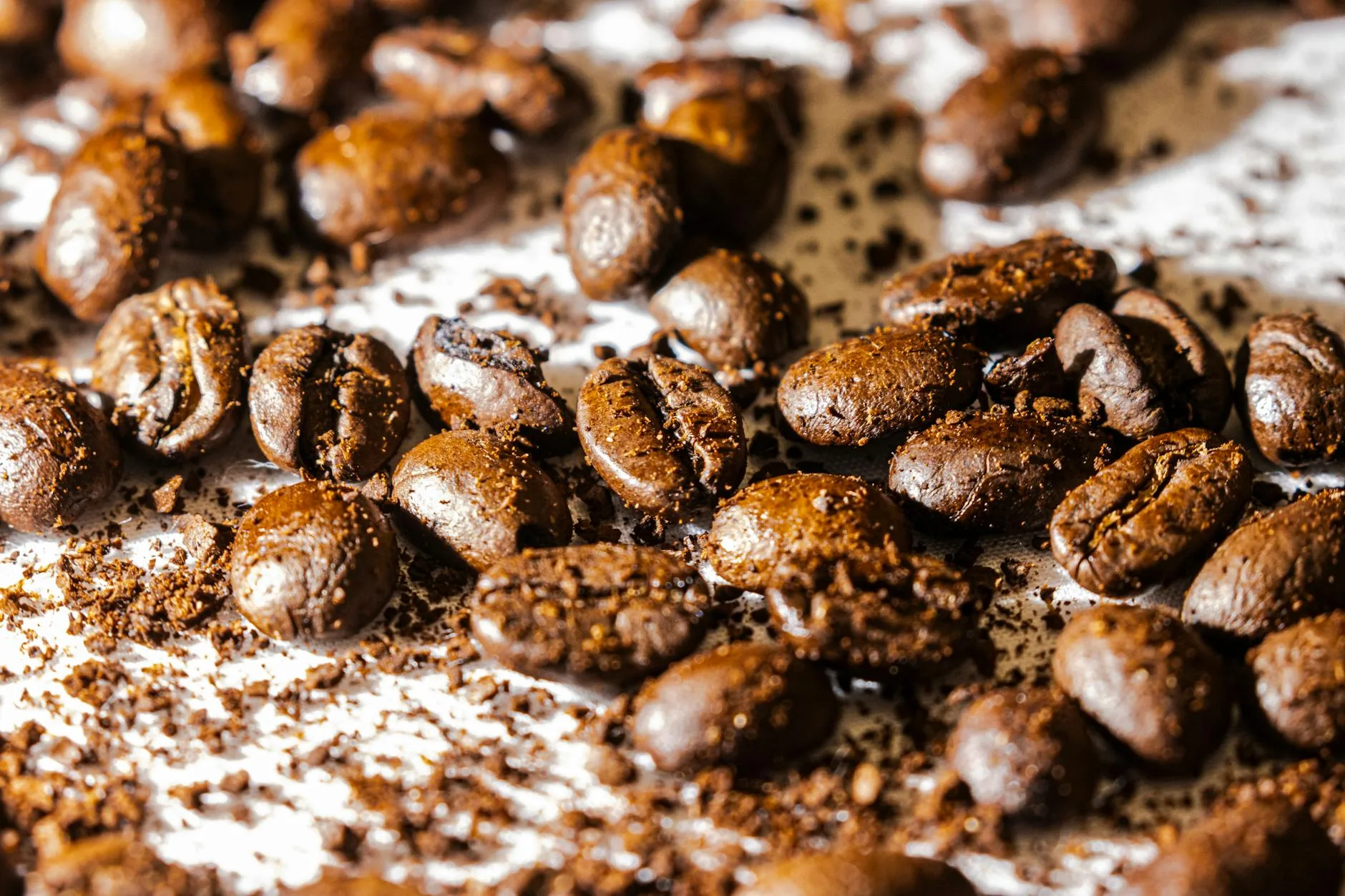
Before blaming your technique, check what you’re putting in the hopper. Bean choice has a massive impact on grind consistency, and it’s the factor most people overlook completely.
Roast level matters. Lighter roasts are denser and harder — they require more force and tend to shatter unpredictably, creating more fines. Dark roasts are brittle and softer, grinding more evenly with less effort but sometimes crumbling into dust if you’re too aggressive. Medium roasts are the sweet spot for hand grinding. They’re firm enough to crack cleanly without being so hard you’re fighting the grinder.
Our breakdown of coffee roast levels covers this in more detail if you’re choosing beans specifically for hand grinding.
Freshness matters too. Beans more than three weeks past roast start losing structural integrity. They become brittle and crumbly, which sounds like it should make grinding easier — but it actually produces more fines and a less uniform particle distribution. Buy in smaller quantities. A 250g bag from a UK roaster (Hasbean, Square Mile, Origin) runs about £8-12 and should last a week or two for a daily cup.
Avoid oily beans in hand grinders. Very dark, oily beans gum up burrs faster, which creates drag, slows the grind, and encourages the kind of stop-start motion that ruins consistency. If the beans look wet and shiny, they’ll need more frequent cleaning of the burr set.
The Grip: Your Foundation for Even Grinding
How you hold the grinder determines everything else. Most people grip it like they’re strangling a tube of toothpaste — white-knuckle death grip, forearm locked, grinding through sheer force. This is the single biggest cause of inconsistent grinds.
Stabilising the Body
Tall, narrow grinders (Timemore C2, 1Zpresso Q2): Hold the body in your non-dominant hand with your fingers wrapped around the middle, not the top. Rest the base against your hip, your thigh, or on a folded tea towel on the worktop. The grinder shouldn’t wobble or rotate while you crank.
Shorter, wider grinders (Rhinowares, Porlex Mini): These are easier to stabilise. Cup the base in your palm with the body resting against the heel of your hand. Some people trap them between their knees while sitting — looks daft, works brilliantly.
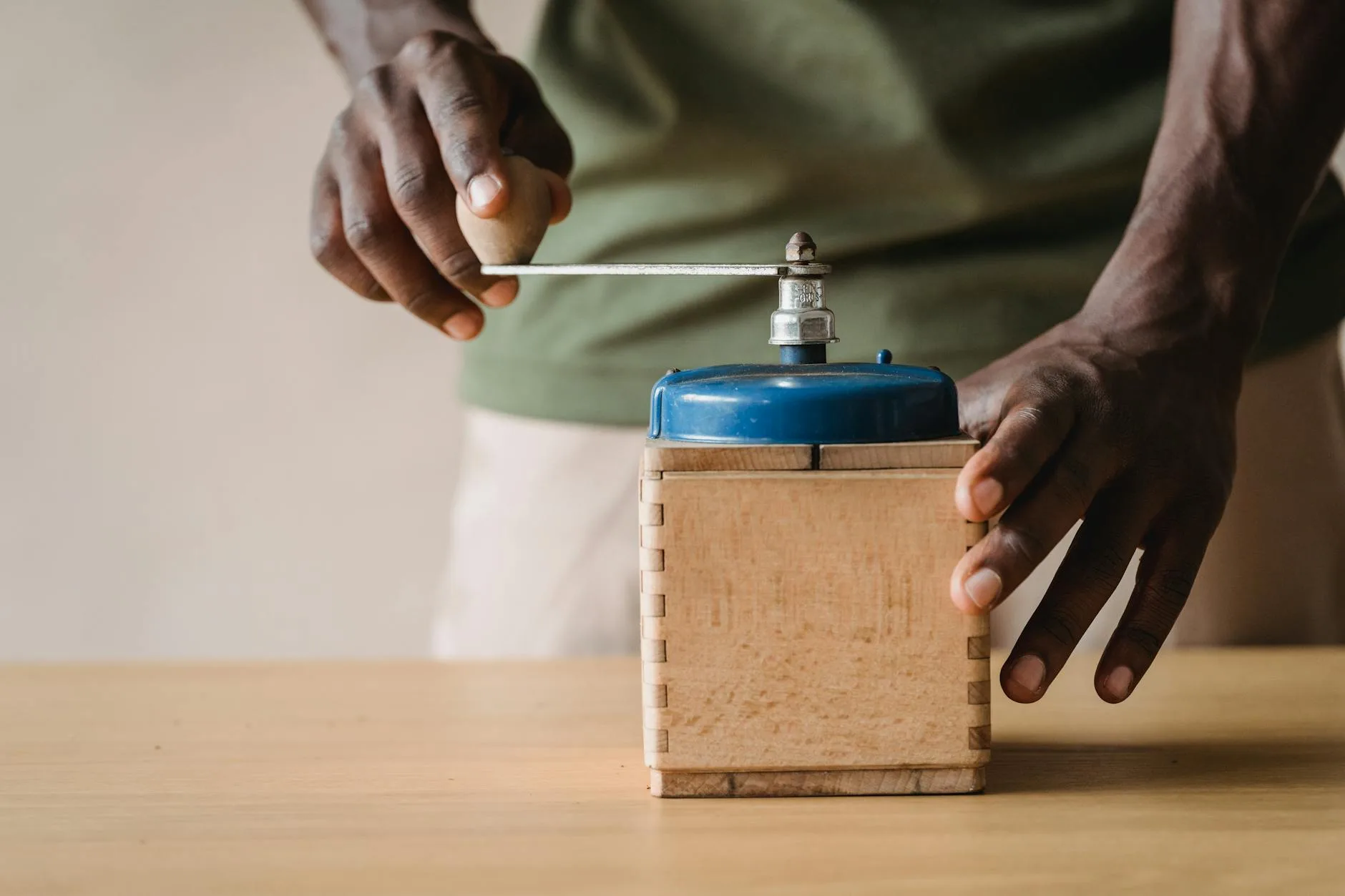
The non-negotiable rule: The body stays still. All movement comes from the cranking arm. If you’re using both hands to grip and crank, the grinder’s moving around and the burrs aren’t aligned consistently. That means uneven particle sizes, full stop.
The Cranking Motion
Here’s where most guides get vague and say “turn smoothly.” Right. Let’s be specific.
- Maintain a constant speed. About 1-1.5 rotations per second for most grind sizes. Not a sprint, not a crawl. Think of it like stirring risotto — steady, rhythmic, no sudden bursts.
- Keep constant downward pressure on the handle. The axle connecting your handle to the inner burr needs to stay centred. If you’re just spinning the handle loosely, it wobbles — and wobble means the gap between burrs fluctuates with every rotation.
- Use your wrist, not your shoulder. The motion should come from your wrist rotating in a smooth circle. When people grind from the shoulder or elbow, they create an elliptical motion that applies uneven pressure throughout each rotation.
- Don’t change direction. Always grind in one direction. Reversing mid-grind jams beans between the burrs and creates a burst of fines when you start forward again.
A good test: close your eyes while grinding. If you can feel a rhythm — even, predictable resistance — you’re doing it right. If it feels jerky, with sudden hard spots and easy patches, slow down and focus on smoothness.
Dose Control: The Overlooked Variable
Overfilling a hand grinder is probably the second most common mistake after poor grip. The hopper on most hand grinders holds 20-30g of beans, but just because they fit doesn’t mean they should all go in at once.
The sweet spot is 15-18g for most hand grinders. This gives the beans room to feed evenly into the burrs rather than jamming and creating pressure spikes. When you overload, beans stack up above the burrs and fall in clumps — each clump creates a momentary spike in resistance, you unconsciously speed up or slow down to compensate, and consistency suffers.
If you need more than 18g (say, 30g for a French press), grind in two batches. It takes an extra minute. Your coffee will taste noticeably better. That’s a worthwhile trade.
Weigh your dose. A basic kitchen scale from Amazon UK — about £8-10 for something perfectly adequate — removes the guesswork. Consistent input leads to consistent output. Eyeballing “roughly a scoop” introduces a variable you don’t need.
Grind Setting Calibration: Finding Your Zero Point
Every hand grinder has a zero point — the setting where the burrs touch and can’t rotate. Finding this is essential for repeatable results, and you should re-find it every time you adjust the grind size.
How to Calibrate
- Remove all beans from the hopper and the grinding chamber.
- Tighten the adjustment dial (usually the inner nut under the hopper or the dial on the base) while slowly turning the handle.
- Stop when you feel resistance and hear a light scraping. That’s zero — burrs touching.
- Count clicks outward from zero to your desired setting. Write it down. For a Timemore C2, that might be 14 clicks for pour over. For a 1Zpresso JX, it might be 24.
Why this matters for consistency: Burrs shift over time with use, temperature changes, and disassembly for cleaning. If you’re just guessing “about where I had it last time,” you’re introducing grind size variation between sessions — even if your technique within each session is perfect.
Keep a note on your phone. Something like: “Timemore C2 — pour over 14 clicks, AeroPress 10 clicks, French press 20 clicks.” Takes five seconds, saves you from bad coffee.
Speed and Rhythm: The Grinding Sweet Spot
Grinding speed affects consistency more than most people realise. Too fast and you’re smashing beans through the burrs without letting them crack cleanly. Too slow and you get more fines from the extended crushing action.
The ideal range is 50-70 RPM — roughly one full rotation per second. At this speed, beans feed into the burrs individually or in small groups, crack predictably, and fall through as uniform particles.
Fast grinding (100+ RPM) generates heat through friction, which can affect flavour on very light roasts and definitely makes oily beans gum things up faster. It also causes the handle to bounce slightly on each rotation, creating micro-variations in burr alignment. You might save 30 seconds. Your coffee won’t thank you.
Slow grinding (under 30 RPM) seems like it should be more careful and precise. It isn’t. At very low speeds, you lose momentum, beans stall against the burrs, and you end up applying inconsistent pressure to push through the stall points. Think of it like cycling uphill in too high a gear — the inconsistent pedal pressure is the problem.
If you’re brewing pour over, French press, or AeroPress, the grind time for 15g of beans should be roughly 45-90 seconds depending on grind size and your specific grinder. If you’re finishing in 20 seconds, you’re going too fast. If it’s taking three minutes, something’s wrong — probably overloaded or set too fine.
Cleaning and Maintenance: Protecting Your Consistency
A dirty grinder is an inconsistent grinder. Old grounds trapped between burrs create dead spots where new beans can’t pass through evenly. Oils build up and create friction. None of this helps.
Weekly Routine (Takes 5 Minutes)
- Remove the inner burr assembly. On most grinders (Timemore, 1Zpresso, Commandante), this means unscrewing the adjustment mechanism and sliding the inner burr out. Your manual shows how — if you’ve lost it, the manufacturer’s website will have a PDF.
- Brush out retained grounds. Use the brush that came with the grinder or a stiff pastry brush. Get into the threads and the grinding chamber.
- Wipe the burrs. A dry cloth or kitchen paper. No water, no soap — steel burrs will rust, and even stainless ones don’t want moisture sitting in the threads.
- Reassemble and recalibrate. Find your zero point again before your next grind.
Monthly Deep Clean
- Soak non-metal parts (plastic catch cup, silicone grip ring) in warm soapy water.
- Use a toothpick or needle to clear compacted grounds from the burr teeth. On conical burrs, grounds pack into the valleys between the cutting teeth — this is where most flavour staleness comes from.
- Check for burr wear. Run your finger lightly across the cutting edges (carefully). If they feel smooth or rounded rather than sharp, the burrs are worn. Budget grinders (under £40) typically need new burrs or replacement after 2-3 years of daily use. Premium grinders (Commandante, 1Zpresso) use harder steel and last much longer.
The SCA (Specialty Coffee Association) recommends regular burr cleaning as a core part of brew quality — it’s not just fussiness.
Troubleshooting Common Consistency Problems
- Lots of fines (dusty grounds): You’re grinding too fast, using beans that are too light-roasted for your burr set, or the burrs are worn. Slow down first. If that doesn’t help, try a medium roast. Still bad? Check burr condition.
- Boulders mixed with fine grounds: The burrs aren’t aligned, the grinder isn’t stabilised during use, or you’re changing speed mid-grind. Recalibrate to zero, focus on holding the body still, and maintain steady rhythm.
- Grind feels “crunchy” with sudden hard spots: Beans are stalling above the burrs. Reduce your dose by 3-5g and make sure beans aren’t bridging across the hopper opening. A gentle shake of the grinder body mid-grind can help beans feed more evenly.
- Different results on different days with the same setting: Environmental factors. Humidity swells wood components and affects bean density slightly. More likely though — your zero point has shifted. Recalibrate before each session until it becomes habit.
- Grounds stuck to the sides of the catch cup: Static electricity. More common in dry weather and with lighter roasts. A single drop of water on the beans before grinding (the “Ross Droplet Technique,” named after James Hoffmann’s viral test of it) virtually eliminates static. Just wet your fingertip, touch the beans, give them a shake, and grind.
Which Hand Grinders Actually Deliver Consistency?
Technique matters enormously, but some grinders make consistency easier to achieve than others. The difference comes down to burr quality, build tolerances, and axle stability.
Budget (under £40): The Timemore C2 (about £35 from Amazon UK) is the clear pick. Its stainless steel conical burrs and dual-bearing axle provide far better stability than anything else at this price. The Hario Skerton, once the default recommendation, has a wobbly lower burr that makes consistency difficult no matter how good your technique is.
Mid-range (£40-100): The 1Zpresso Q2 (about £65) is exceptional for its size, and the Rhinowares hand grinder (about £30-40) punches above its weight. If you’re making coffee for one person, either of these with proper technique will match or beat an electric grinder costing twice as much.
Premium (£100+): The Commandante C40 (about £220 from Bella Barista) and 1Zpresso JX-Pro (about £140) produce competition-level grind consistency. If you’re pairing with a quality espresso machine, the JX-Pro’s stepless adjustment makes dialling in espresso grinds far more precise.
Storing Your Grounds (Don’t)
Grind immediately before brewing. Every minute between grinding and brewing, you’re losing volatile aromatics and the grounds are absorbing moisture from the air — both of which change extraction behaviour.
If you completely must grind ahead (preparing for a camping trip, say), store grounds in an airtight container and use within a few hours. A proper coffee canister with a CO2 valve helps, but it’s still a compromise. Whole beans keep for weeks. Ground coffee goes stale in hours. That’s the reality, and no container fully solves it.
Pulling It All Together
A hand grinder consistent grind comes down to five habits: stabilise the body, maintain steady rhythm at about one rotation per second, don’t overfill, recalibrate your zero point regularly, and keep the burrs clean. None of these are difficult individually. Building them into a routine takes maybe a week of conscious effort before they become automatic.
The ritual is part of the appeal, . There’s something meditative about hand grinding when you’re not fighting the thing. Two minutes of focused, rhythmic cranking while the kettle boils — no screens, no noise beyond the crunch of beans. It’s the best part of a lot of people’s mornings, and it only works when the grind is right.