It’s Sunday morning. The kettle’s just boiled, you’ve spooned some pre-ground coffee into the French press your parents gave you three Christmases ago, poured the water in, waited a bit, pushed the plunger down, and poured. The result is… fine. Drinkable. But not the rich, full-bodied cup that French press enthusiasts rave about. The gap between “fine” and “excellent” comes down to a handful of variables that most people get wrong without realising — and every single one is fixable without buying anything new.
In This Article
- Why French Press Coffee Tastes Different
- What You Need
- The Grind: The Single Biggest Variable
- Water Temperature and Quality
- The Ratio: How Much Coffee to Water
- Step by Step: The Complete Method
- Timing: Why Four Minutes Matters
- The James Hoffmann Method
- Common Problems and Fixes
- Choosing the Right Beans
- Cleaning and Maintenance
- Frequently Asked Questions
Why French Press Coffee Tastes Different
French press is an immersion brewing method — the coffee grounds sit in the water for the entire brew time, rather than water passing through them once (as with pour-over or drip machines). This extended contact time, combined with the metal mesh filter that allows natural oils and fine particles through, creates a distinctly full-bodied, rich cup that paper-filter methods can’t replicate.
What Gets Through the Filter
A paper filter traps almost everything except water and dissolved flavour compounds. A French press mesh filter lets through:
- Coffee oils — these carry flavour compounds and create the characteristic body and mouthfeel. They’re also what makes French press coffee taste “thicker” than filtered coffee
- Fine sediment — tiny coffee particles that settle to the bottom of your cup. Some people love this; others find it gritty. Grind quality directly controls how much sediment you get
- Diterpenes — naturally occurring compounds (cafestol and kahweol) that paper filters remove but metal filters don’t. These are the reason some health guidance recommends limiting unfiltered coffee consumption, though the effect at normal consumption levels is modest
The Trade-Off
French press coffee has more body and flavour intensity than filtered methods, but less clarity. You taste more of the bean’s natural character — for better or worse. Great beans shine in a French press. Bad beans have nowhere to hide.
What You Need
The equipment list is mercifully short:
- French press — any size. Bodum Chambord (about £25-35) is the default recommendation for good reason. Glass carafe, stainless steel frame, reliable mesh filter. Available everywhere from John Lewis to Argos
- Kettle — any kettle works. A temperature-controlled kettle (about £30-50) is nice but not essential — we’ll cover a workaround
- Coffee — whole bean, freshly roasted, coarsely ground. We’ll cover grind size in detail below
- Grinder — if buying whole beans (which you should). A basic burr grinder starts at about £25-30. Our best French press grinders guide covers the top UK options
- Scales — optional but recommended. Measuring by weight (grams) is more consistent than measuring by tablespoon, because coffee density varies between beans
- Timer — your phone works fine
What You Don’t Need
- A gooseneck kettle (that’s for pour-over precision)
- Expensive specialty equipment
- A barista qualification
The Grind: The Single Biggest Variable
If you change one thing about your French press routine, change the grind. It matters more than water temperature, more than timing, more than the coffee itself. A mediocre bean with a perfect grind tastes better than an excellent bean ground wrong.
What “Coarse” Actually Means
French press needs a coarse grind — but “coarse” is frustratingly vague. Here’s what to aim for:
- Visual reference: roughly the size of sea salt flakes or raw sugar crystals. If you can see individual particles clearly, you’re in the right territory. If it looks like sand or powder, it’s too fine
- Feel test: rub the grounds between your fingers. You should feel distinct gritty particles with clear edges. If it feels smooth or powdery, grind coarser
- Brew test: if your coffee tastes bitter and over-extracted with a lot of sediment in the cup, grind coarser. If it tastes sour and watery, grind finer
For a deep dive into grind sizes across all brew methods, our grind sizes guide covers everything from Turkish to cold brew. If you are exploring this area, our guide on Pour Over vs French Press vs AeroPress: Brew Method Guide covers the essentials.
Why Grind Size Matters
Water extracts flavour from coffee at a rate determined by the surface area exposed. Fine grounds have enormous surface area — water extracts quickly, pulling bitter compounds if left too long. Coarse grounds have less surface area — water extracts more slowly, giving you control over the extraction during the 4-minute brew time.
Too fine, and you get:
- Over-extraction — bitter, harsh, astringent taste
- Excessive sediment — muddy cup, gritty mouthfeel
- Hard plunging — the mesh filter clogs with fine particles, making the plunger difficult to push down
Too coarse, and you get:
- Under-extraction — sour, thin, weak taste
- Watery body — none of the richness French press is known for
- Wasted coffee — you’re not extracting the flavour you paid for
Blade Grinders vs Burr Grinders
A blade grinder (the cheap whirring kind) chops beans randomly, producing a mix of fine dust and coarse chunks. This inconsistency means some particles over-extract while others under-extract in the same brew. The result is simultaneously bitter and sour — the worst of both worlds.
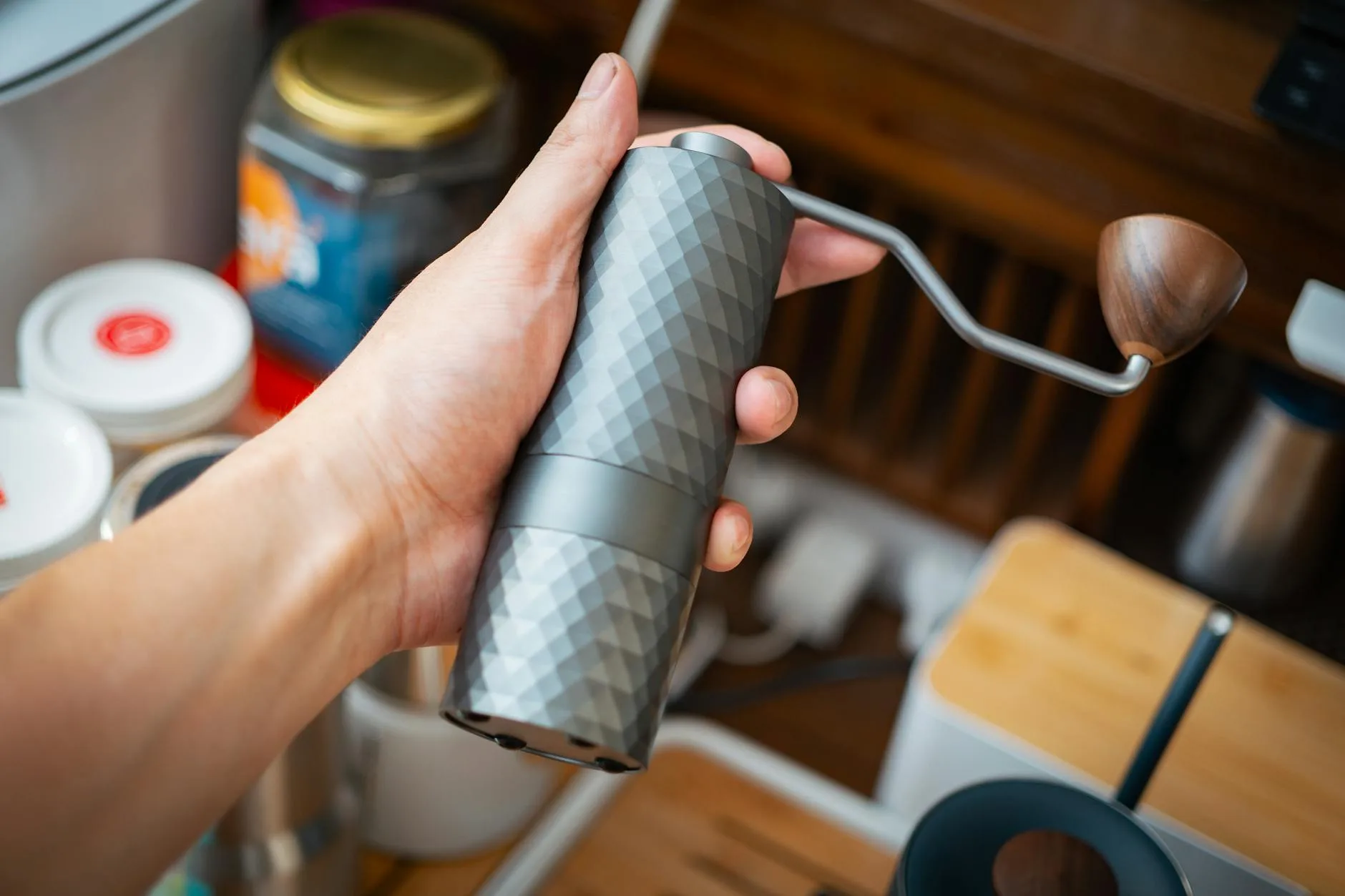
A burr grinder crushes beans between two surfaces set at a fixed distance apart, producing uniform particle sizes. Even a basic burr grinder (about £25-30 for a manual, £40-60 for electric) transforms French press coffee. After years of using a blade grinder and wondering why the coffee always tasted harsh, switching to a £30 Timemore hand grinder was a genuine revelation — same beans, same method, completely different cup.
Water Temperature and Quality
Temperature
The target is 92-96°C. Boiling water (100°C) scorches the grounds and produces bitter flavours. Water below 90°C under-extracts, resulting in a sour, flat cup.
The practical approach: boil your kettle, then wait 30-60 seconds before pouring. That brings the temperature into the ideal range without needing a thermometer. If you have a variable temperature kettle, set it to 94°C and forget about it.
Water Quality
Coffee is 98-99% water. If your tap water tastes bad, your coffee will taste bad. Most UK tap water is perfectly fine for coffee. Hard water areas (London, the south-east, East Anglia) may notice a slight improvement using filtered water — a basic Brita jug is enough. The Specialty Coffee Association’s water standard recommends water with 75-250 ppm total dissolved solids, which most UK tap water falls within.
Don’t use distilled or very soft water — coffee needs some mineral content for proper extraction. Pure water actually extracts too aggressively and produces harsh flavours.
The Ratio: How Much Coffee to Water
The Standard
The widely accepted ratio is 1:15 — one gram of coffee for every 15 grams (millilitres) of water. For a standard 8-cup (1 litre) French press: You might also find our Turkish Coffee: How to Make It at Home guide useful here.
- 60-70g of coffee to 1 litre of water
For a 3-cup (350ml) press:
- 23-25g of coffee to 350ml of water
Adjusting to Taste
- Stronger: use 1:13 or 1:14 (more coffee per unit of water)
- Lighter: use 1:16 or 1:17 (less coffee per unit of water)
- Start at 1:15 and adjust in small increments. A single gram of coffee difference is noticeable
Without Scales
If you don’t have scales (and most people don’t, at least initially):
- One heaped tablespoon of coarse ground coffee per cup is a reasonable approximation
- A “cup” in French press terms is about 120ml, not a full mug. A 4-cup French press makes about two actual mugs of coffee
- This method is less precise, but it works. Scales just remove the guesswork
Step by Step: The Complete Method
This is the standard French press technique that produces reliably good coffee:
- Boil water and let it cool for 30-60 seconds — target 92-96°C
- Grind your coffee coarsely — sea salt texture, grind just before brewing for maximum freshness
- Add coffee to the press — 60-70g per litre, or one heaped tablespoon per cup
- Pour a small amount of water — just enough to wet all the grounds (about twice the weight of the coffee). This is the “bloom” — fresh coffee releases CO2 when it hits hot water, and letting it bubble for 30 seconds allows for more even extraction
- Pour the remaining water — fill to the top of the metal band, not to the very rim. Pour steadily, ensuring all grounds are saturated
- Place the lid on with the plunger up — this retains heat during brewing. Don’t push the plunger down yet
- Wait four minutes — set a timer. Don’t stir, don’t touch it, don’t peek
- Press the plunger down slowly and steadily — if it’s very hard to push, your grind is too fine. It should offer gentle resistance
- Pour immediately — don’t leave brewed coffee sitting on the grounds. If you’re not drinking it all right away, pour the rest into a separate vessel
- Serve and enjoy — expect some sediment at the bottom of the cup. This is normal
Timing: Why Four Minutes Matters
The Science
Four minutes is the sweet spot for coarse-ground coffee in an immersion brew. During this time:
- 0-1 minutes: acids and fruity compounds extract first (these are the bright, sharp notes)
- 1-3 minutes: sugars, caramel, and chocolate compounds extract (the sweet, rounded middle notes)
- 3-4 minutes: heavier compounds extract, adding body and depth without crossing into bitterness
- Beyond 4 minutes: bitter, astringent, and woody compounds start to dominate
What Happens If You Leave It Longer
Every minute past four adds bitterness without adding anything pleasant. At six minutes, the coffee is noticeably more bitter. At ten minutes (the “I forgot about it” scenario), it’s genuinely unpleasant. This is why pouring immediately matters — if coffee sits on the grounds, extraction continues even with the plunger down.
Can You Adjust the Time?
Yes, but adjust grind size first:
- If the coffee is too weak at four minutes, grind slightly finer rather than brewing longer
- If it’s too strong or bitter, grind slightly coarser rather than brewing shorter
- Changing brew time is a blunter instrument than changing grind size
The James Hoffmann Method
James Hoffmann — World Barista Champion, YouTube coffee educator, and author of The World Atlas of Coffee — popularised a French press technique that produces a cleaner cup with less sediment. It’s worth trying if you find standard French press too gritty.
The Technique
- Add coffee and water as normal (Hoffmann recommends a medium-coarse grind, slightly finer than traditional)
- Don’t put the lid on. Let it brew open for four minutes
- After four minutes, use a spoon to break the “crust” of grounds floating on the surface. Stir gently, then scoop off the foam and floating grounds with two spoons
- Wait another 5-8 minutes (yes, really). The remaining fine particles sink to the bottom
- Place the plunger on top but don’t press it down. The plunger just acts as a strainer as you pour
- Pour gently without plunging — the weight of the mesh filter resting on the surface is enough to keep grounds out
Does It Work?
The Hoffmann method produces a noticeably cleaner cup — less sediment, more clarity in the flavour, closer to a filtered coffee texture while keeping the body that French press is known for. The extended wait time is the downside — 9-12 minutes total vs 4 minutes for the standard method. On weekday mornings when time matters, the standard method wins. On lazy Sunday mornings when you can wait, the Hoffmann method is worth the patience.
Common Problems and Fixes
Bitter Coffee
The most common complaint. Causes:
- Grind too fine — the number one reason. Grind coarser
- Water too hot — let it cool longer after boiling
- Brewed too long — stick to four minutes and pour immediately
- Stale or over-roasted beans — dark roasts pushed to the edge of burnt will always taste bitter. Try a medium roast
Weak or Sour Coffee
- Grind too coarse — grind finer in small increments
- Not enough coffee — increase the ratio (try 1:13 or 1:14)
- Water too cool — use hotter water (aim for the 30-second rest, not 2 minutes)
- Under-brewed — ensure the full four minutes. Don’t rush it
Too Much Sediment
- Grind too fine — the mesh can only do so much. Coarser grinds produce less silt
- Blade grinder — produces dust that passes through any mesh filter. Switch to a burr grinder
- Plunging too aggressively — slow, steady pressure. Ramming the plunger down stirs up settled particles
- Try the Hoffmann method — the extended settling time lets fines drop to the bottom before pouring
The Plunger Is Really Hard to Push
Your grind is too fine. The mesh filter is clogging with powder. Grind coarser. If it’s stuck completely, don’t force it — you risk cracking the glass carafe or sending grounds erupting over the sides.
Choosing the Right Beans
Roast Level
- Medium roast is the sweet spot for French press. It’s developed enough for the rich, full body that immersion brewing excels at, without the carbon bitterness of very dark roasts
- Light roasts can taste thin and acidic in a French press — the extended contact time doesn’t suit the bright, fruity profile that light roasts are designed for. They’re better in pour-over
- Dark roasts work but can tip into bitterness easily. If you prefer dark roasts, use slightly less coffee (1:16 ratio) and slightly cooler water
Freshness
Coffee starts losing volatile flavour compounds within days of roasting. For the best French press results:
- Buy beans roasted within the last 2-4 weeks — check the roast date on the bag (best-before dates are meaningless for coffee quality)
- Grind just before brewing — ground coffee stales far faster than whole beans
- Store in an airtight container away from light and heat. A dedicated coffee canister makes a noticeable difference
Where to Buy
UK specialty roasters that deliver freshly roasted beans include Square Mile, Hasbean, Origin, Monmouth, Dark Arts, Assembly, and dozens of excellent regional roasters. Supermarket coffee can work but is typically roasted weeks or months before it reaches the shelf — the flavour difference compared to freshly roasted beans is dramatic.
Cleaning and Maintenance
After Every Use
- Remove the grounds — tap the press over a bin, then rinse. Don’t pour grounds down the sink (they clog drains). A rubber spatula helps get the last grounds out without scratching the glass
- Disassemble the plunger — unscrew the mesh filter assembly and rinse each piece under hot water
- Let everything air dry
Weekly Deep Clean
- Disassemble the plunger completely (usually three parts: the filter screen, the cross plate, and the spiral plate)
- Soak all metal parts in hot water with a drop of washing-up liquid for 10 minutes
- Scrub the mesh filter with a soft brush — an old toothbrush works perfectly
- Rinse thoroughly and reassemble
Common Cleaning Mistakes
- Not disassembling the plunger — coffee oils build up between the mesh layers and go rancid, producing stale flavours in every subsequent brew
- Using harsh detergents — anything scented can leave flavour residue. Plain washing-up liquid is fine
- Dishwasher for the glass carafe — some French press carafes are dishwasher-safe, but the thermal shock can weaken the glass over time. Hand washing is safer
Frequently Asked Questions
How long should French press coffee steep? Four minutes is the standard and the best starting point. This allows the water to extract the full range of flavour compounds from coarsely ground coffee without crossing into bitter, over-extracted territory. If four minutes produces coffee that’s too strong for your taste, grind slightly coarser rather than reducing the time.
Why is my French press coffee bitter? The most common cause is a grind that’s too fine — the increased surface area leads to over-extraction. Other causes include water that’s too hot (let the kettle cool for 30-60 seconds before pouring), brewing for longer than four minutes, or using dark-roasted beans that are already close to the bitter threshold. Adjust grind size first, as it has the biggest impact.
Can you use pre-ground coffee in a French press? You can, but most pre-ground coffee sold in supermarkets is ground for drip machines or espresso — both finer than French press needs. The result is over-extracted, bitter coffee with heavy sediment. If buying pre-ground specifically labelled “coarse” or “French press” grind, it works acceptably. Grinding your own beans fresh is a noticeable step up.
Is French press coffee bad for cholesterol? French press coffee contains diterpenes (cafestol and kahweol) that paper filters remove. Research suggests these compounds can raise LDL cholesterol levels when consumed in large quantities — typically five or more cups daily of unfiltered coffee over sustained periods. Moderate consumption (two to three cups) is unlikely to have a meaningful effect for most people. If cholesterol is a concern, consult your GP.
How much coffee do I put in a French press? Use a ratio of 1:15 — one gram of coffee for every 15ml of water. For a standard 8-cup (1 litre) French press, that’s about 60-70 grams of coffee. Without scales, use one heaped tablespoon of coarse ground coffee per cup (a French press “cup” is about 120ml, not a full mug).