The Sage Barista Express is the best espresso machine under £500 for most aspiring home baristas. It combines a capable grinder with manual dosing, extraction and milk steaming, so it teaches useful skills without requiring a separate grinder. Choose the Ninja Luxe Premier if you want more guidance and automatic frothing, or the De’Longhi Dedica when budget and worktop width matter most.
Quick picks: the best espresso machines under £500
- Best overall: Sage Barista Express — integrated grinder.
- Best assisted all-in-one: Ninja Luxe Premier ES601UK — integrated grinder and scale.
- Best for cold brew: De’Longhi La Specialista Arte Evo — integrated grinder.
- Best traditional manual option: Solis Barista Gran Gusto — separate grinder needed.
- Best compact budget option: De’Longhi Dedica Style — separate grinder or pre-ground coffee.
Quick navigation
- How we chose
- Comparison at a glance
- The five best espresso machines under £500
- Which machine should you buy?
- Grinder, portafilter and pressure
- Milk workflow and maintenance
- Frequently asked questions
- The bottom line
How we chose
We compared current UK machines priced at no more than £500 by workflow, grinder arrangement, temperature management, basket format, milk system, cleaning effort and the amount of control they give the user. The shortlist deliberately includes both integrated-grinder and standalone machines. A built-in grinder reduces the number of appliances, while a separate grinder gives more upgrade flexibility.
This is a specification-led buying guide rather than a claim that every machine was laboratory-tested side by side. Availability can change, while performance claims here are limited to documented functions and realistic consequences of each design. Pump-pressure figures are not treated as a quality ranking: coffee preparation, temperature stability and grind control matter more than the largest number on the box.
Comparison at a glance
| Machine | Our verdict | Grinder | Milk system |
|---|---|---|---|
| Sage Barista Express | Best overall | Integrated grinder | Manual steam wand |
| Ninja Luxe Premier ES601UK | Best assisted all-in-one | Integrated grinder and scale | Automatic frothing |
| De’Longhi La Specialista Arte Evo | Best for cold brew | Integrated grinder | Manual steam wand |
| Solis Barista Gran Gusto | Best traditional manual option | Separate grinder needed | Manual steam wand |
| De’Longhi Dedica Style | Best compact budget option | Separate grinder or pre-ground coffee | Manual frother |
Check the selected colour and bundle before ordering. The comparison table contains no buying links so the product reviews can explain each compromise first.
The five best espresso machines under £500
1. Sage Barista Express: best overall

The Barista Express is the strongest all-round choice for someone who wants to learn espresso without assembling a grinder-and-machine pair. Its conical burr grinder has 16 settings and doses directly into the portafilter. Low-pressure pre-infusion precedes extraction, while the steam wand leaves milk texture in your hands. Sage describes it as bean to cup, but it is not a one-touch automatic machine: you still distribute, tamp, lock in the portafilter, start the shot and steam milk. That manual involvement is precisely why it suits an aspiring home barista.
- Buy it if: you want one footprint, fresh grinding and meaningful manual control.
- Skip it if: you want automatic drinks or expect to upgrade the grinder soon.
- Main compromise: the integrated grinder is convenient but less flexible than a separate specialist grinder.
2. Ninja Luxe Premier ES601UK: best assisted all-in-one
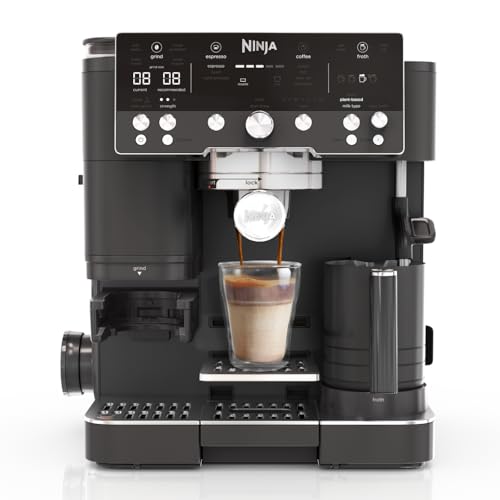
The black ES601UK variation sits just inside budget at the latest check. It combines 25 grinder settings, a built-in scale, assisted tamping and recommendations that help set grind size and dose. The frothing system steams and whisks dairy or plant milk with preset textures, making it the easiest route here to repeatable milk drinks. It also prepares filter-style coffee and cold brew. The trade-off is size and complexity: at about 33.6cm wide and 17kg, this is not a discreet machine, and experienced users may prefer fewer automated decisions.
- Buy it if: guided setup and low-effort milk texturing matter more than traditional technique.
- Skip it if: you have a narrow counter or want direct control over every variable.
- Main compromise: it uses the whole £500 budget and occupies considerably more space than the Dedica.
3. De’Longhi La Specialista Arte Evo: best for cold brew

The Arte Evo combines an eight-setting grinder, three brewing-temperature profiles, single-wall baskets and a compact barista kit. Its distinguishing feature is a cold-extraction programme designed to make a cold-brew-style drink in under five minutes. That is useful versatility, but it should not be confused with traditional immersion cold brew made over many hours. Espresso preparation remains hands-on: dose, tamp, lock in and steam milk yourself. Eight grind settings offer less adjustment than the Ninja, so bean changes may still require dose and recipe compromises.
- Buy it if: you want integrated grinding, manual milk work and a fast cold-coffee option.
- Skip it if: maximum grinder adjustment or a separate upgrade path matters more.
- Main compromise: the grinder is convenient but relatively coarsely stepped.
4. Solis Barista Gran Gusto: best traditional manual option

The Solis is the only 58mm standalone machine in this shortlist. It uses a conventional filter holder, programmable cup volume, hot-water outlet, steam function and PID-assisted temperature control. That makes it appealing if you want a more traditional workflow and the broad accessory choice associated with 58mm baskets. It does not include a grinder, so the real system cost can approach or exceed £500 once a suitable espresso grinder is added. Treat the advertised 15-bar pump as capacity, not a target brewing pressure or proof of better espresso.
- Buy it if: you already own a capable grinder and want a 58mm manual platform.
- Skip it if: £500 must cover the complete setup.
- Main compromise: the machine itself excludes the most important companion appliance.
5. De’Longhi Dedica Style: best compact budget option
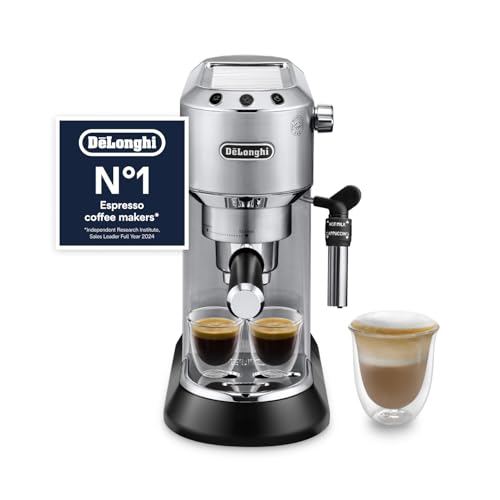
The Dedica remains the sensible budget recommendation. Its 15cm-wide body fits worktops that cannot accommodate the three integrated-grinder machines, while the thermoblock, pressurised baskets and adjustable milk frother make espresso-based drinks approachable. It accepts pre-ground coffee, or you can pair it with a grinder later. The pressurised setup is forgiving but gives less direct feedback than the Solis, and the small chassis provides less cup and steaming room. It is a better first step than an expensive all-in-one when you are unsure how deep the hobby will go.
- Buy it if: you want affordable manual espresso in the smallest practical footprint.
- Skip it if: you want a 58mm basket, integrated grinder or stronger steaming workflow.
- Main compromise: compactness and ease take priority over advanced control.
Which machine should you buy?
Buy the Sage Barista Express if you want the most balanced route into home espresso. It keeps the initial station simple while leaving dose, tamping, extraction and milk texture under your control. The Ninja is better when you value coaching and automatic frothing; the Arte Evo suits households that will use its quick cold-coffee mode.
Choose the Solis only when a suitable grinder is already available or separately budgeted. Pick the Dedica when space and price lead the decision. The biggest buying mistake is spending the entire allowance on a grinder-free machine, then pairing it with pre-ground coffee or an unsuitable blade grinder and blaming the espresso machine.
Grinder, portafilter and pressure
Integrated or separate grinder?
Integrated grinders reduce clutter and make the purchase easier to understand. Separate grinders usually offer a better upgrade path and let you replace one component without retiring the whole station. Our guide to choosing a grinder for espresso explains why small adjustment steps matter, while the entry-level espresso grinder guide sets realistic expectations.
Basket size and pressure
A 58mm portafilter provides broad accessory compatibility, but diameter alone does not guarantee better coffee. Smaller and pressurised baskets can be more forgiving for beginners. Likewise, a 15-bar pump is not evidence that the coffee should brew at 15 bar. The Specialty Coffee Association publishes broader coffee standards and technical resources; use machine-specific instructions for dose and setup rather than chasing marketing numbers.
Dialling in needs practice
Fresh coffee changes with age, humidity and roast. Expect to adjust grind, dose or yield rather than finding one permanent setting. The practical process is covered in our beginner’s guide to dialling in espresso.
Milk workflow and maintenance
Manual versus automatic frothing
The Ninja reduces technique with preset textures. The other four machines use manual wands or frothers, which take practice but allow more direct control. Purge and wipe a wand immediately after use. If you mainly make milk drinks but do not want to learn steaming, compare the alternatives in our milk-frother guide.
Daily effort
Knock out the puck, rinse the basket, empty the drip tray and wipe exposed milk before it dries. Grinder chutes also retain coffee. The Ninja and integrated-grinder machines reduce separate appliances but do not remove cleaning. Our espresso workflow guide shows what the routine involves.
Descaling and water
Follow the manufacturer’s water-hardness and descaling instructions rather than using one universal timetable. Products and intervals differ by machine. De’Longhi maintains specification and care information for the Dedica range, and our coffee-machine maintenance guide covers the everyday basics.
Frequently asked questions
Which is the best espresso machine under £500?
The Sage Barista Express is the best-balanced choice for most home baristas because it combines fresh grinding with a genuinely manual workflow.
Does a £500 budget need to include a grinder?
Yes, unless the machine has an integrated grinder or you already own one. A grinder-free machine can push the complete setup beyond £500.
Is the Ninja Luxe Premier a bean-to-cup machine?
It integrates grinding, weighing and assisted preparation, but it is not a one-touch automatic machine. You still use a portafilter and take part in the workflow.
Is 15-bar pressure better for espresso?
No. The pump rating is not a cup-quality score, and espresso is not improved simply by applying the maximum advertised pressure.
Can the De’Longhi Dedica make good espresso?
It can make enjoyable espresso-style drinks with suitable coffee and preparation, but its pressurised baskets and compact format offer less control than a traditional 58mm setup.
Which machine is easiest for milk drinks?
The Ninja Luxe Premier is easiest because its system automatically steams and whisks milk using preset textures.
The bottom line
The Sage Barista Express is the best espresso machine under £500 for most UK home baristas. Choose the Ninja Luxe Premier for more guidance and easier milk, the La Specialista Arte Evo for its fast cold-coffee mode, the Solis when you already own a suitable grinder, or the Dedica for a compact budget setup. Budget for beans, cleaning and a grinder where required—the machine is only one part of consistent espresso.