The best travel coffee maker is the one you will still use when you are tired, under-packed and nowhere near your normal kettle. For most UK travellers, that means an AeroPress Go: it is compact, hard to ruin, easy to rinse in a hotel sink, and forgiving enough to make good coffee with supermarket beans. This best travel coffee maker portable UK guide is about real brewing away from home, not building a miniature coffee bar in your hand luggage.
In This Article
- Best Travel Coffee Maker Portable UK Picks at a Glance
- What Actually Matters When Coffee Gear Leaves the Kitchen
- Best Overall: AeroPress Go
- Best Pour-Over: Hario V60 01 Plastic
- Best Portable Espresso: Wacaco Picopresso vs OutIn Nano
- Best Cheap Option: Bodum Travel Press
- What to Pack With Your Travel Brewer
- Frequently Asked Questions
Best Travel Coffee Maker Portable UK Picks at a Glance
If I were buying one portable brewer for weekends away, campsites and hotel rooms, I would buy the AeroPress Go. It is not the fanciest option, but it gives the best mix of taste, packability, clean-up and price. You can make a short strong cup, dilute it like an Americano, or use it over ice if the hotel room has a fridge. That flexibility matters more than a perfect espresso-style shot when you are using a wobbly bedside table as your brew bar.
The quick shortlist:
- Best overall: AeroPress Go, about £34.95 from Origin Coffee or £45-£50 from Amazon UK depending on stock.
- Best budget filter option: Hario V60 01 plastic dripper, about £6-£13 from Amazon UK, Coffee Hit or specialist coffee shops.
- Best for proper manual espresso: Wacaco Picopresso, usually about £110-£130 from Wacaco, Redber or Amazon UK.
- Best self-heating espresso gadget: OutIn Nano, about £130-£140 from Amazon UK or UK gadget/coffee retailers.
- Best cheap all-in-one mug: Bodum Travel Press, usually £15-£25 from Barista Shop, Cannon Coffee, Amazon UK or Bodum stockists.
Travel coffee buyers should start with the water source. If you will have a kettle, any manual brewer works. If you only have cold water and a USB-C cable, the OutIn Nano has a reason to exist. If you are flying, walking or carrying everything yourself, the V60 and AeroPress Go make far more sense than a heavy pressurised gadget.
I would not buy a battery espresso maker as a first travel brewer unless you specifically want espresso-style drinks and know you will charge it. After a few trips, the small irritations matter: where the wet grounds go, whether the brewer fits inside your bag, how many paper filters you remembered, and whether you can clean the thing without leaving coffee sludge in a hotel bathroom sink.
What Actually Matters When Coffee Gear Leaves the Kitchen
Travel brewers fail in boring ways. They are too messy, too fussy, too fragile, too dependent on a perfect grind, or too bulky once you add the grinder, scales, filters and mug. Taste matters, but the best-tasting setup at home is not always the best travel setup.
Pack Size and Weight
For train weekends and cabin bags, I want the brewer, filters and scoop to fit in a freezer bag or its own mug. The AeroPress Go is good here because the cup acts as the case. The Hario V60 01 is lighter, but it needs separate filters, a mug and some care so it does not get crushed. The Bodum Travel Press is bulkier because it is a mug and brewer in one.
Portable espresso makers are heavier. A Wacaco Picopresso is compact but dense, and it really wants a good hand grinder. The OutIn Nano is larger again because it contains a battery, heater and pump. That is fine for car travel or an office drawer. It is less appealing in a hiking pack.
Heat Source
This is the decision people skip. If you will have a kettle, stove or Jetboil, you do not need a self-heating coffee maker. A £35 AeroPress Go plus decent beans will beat most gadget brewers for ease.
If you regularly stay somewhere with no kettle, the OutIn Nano becomes more interesting because it can heat cold water. It is still not magic: heating water drains the battery, and making several drinks in a row takes patience. For one espresso-style drink at a time, it can work well. For two tired adults wanting coffee before a long drive, I would rather find hot water and use an AeroPress.
Cleaning
This is where the AeroPress Go wins. Push the puck out, rinse the plunger, done. A V60 is also clean if you can bin the paper filter and grounds. The Bodum Travel Press is messier because the wet grounds sit in the bottom of the drinking vessel.
Portable espresso makers need more care. Fine coffee gets into baskets, seals and small parts. The Picopresso is satisfying if you like the process, but it is not what I would hand to someone who just wants coffee before a 7am ferry.
Taste and Forgiveness
An AeroPress is forgiving with grind size and water temperature. V60 tastes cleaner but punishes bad pouring and stale pre-ground coffee. Picopresso can make the best drink here if you pair it with fresh beans, a capable grinder and a bit of patience. OutIn Nano is more convenient than the Picopresso, but its result depends heavily on grind, dose and whether the water is properly heated.
That is why the existing pour over vs French press vs AeroPress guide is still useful background. Travel does not change extraction; it just makes the weak points more obvious.
Best Overall: AeroPress Go
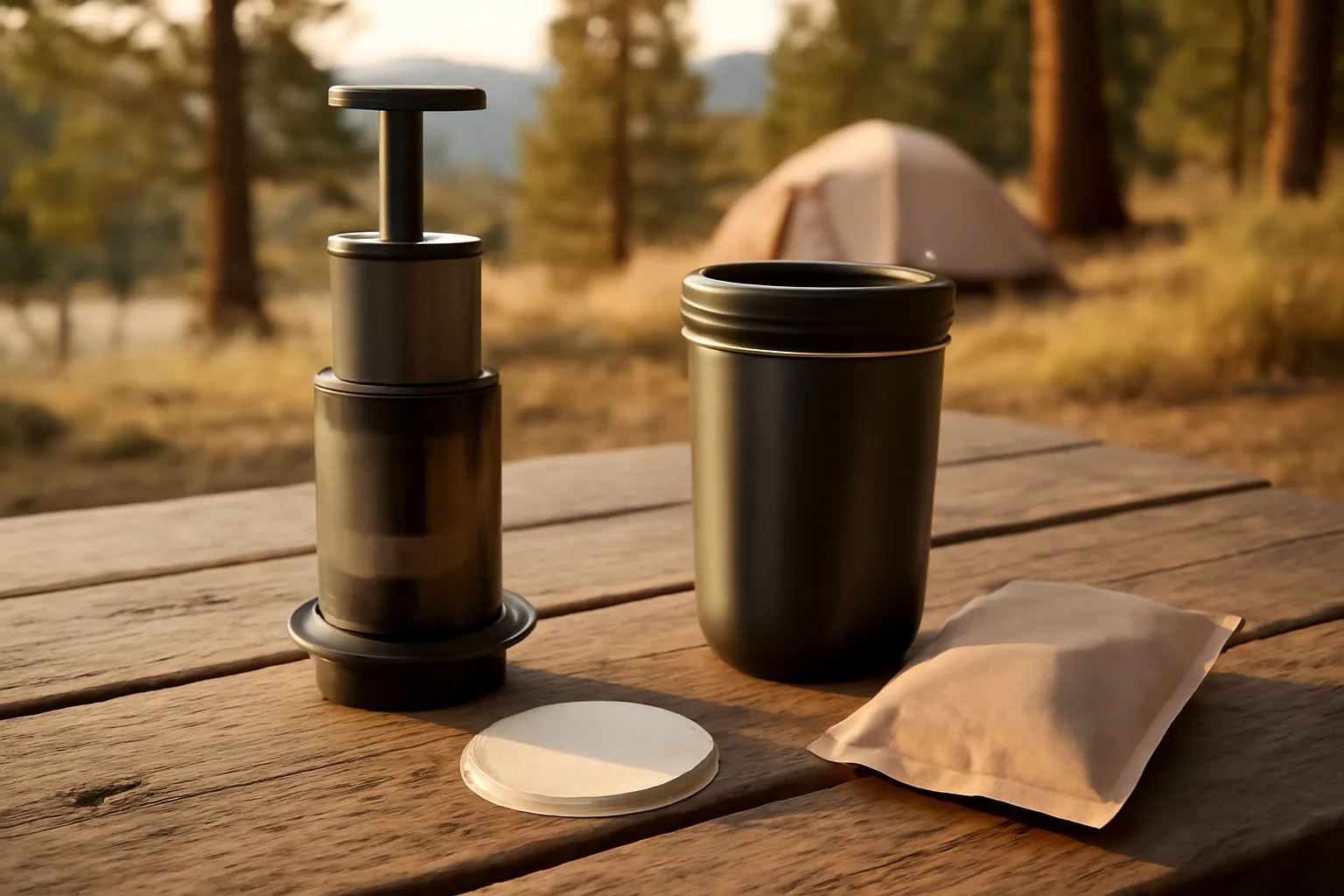
The AeroPress Go is the one I would buy for most people. It costs about £34.95 from Origin Coffee at the time of checking, with Amazon UK often sitting closer to £45-£50 depending on seller and stock. It includes the brewer, mug, lid, scoop, stirrer and a compact filter holder.
Why It Wins
It is hard to beat because it solves the main travel problems at once:
- Packability: the brewer nests into its own mug, so the kit stays together.
- Clean-up: the compressed puck is easy to eject into a bin.
- Forgiveness: it works with medium-fine, medium and even slightly coarse grinds.
- Speed: you can brew in about two minutes once the water is hot.
- Price: it is cheap enough to replace if it gets battered in a bag.
The flavour sits somewhere between filter coffee and a short strong immersion brew. It is not real espresso, despite the old marketing language people still repeat, but it makes a strong enough base for a hotel-room Americano or a small milk drink.
What I Would Pack With It
For a weekend, I would pack:
- 15-18g coffee doses: pre-weighed into small reusable pots or zip bags.
- Paper filters: at least two per day, because one always ends up wet or missing.
- Small hand grinder: optional, but a Timemore C2 around £55-£70 is a good travel-friendly upgrade.
- Collapsible kettle or campsite kettle: only if you know the accommodation will not have one.
If you already own a good grinder, read the manual vs electric coffee grinder guide before buying a travel grinder. A small manual grinder makes sense for camping and train trips. Taking an electric grinder on a weekend away is usually overkill unless you are driving.
Downsides
The AeroPress Go mug is smaller than some people expect. If you like a big morning coffee, you will brew concentrate and top it up. The supplied scoop is useful but less accurate than scales. The plastic parts also hold coffee oils if you never wash them properly.
For the money, those are fair trade-offs. The regular AeroPress is slightly nicer at home because it has more capacity, and the newer AeroPress Clear and Steel versions look better, but the Go is the right travel model.
Best Pour-Over: Hario V60 01 Plastic
The Hario V60 01 plastic dripper is the cheapest serious travel coffee maker in this list. It costs about £6-£13 in the UK, depending on colour, retailer and whether filters are bundled. Coffee Hit, Amazon UK and independent coffee shops usually stock it.
Why Choose It
The V60 is light, cheap and makes clean coffee. It is brilliant for hotel rooms, holiday cottages and campsites where you have hot water and a decent mug. It also takes up almost no space compared with a French press or electric gadget.
The plastic version is the one to buy for travel. Ceramic looks nicer at home but is heavier and breakable. Metal versions are tough but usually cost more. The plastic V60 01 is not glamorous, yet it is the brewer I would happily throw into a rucksack without thinking about it.
The Catch
You need filters, a mug and some pouring control. A hotel kettle will do the job, but a wide-spout kettle can make the pour messy. You also need a sensible grind. Too fine and it stalls; too coarse and it tastes thin.
If you are fussy about pour-over, you will miss your gooseneck kettle. The gooseneck kettle guide explains why control matters. For travel, though, I would not pack one unless coffee is the point of the trip.
Best Use Case
The V60 is best for people who already like filter coffee and do not mind a small ritual. It is poor for moving vehicles, tiny tents and half-asleep mornings. It is excellent for a quiet cottage kitchen where you have five minutes, fresh beans and a nice view.
Buy Hario 01 papers rather than guessing. A pack usually costs about £4-£6 for 100. If you are going away for a week, take more than you think; trying to improvise filter papers with kitchen roll is how holidays become character-building.
Best Portable Espresso: Wacaco Picopresso vs OutIn Nano
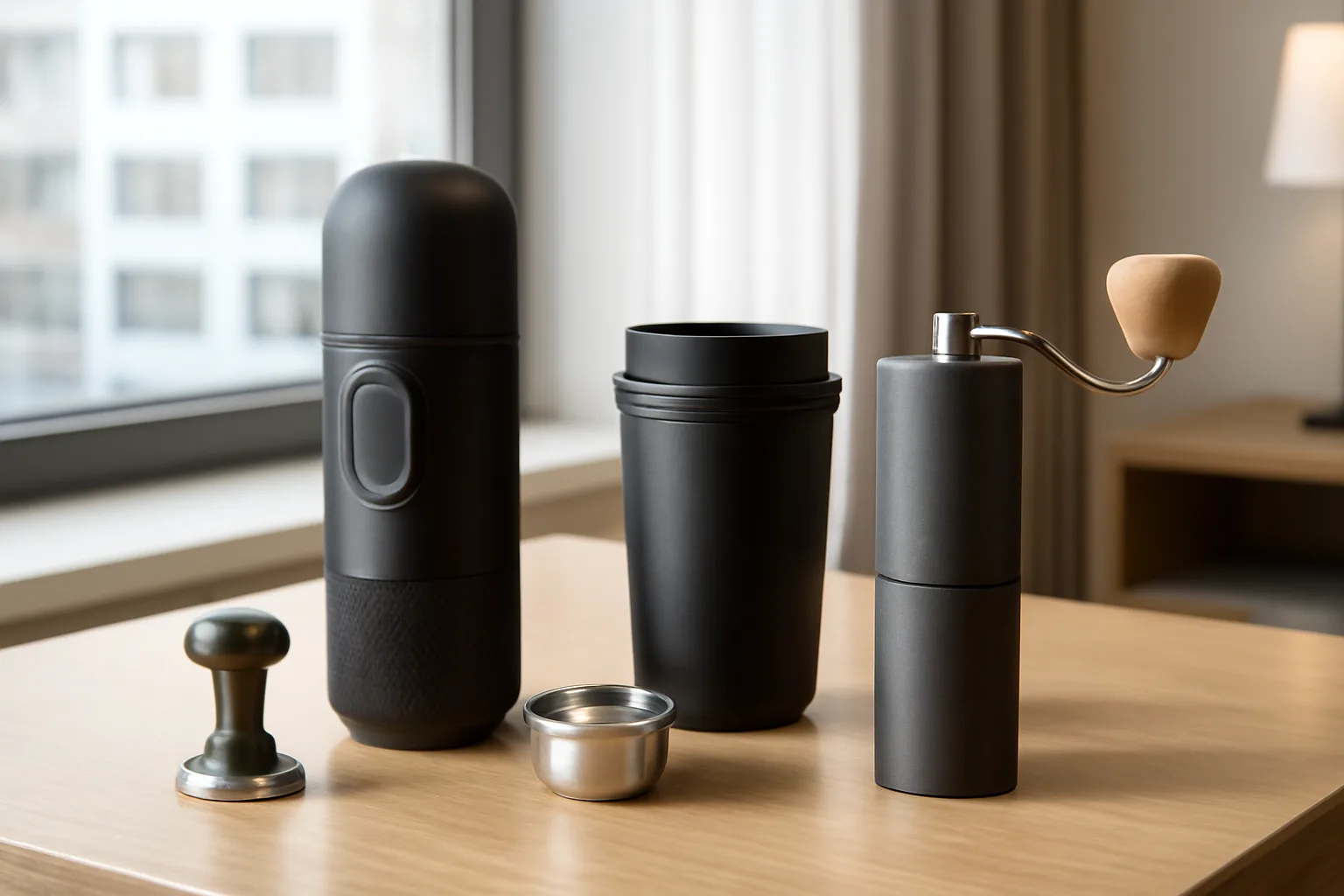
Portable espresso is where expectations need tightening. You can get an espresso-style drink away from home, but it costs more, needs a better grind, and takes more effort than AeroPress or V60. The two options I would consider are the Wacaco Picopresso and the OutIn Nano.
Wacaco Picopresso
The Wacaco Picopresso is the better pick if you care about the shot. It uses an 18g basket, needs finely ground coffee, and rewards proper puck prep. UK pricing is usually around £110-£130, with Wacaco, Redber and Amazon UK all worth checking.
It is compact, satisfying and capable, but it is not casual. You will want a good hand grinder, ideally something above the cheap ceramic-burr level. A Timemore C3 ESP, 1Zpresso Q series or similar travel-friendly grinder can add £70-£120. That makes the real Picopresso setup more like £180-£250 once you include a grinder, small scales and a case.
The upside is cup quality. If your beans and grind are right, it can make the most convincing espresso-style drink here. The downside is that it asks more of you before breakfast.
OutIn Nano
The OutIn Nano is the convenience pick. It usually costs about £130-£140 in the UK and can heat water itself, which is the whole point. It also works with ground coffee and some capsule formats, so it suits car travel, campervans and offices better than ultralight packing.
The GOV.UK hand luggage rules for electronic devices are worth checking before flying with battery-powered coffee kit, especially because airline rules and security handling can change. For simple flights, I would rather take a manual brewer and avoid the battery question.
The Nano is handy if you often have cold water but no kettle. It is less appealing if you already have hot water, because you are paying for a heater, battery and pump you may not need.
Which One Should You Buy?
Buy the Picopresso if you already own a capable grinder and enjoy espresso prep. Buy the OutIn Nano if you want a gadget that heats and pumps for one drink at a time. Do not buy either if you just want reliable morning coffee with little mess. That is AeroPress Go territory.
The grinder decision matters here. The guide to choosing a grinder for espresso vs filter is worth reading before spending £130 on a portable espresso maker and then feeding it uneven pre-ground coffee.
Best Cheap Option: Bodum Travel Press
The Bodum Travel Press is a travel mug with a built-in French-press plunger. It normally costs about £15-£25 from UK coffee shops, Amazon UK, Barista Shop, Cannon Coffee or Bodum stockists. It is not the cleanest-tasting brewer here, but it is cheap and simple.
Why It Works
You add coarse coffee, add hot water, wait, plunge, and drink from the same vessel. That is appealing on a campsite, in an office, or during a long drive stop where you do not want separate kit.
It suits people who already like cafetière coffee. The body is heavier than a plastic dripper, but you are also carrying your cup. If you only want one device, that is useful.
The Mess Problem
The wet grounds stay in the mug. If you drink slowly, the coffee can keep extracting and taste rougher near the bottom. Cleaning also means rinsing grounds from the mug, which is awkward in a small sink. This is why I prefer the AeroPress Go for most travel.
If you want French press flavour and do not mind the clean-up, it is good value. If you hate grit, buy the V60 or AeroPress instead. The existing French press coffee guide covers the grind and timing basics that still apply when the press is built into a mug.
Who Should Buy It?
Buy it for:
- Office use: one mug, no separate brewer, easy to keep in a drawer.
- Car camping: weight matters less, and rinsing outside is easier.
- Low-budget travel: it costs less than most proper coffee gadgets.
Skip it for flights, hand luggage and anyone who wants very clean filter coffee. A V60 weighs less and tastes cleaner.
What to Pack With Your Travel Brewer
The brewer is only half the setup. Bad beans, no filters or the wrong grind will make even a good portable brewer feel disappointing.
Beans or Ground Coffee
Whole beans taste better, but pre-ground coffee is easier. For a short trip, I often accept pre-ground coffee if it means taking less gear. Buy a fresh 250g bag and ask the roaster to grind for AeroPress, filter or cafetière depending on your brewer.
If you want supermarket coffee, look for whole beans with a roast date if possible. A bag of decent UK-roasted beans costs about £8-£14 for 250g. Budget beans can be fine in an AeroPress, but portable espresso is less forgiving.
The speciality coffee beans guide is useful if you want something brighter and cleaner than supermarket dark roast. For travel, I prefer medium roasts because they are easier to dial in without perfect gear.
Grinder
A grinder is the biggest quality upgrade and the biggest faff. A cheap hand grinder around £25-£35 is okay for cafetière and AeroPress. For espresso, cheap grinders are false economy. Expect to spend at least £70-£120 for something travel-sized that can grind fine enough with control.
If that sounds annoying, take pre-ground coffee. There is no shame in making the trip easier. Coffee on holiday should not feel like assembling flat-pack furniture before breakfast.
Filters, Scales and Spoon
Paper filters weigh almost nothing. Pack too many. AeroPress filters cost about £7-£8 for 350. Hario V60 01 filters are usually about £4-£6 for 100. Keep them in a small zip bag so they do not get damp.
Scales are optional for travel. A small 0.1g coffee scale costs about £15-£35 from Amazon UK, Timemore or coffee shops. I use scales at home; away from home, I am happy with a scoop if the trip is short. The coffee scales guide is there if you want repeatable recipes rather than guesswork.
Water
Hotel water can be hard, flat or chlorine-heavy. If the coffee tastes dull, water may be the reason. A small bottle of supermarket spring water can rescue a brew and costs about 60p-£1.20. I would not pack water unless camping, but I will buy it if the first cup tastes chalky.
My Practical Travel Kit
For most UK weekends, my travel kit would be:
- AeroPress Go: about £34.95-£50 depending on retailer.
- Pre-weighed coffee doses: 15-18g each, packed in small reusable pots.
- Paper filters: at least two per day.
- Small hand grinder: only if I am driving or coffee is part of the trip.
- Microfibre cloth: for drying the brewer before it goes back in the bag.
For camping with a stove, I would consider the V60 because it is so light. For a hotel room with no kettle, I would either take a small travel kettle or consider the OutIn Nano. For espresso obsessives, Picopresso plus a proper grinder is the quality route, but it is a hobby setup, not the easiest answer.
Frequently Asked Questions
What is the best travel coffee maker for most UK buyers? The AeroPress Go is the best travel coffee maker for most UK buyers because it is compact, easy to clean, forgiving with grind size and usually costs about £34.95-£50.
What is the cheapest good portable coffee maker? The Hario V60 01 plastic dripper is the cheapest serious option at about £6-£13, but you need filters, a mug and hot water. The Bodum Travel Press is a better cheap all-in-one option at about £15-£25.
Can a portable coffee maker make real espresso? The Wacaco Picopresso can make convincing espresso-style coffee if you use a proper fine grind and good puck prep. It is much closer than an AeroPress, but it needs more skill and a better grinder.
Is the OutIn Nano worth it? The OutIn Nano is worth considering if you often have cold water but no kettle, such as in a car, campervan or basic accommodation. If hot water is easy to get, an AeroPress Go is cheaper and simpler.
Can I take a portable coffee maker on a plane? Manual brewers such as an AeroPress Go, V60 or Picopresso are normally easier for flying than battery-powered devices. Check current airline and GOV.UK guidance before packing electric or lithium-battery coffee gear.
Should I take whole beans or ground coffee when travelling? Whole beans taste better if you take a grinder, but fresh pre-ground coffee is simpler for short trips. For AeroPress or V60 weekends, pre-ground coffee from a good roaster is a fair compromise.