Reusable coffee pods can make decent coffee, but they rarely match the best fresh disposable capsules unless you are willing to grind, fill and clean them properly. If you are asking whether reusable coffee pods are worth it, the answer depends on whether lower waste and lower running cost matter more than one-button convenience. They suit people who want more control over coffee choice, not anyone who wants pod-machine convenience with zero faff.
In This Article
- Are Reusable Coffee Pods Worth It for Good Coffee?
- What Reusable Pods Can and Cannot Fix
- Grind, Dose and Filling Technique
- UK Cost: Reusable Pods vs Disposable Capsules
- Taste, Crema and Convenience Trade-Offs
- Compatibility and Machine Risks
- Cleaning, Storage and Daily Workflow
- Frequently Asked Questions
Are Reusable Coffee Pods Worth It for Good Coffee?
Reusable coffee pods make good coffee when three things line up: the pod seals properly, the grind is right, and the coffee is fresh enough to extract well. Miss one of those and the result is usually weak, watery or oddly bitter.
That is the honest answer. A reusable pod is a tiny brewing basket. It does not magically turn a pod machine into a manual espresso setup, and it cannot create the same pressure profile as a proper basket and portafilter. But with the right coffee and a bit of routine, it can make a cup that is better than many stale supermarket capsules.
The Best Case
The best reusable-pod cup tastes clean, rounded and stronger than instant or cheap capsules. You get to choose beans from UK roasters instead of being locked into one capsule range. A medium roast ground just before filling usually gives the best balance: enough body for a pod machine, without the burnt edge you get from very dark pre-ground coffee.
If you already buy decent beans at £8-£14 per 250g, reusable pods can be a useful way to use the same coffee in a small machine. The CoffeeSetupUK guide to choosing coffee beans for your machine is worth reading first if you are still picking coffee by roast colour alone.
The Worst Case
The worst reusable-pod cup is thin, sour and messy. That usually happens when the grind is too coarse, the pod is underfilled, the lid does not seal, or the machine is forcing water around the coffee instead of through it.
I would not buy reusable pods expecting coffee-shop espresso. Buy them because you want lower waste, cheaper daily cups and more control. If taste is the only priority, a good bean-to-cup machine or manual espresso machine will beat a refillable pod most mornings.
What Reusable Pods Can and Cannot Fix
Reusable pods solve some pod-machine problems and leave others untouched. That distinction matters because a lot of disappointment comes from expecting the wrong job.
What They Can Improve
Reusable pods can improve freshness and choice. Disposable capsules are convenient, but you are tied to whoever filled them, when they were packed and how they were roasted. A refillable pod lets you use coffee from Square Mile, Origin, Hasbean, Rave, Pact or a local roaster.
They can also reduce per-cup cost. A normal branded capsule often costs about 35p-70p in the UK, sometimes more for speciality options. Ground coffee bought by the bag can bring the coffee cost closer to 15p-35p per pod, depending on the dose and bean price.
Useful improvements:
- More coffee choice: you can use the same beans you enjoy in other brew methods.
- Lower running cost: the pod itself is a one-off purchase, then you pay for coffee.
- Less capsule waste: fewer single-use capsules going through the house.
- Control over strength: you can change dose and grind within the pod’s limits.
What They Cannot Improve
Reusable pods cannot fix a poor machine, stale coffee or a brewing chamber that does not suit the capsule. They also cannot remove the small size limit. Most reusable pods hold roughly 4-7g of coffee, depending on format. That is much less than the 18g dose used in a typical espresso basket.
This is where expectations need trimming. The Specialty Coffee Association coffee standards are a useful reminder that extraction depends on dose, grind, water and contact time. A refillable capsule changes some of those variables, but it is still constrained by the machine.
If you are weighing up pod convenience against a bigger machine, Bean-to-Cup vs Espresso Machine gives the broader machine-choice view.
Grind, Dose and Filling Technique
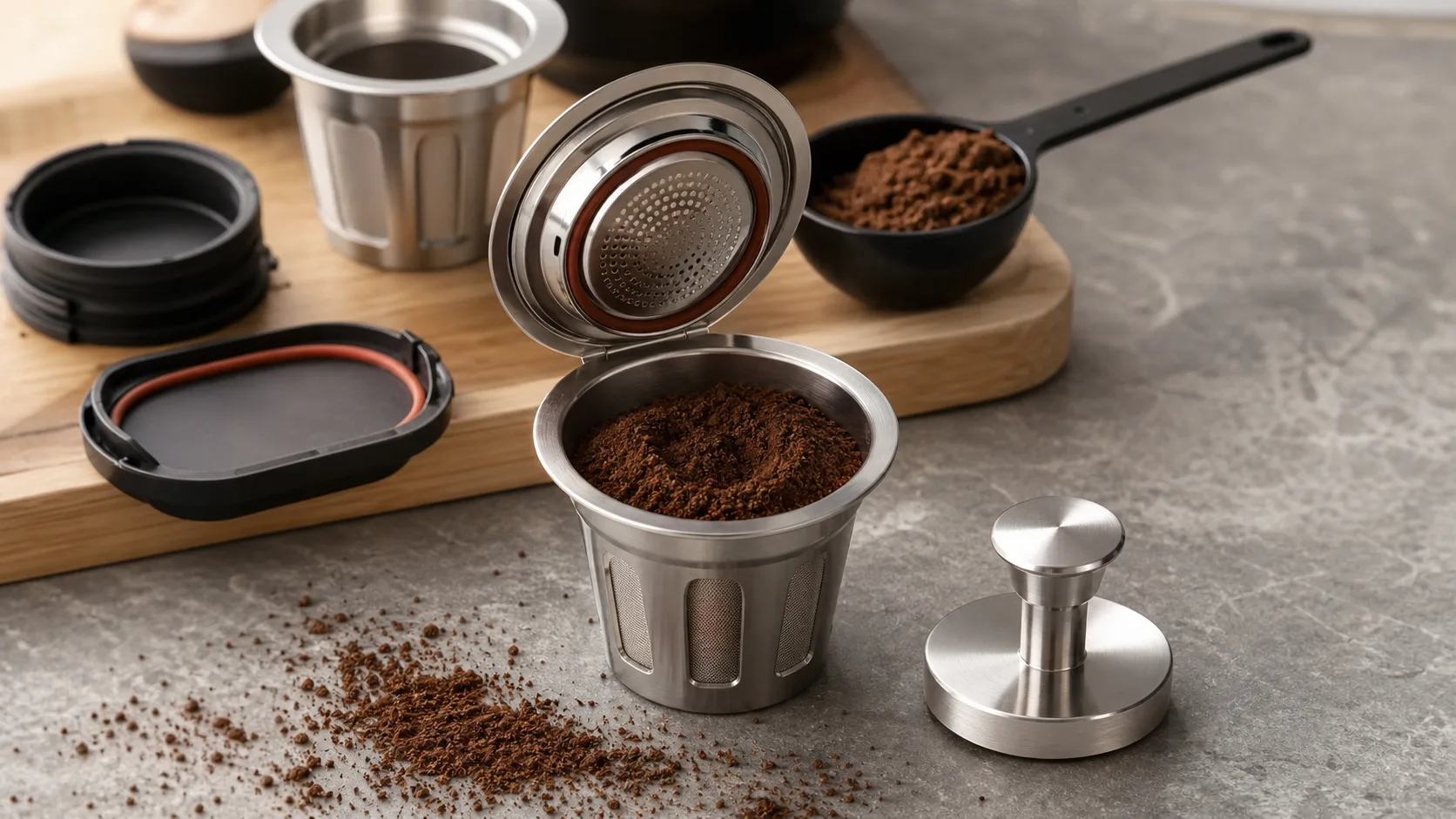
Reusable pods live or die on filling technique. Disposable capsules are factory-filled with consistent grind, dose and sealing. At home, you become the factory. Slightly annoying, but not difficult once you have a rhythm.
Grind Size
Most reusable pods need a fine grind, but not always espresso-fine. Too coarse and water runs through quickly. Too fine and the machine may choke, leak or produce a bitter, muddy cup.
If you own a grinder, start near moka-pot fine, then adjust from there. If you buy pre-ground coffee, choose espresso grind only if your reusable pod maker recommends it. Some pod formats prefer a touch coarser.
The grind should feel finer than cafetiere and usually finer than filter, but it should not clump like flour. If the pod has tiny filter holes, very fine powder can block them and make clean-up miserable.
Dose and Tamp
Do not heap coffee into the pod and crush it flat. Most reusable pods need a level fill and a light tamp, not a hard espresso tamp. Overfilling can stop the pod closing properly, damage the seal or cause leakage into the machine.
A repeatable routine works best:
- Fill the pod loosely. Add ground coffee until it sits just above level.
- Settle the grounds. Tap the pod gently on the counter to remove air gaps.
- Level the top. Use a scoop handle or small straight edge.
- Tamp lightly if required. Press only enough to make the surface even.
- Wipe the rim. Any grounds on the seal can cause leaks.
A small spoon or dosing scoop costs about £3-£8. A tiny tamper for refillable capsules is usually £6-£15 on Amazon UK or Etsy. You do not need fancy kit, but you do need consistency.
For storing the beans or grounds you use in pods, the guide to keeping coffee beans fresh is more useful than guessing from the bag clip.
UK Cost: Reusable Pods vs Disposable Capsules
The cost argument is real, but it depends on how often you use the machine. A reusable pod that sits in a drawer saves nothing.
Upfront Cost
Basic plastic refillable pods for Dolce Gusto-style machines are often £8-£15 for a small pack on Amazon UK. Stainless steel reusable pods for Nespresso Original-style machines are usually £12-£30 for generic sets, while better-known systems such as SealPod are often around £25-£40 depending on kit, lids and accessories. SealPod’s own site is useful for checking the sort of reusable capsule system and accessories available: SealPod reusable capsules.
Some premium refillable systems cost £35-£60 once you add spare lids, tampers and brushes. That is still not huge money compared with a coffee machine, but it is not free.
Per-Cup Cost
Disposable capsules at 45p each cost £164.25 a year if you drink one per day. At two per day, that is £328.50. If your refillable pod uses about 6g of coffee, a £10 250g bag gives roughly 41 fills, or about 24p of coffee per pod. A cheaper £6 supermarket espresso grind could bring that under 15p, though taste may drop.
Simple example:
- One branded capsule daily at 45p: about £164 per year.
- One reusable pod daily using £10/250g coffee: about £88 of coffee per year, plus pod cost.
- Two branded capsules daily at 45p: about £329 per year.
- Two reusable pods daily using £10/250g coffee: about £176 of coffee per year, plus pod cost.
The saving is not life-changing, but it is enough to matter if the machine gets daily use. If you only make a pod coffee twice a week, the convenience loss may not be worth the faff.
For a similar convenience-versus-cost decision, Coffee Subscription Services UK covers the habit side well.
Taste, Crema and Convenience Trade-Offs
The taste trade-off is where reusable pods split opinion. Some people love being able to use better coffee. Others try them twice, hate the mess and go back to capsules.
Taste
Fresh coffee helps. A refillable pod filled with freshly ground medium roast can taste sweeter and less stale than a cheap capsule. The downside is that pod machines are not very forgiving. If the grind is wrong or the pod underfills, flavour falls away quickly.
Expect a short, strong coffee rather than true espresso. It can be enjoyable with milk, especially in flat-white-style drinks where texture and sweetness matter more than perfect crema.
Crema
Reusable pods often produce less crema than factory capsules. Some disposable capsules use grind, freshness, pressure and capsule design to create a more dramatic foam. Refillable pods can still make a pleasant top layer, but it may be thinner and less stable.
That is not automatically bad. Crema is not proof of great flavour. A harsh capsule can have a thick foam; a nicer reusable-pod coffee can look flatter but taste better.
Convenience
Convenience is the biggest loss. Disposable capsule workflow is simple: pod in, button, bin or recycling bag. Reusable workflow is slower: fill, level, seal, brew, empty, rinse, dry.
If you are making one relaxed coffee at home, that may be fine. If you are trying to make three coffees while getting kids out of the door, it will feel like a tiny unpaid job.
Compatibility and Machine Risks
Compatibility is the bit to check before price. “Nespresso-compatible” is not enough. Original, Vertuo, Dolce Gusto, Tassimo and other systems use different shapes, puncture methods and pressure behaviour.
Original vs Vertuo and Other Systems
Nespresso Original-style reusable pods are common. Vertuo is harder because the system reads capsule barcodes and spins the capsule differently. Dolce Gusto refillables exist, but quality varies. Tassimo is usually awkward because of barcode-based drinks.
Before buying, check:
- Machine format: Original, Vertuo, Dolce Gusto or another system.
- Model notes: some pods fit one model but not another.
- Seal type: silicone lids, foil stickers and hinged metal lids behave differently.
- Cleaning access: narrow parts are harder to rinse and dry.
- Return policy: useful if the pod jams or leaks.
Do not force a reusable pod into a machine. If the lever feels wrong, stop. A £20 capsule is not worth damaging a £90-£180 machine.
Material Choice
Stainless steel pods feel more durable and usually clean better. Plastic pods are cheaper, but they can stain, hold smells and warp over time. Silicone lids are convenient but easy to lose. Foil sticker lids can improve pressure but create ongoing waste and extra cost.
The sweet spot for most UK buyers is a stainless reusable pod with spare seals and a small brush, assuming it fits the machine. Expect to pay about £20-£40 for a decent starter kit.
Cleaning, Storage and Daily Workflow
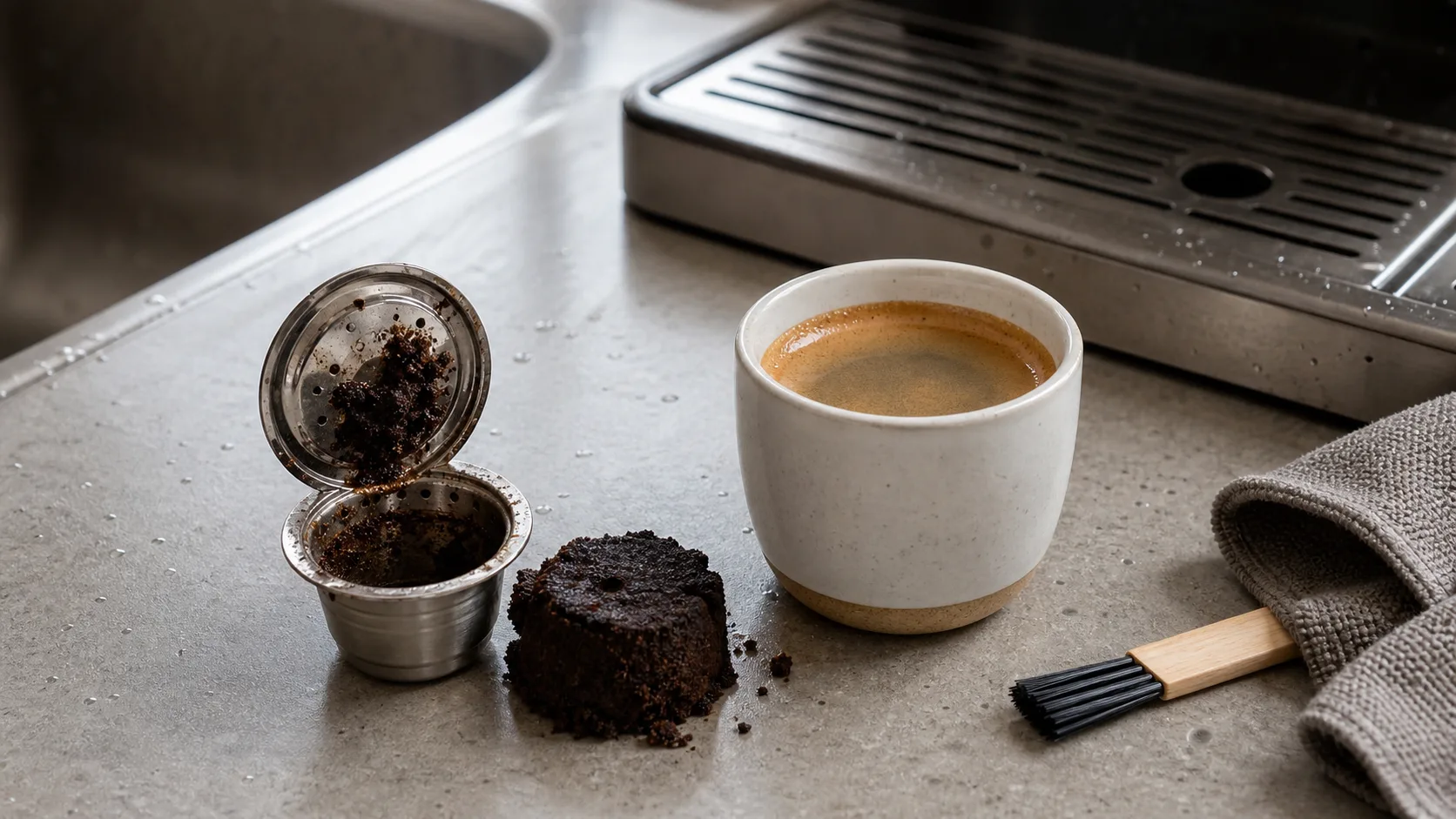
Cleaning decides whether reusable coffee pods are worth it. Taste might persuade you to try them; cleaning decides whether they stay in use after week two.
Daily Cleaning
Empty the pod while the puck is still warm, then rinse it before oils dry onto the filter holes. A soft brush helps. Do not scrape aggressively with a knife, because damaged holes or seals can change flow.
I would keep a tiny brush next to the machine. It sounds fussy, but if the brush lives in a drawer, the pod gets dumped in the sink and becomes tomorrow’s problem.
Deeper Cleaning
Coffee oils build up. Once a week, soak metal pods in warm water with a little coffee-equipment cleaner if the manufacturer allows it. Rinse well. Let everything dry before storing, especially silicone seals.
Do not put every reusable pod in the dishwasher unless the maker says it is safe. Some lids, seals and coatings do not like repeated dishwasher heat.
Water quality also affects pod coffee. If your machine scales quickly or coffee tastes flat, the CoffeeSetupUK guide to coffee machine water filters is worth checking alongside pod changes.
The Verdict
Reusable coffee pods are worth it if you drink pod coffee regularly, care about waste, and do not mind a two-minute clean-up. They are less convincing if you bought a pod machine purely for speed.
My practical take: buy one decent reusable pod kit, not a bargain multipack, and test it with coffee you already like. If you can get a cup you enjoy after five attempts, it is worth keeping. If every use feels like a chore, disposable capsules or a different brewing method will make you happier.
The reusable cup guide, Best Reusable Coffee Cups 2026 UK, covers travel cups; do not confuse that with reusable pods. Same low-waste instinct, very different daily job.
Frequently Asked Questions
Are reusable coffee pods worth it? They are worth it for regular pod-machine users who want lower running costs, less capsule waste and more coffee choice. They are not worth it if convenience is your main reason for owning a pod machine.
Do reusable coffee pods taste as good as normal capsules? Sometimes, but not always. Freshly ground coffee in a well-fitting pod can beat cheap capsules, but premium factory capsules are usually more consistent.
What grind should I use for reusable coffee pods? Start with a fine grind around moka-pot to espresso range, then adjust. If the cup is weak, go finer or fill more evenly. If it leaks or chokes, go slightly coarser.
Can reusable pods damage a coffee machine? A badly fitting pod can jam, leak or stress the lever. Only use pods listed as compatible with your exact machine type, and never force the mechanism closed.
How much do reusable coffee pods cost in the UK? Basic plastic sets are often £8-£15, generic stainless pods are about £12-£30, and better reusable capsule kits are commonly £25-£40.
Are stainless steel reusable pods better than plastic? Usually, yes. Stainless steel tends to last longer, clean better and hold fewer smells, though plastic pods are cheaper for a first experiment.