Choosing among the best hand coffee grinders 2026 UK buyers can get comes down to brew method, dose size and how much adjustment you will actually use. The KINGrinder K6 is our best overall hand coffee grinder because its external 16-micron adjustment, 30–35g capacity and steel burr cover everything from pour-over to occasional espresso without specialist pricing. TIMEMORE is the stronger espresso-focused value choice, while OXO, Porlex and Hario cover larger doses, travel and tight budgets.
In This Article
- The Best Hand Coffee Grinders UK at a Glance
- How We Chose These Hand Coffee Grinders
- Best Hand Coffee Grinders 2026 UK: Detailed Reviews
- How to Choose a Hand Coffee Grinder
- Hand Grinder Comparison: Which One Suits Your Brew?
- Getting Better Results From a Manual Grinder
- The Bottom Line
- Frequently Asked Questions
The Best Hand Coffee Grinders UK at a Glance
| Grinder | Best for | Adjustment | Capacity | Main compromise |
|---|---|---|---|---|
| KINGrinder K6 | Best overall | External, 16 microns per click | 30–35g | Substantial for travel |
| TIMEMORE Chestnut C3 ESP Pro | Best for espresso on a sensible budget | Internal, 23.3 microns per click | 20–25g | Finer dial requires click counting |
| OXO Brew Manual Grinder | Best for larger filter batches | 40 stepped settings | Up to 40g | Tall body and less espresso precision |
| Porlex Mini | Best for travel | Internal, stepped | About 20g | Ceramic burr and small dose |
| Hario Mini Mill Slim | Best budget choice | Internal, stepped | About 24g | Slower ceramic burr |
The shortlist separates five real jobs. The K6 is the all-rounder; TIMEMORE gives espresso drinkers finer steps without jumping to specialist prices; OXO handles bigger filter doses; Porlex travels neatly; and Hario remains the inexpensive route into grinding beans immediately before brewing.
If you are undecided between hand power and a plug-in model, our guide to manual vs electric coffee grinders explains the daily-effort trade-off. A hand grinder is quiet, compact and excellent value, but grinding several large doses every morning gets old quickly.
How We Chose These Hand Coffee Grinders
We compared documented burr type, adjustment design, stated capacity, weight, cleaning method and current UK availability. We also considered whether each model earned a distinct place rather than filling the list with near-duplicates. This is a specification-led assessment, not a claim that we laboratory-tested every grinder.
Three factors carried the most weight:
- Useful adjustment: espresso needs small, repeatable changes; filter coffee is less demanding but still benefits from clear settings.
- Workable capacity: a 15g travel grinder can be excellent for one cup and irritating for a 1-litre cafetiere.
- Value at the intended job: the cheapest grinder is not good value if uneven particles make every brew hard to repeat.
We checked documented specifications rather than relying on product names. KINGrinder documents 16-micron clicks and a 30–35g hopper for the K6; TIMEMORE states 23.3-micron clicks and a 20–25g capacity for the C3 ESP Pro; OXO lists 40 settings and a 40g hopper. These figures describe adjustment and capacity, not a promise that every setting suits every coffee.
Our selection also accounts for brew method. The right answer for a V60 is not automatically the right answer for an unpressurised espresso basket. If that distinction is unfamiliar, read our guide to choosing a grinder for espresso vs filter before spending premium money.
Best Hand Coffee Grinders 2026 UK: Detailed Reviews
1. KINGrinder K6 — Best overall

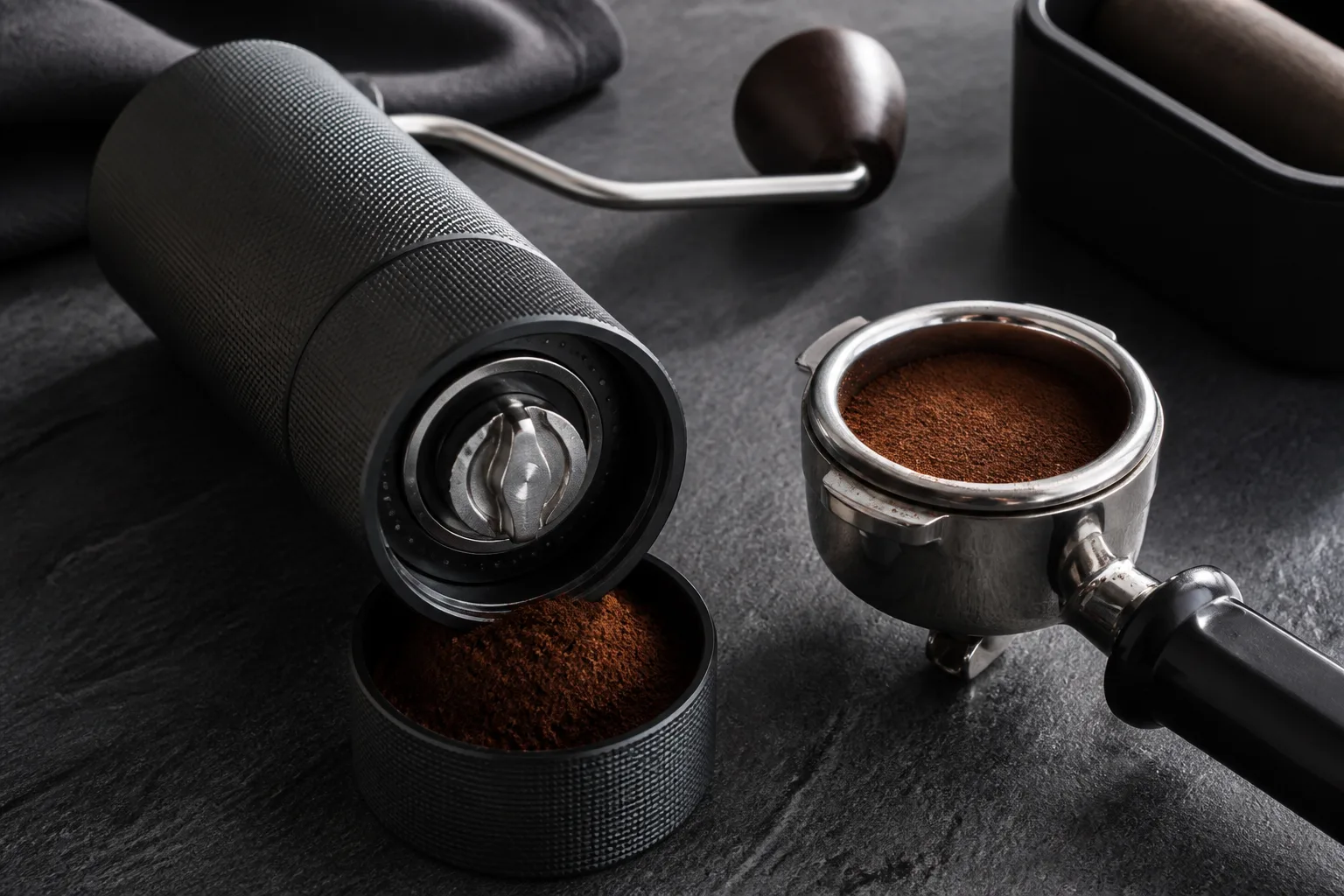
The K6 remains the sweet spot. Its stainless-steel burr, aluminium body and external adjustment give it the range for pour-over, AeroPress, cafetiere and occasional espresso. One turn has 60 clicks at 16 microns per click, so moving between known settings is quicker and cleaner than reaching underneath the burr.
The metal body and 30–35g hopper make it more substantial than a travel grinder. Dense light-roast beans at espresso settings still require effort, and dedicated espresso users may prefer the smaller steps of the TIMEMORE.
- Buy it if: you want one durable grinder for several brew methods.
- Skip it if: low weight or the cheapest possible first grinder matters most.
- Main compromise: broad capability and capacity in exchange for extra weight.
2. TIMEMORE Chestnut C3 ESP Pro — Best for espresso on a sensible budget

The C3 ESP Pro brings useful espresso control to a lower price bracket than many specialist hand grinders. TIMEMORE states 23.3 microns per click, a 20–25g capacity and a folding handle. The all-metal body, double-bearing shaft and S2C steel burr also make it a convincing compact grinder for someone switching between espresso and filter.
Its adjustment remains internal, so changing between distant settings is less convenient than the K6 external ring. The smaller hopper also suits one or two drinks rather than a large cafetiere.
- Buy it if: espresso is important and you want fine steps plus a packable folding handle.
- Skip it if: you change brew methods constantly or regularly grind more than 25g.
- Main compromise: good espresso control, but internal adjustment and modest capacity.
3. OXO Brew Manual Grinder — Best for larger filter batches

OXO is the practical batch option. Its 40g hopper comfortably covers a larger V60, two mugs or a cafetiere dose, while the 40 stepped settings and stainless-steel conical burr are easier to understand than an unmarked adjustment nut. The handle pivots inward for storage and the wide opening makes loading beans less fiddly.
Forty settings offer useful filter flexibility but do not equal the tiny changes of an espresso specialist. The tall 500g body is portable around the house, not genuinely pocketable for hand luggage.
- Buy it if: you make larger filter batches and want simple numbered adjustment.
- Skip it if: fine espresso control or minimum travel weight is the priority.
- Main compromise: the easiest larger-dose ownership experience, with less fine-end precision.
4. Porlex Mini — Best for travel
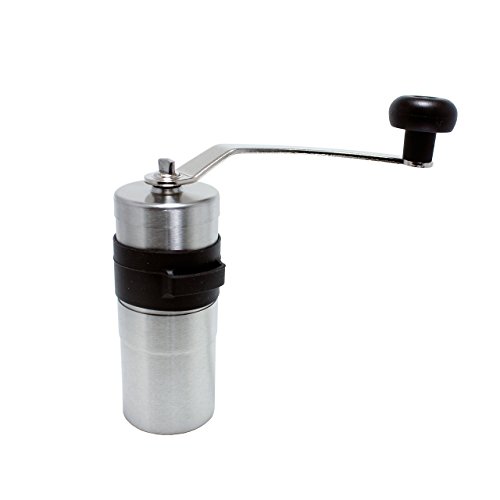
Porlex Mini is the travel specialist. The stainless-steel body is narrow, durable and roughly 250g, while the ceramic burr and approximately 20g capacity suit one AeroPress or compact pour-over dose. The removable handle and small diameter make more sense in luggage than pretending a full-size grinder is travel-friendly.
The ceramic burr is slower than the steel designs above, especially with dense beans. Internal adjustment is basic, and larger brews need a second load. Some stock may be imported, so check the supplied instructions and seller details.
- Buy it if: you want a proven compact grinder for one careful cup away from home.
- Skip it if: you make large batches or expect effortless espresso adjustment.
- Main compromise: excellent packing size, but slower grinding and a small dose.
5. Hario Mini Mill Slim — Best budget choice
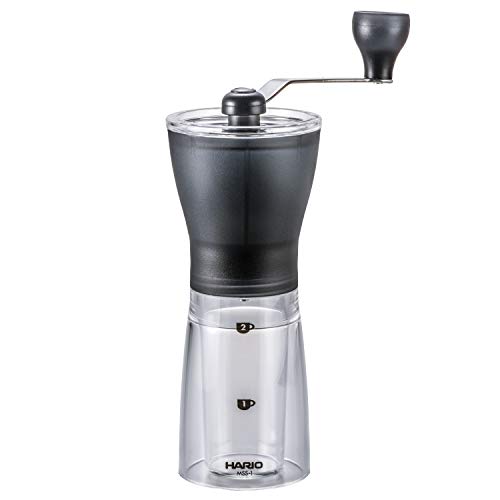
Hario Mini Mill Slim is the inexpensive way to stop buying pre-ground coffee. Its 24g capacity covers an AeroPress or small pour-over, the ceramic burr will not rust and the handle removes for storage. Hario is also a known coffee-equipment brand, which makes the design easier to trust than an anonymous bargain mill.
Adjustment sits beneath the burr, grinding takes longer, and coarse particle consistency trails the metal grinders. It is not our recommendation for repeatedly dialling in an unpressurised espresso basket.
- Buy it if: you want a low-cost grinder for one or two filter cups.
- Skip it if: speed, large batches or espresso control matter.
- Main compromise: a credible budget start, provided you accept slower work and basic adjustment.
How to Choose a Hand Coffee Grinder
Match the adjustment to the brew method
Espresso is the demanding case. Small changes alter resistance in the coffee puck, so an external numbered dial with fine steps saves frustration. Filter brewing gives you more tolerance: a clear stepped mechanism is normally enough, provided you can return to a previous setting. Our coffee grind-size guide gives practical starting points from espresso through to cafetiere.
Do not buy an espresso-focused grinder by accident if you only use a cafetiere. You will pay for adjustment precision you rarely exploit. Conversely, expecting a Mini Mill to make repeated, finely controlled espresso is false economy.
Steel vs ceramic burrs
Steel burrs in the K6, TIMEMORE and OXO models cut quickly and usually produce a more controlled particle distribution. Ceramic burrs keep the Hario grinders affordable and will not rust, but they feel slower and tend to be less convincing at very coarse settings.
The burr material alone does not determine quality. Geometry, alignment, shaft stability and adjustment all matter. Avoid treating “stainless steel” as an automatic guarantee.
Capacity, grip and daily effort
Start with your normal coffee dose. A 15–20g hopper is fine for one AeroPress; a 30g filter brew may require two loads. Larger hands may also find a narrow grinder easier to wrap around, while users with limited grip strength may prefer an electric model.
- One cup: roughly 15–20g capacity is usually enough.
- Two filter cups: aim for around 25–35g.
- Large cafetiere: prioritise capacity or accept multiple loads.
Cleaning and repeatability
Coffee oils and retained fines build up around the burr. A grinder that dismantles without tools is easier to brush clean, but always follow its manual: some manufacturers specifically warn against washing the burr assembly with water. Mark down your usual settings for each brew method rather than rediscovering them every Monday.
Our hand-grinder technique guide explains how a steady crank speed and upright grip improve repeatability. Technique cannot rescue a poor burr, but it removes one avoidable variable.
Hand Grinder Comparison: Which One Suits Your Brew?
For pour-over and AeroPress
Buy the K6 if budget allows. It gives you room to explore different brewers, and the external dial makes changing between them painless. The Porlex Mini is the smarter choice if compact size matters more than capacity. The Hario works for occasional brewing on a tighter budget, but it takes longer.
For espresso
The TIMEMORE wins here. Its 23.3-micron steps provide finer control than a basic ceramic grinder at a realistic price. The K6 is the better all-round purchase if espresso is occasional, but TIMEMORE suits someone who wants a smaller adjustment step and folding handle.
The common mistake is spending heavily on an espresso machine and treating the grinder as an afterthought. Grind control has a direct effect on resistance and extraction. Our broader best coffee grinders UK guide covers electric options if hand grinding every shot sounds tedious.
For cafetiere and larger batches
The OXO 40g hopper is useful, but the K6 produces the more convincing all-round result. If you make a full cafetiere every day, consider the time as well as the purchase price. A hand grinder can be wonderfully quiet at 7am and rather less charming when guests want a second pot.
Getting Better Results From a Manual Grinder
Use a repeatable starting routine
- Weigh the beans. Use the same dose while you adjust grind size.
- Set the grinder from a known reference. Record clicks or dial numbers for each brewer.
- Keep the grinder upright. A stable shaft position helps the burr work consistently.
- Turn at a calm, even pace. Racing the handle adds heat and makes the process harder to repeat.
- Change one variable. Adjust grind size before simultaneously altering dose, water and brew time.
Brush rather than rinse
Use the supplied brush or a clean, dry soft brush to remove retained grounds. Unless the manufacturer explicitly says otherwise, keep the burr assembly away from water. The grinder body and catch cup may have different care instructions, so do not assume every part can be washed together.
Know when manual no longer fits
A hand grinder makes sense for one or two careful drinks, quiet kitchens and travel. It becomes a chore when you regularly grind 60g batches, switch constantly between espresso and filter, or make drinks for several people. That is not failure; it is simply the point where an electric grinder buys back useful time.
The Bottom Line
The KINGrinder K6 is the best hand coffee grinder for most UK buyers. It has a useful external adjustment system, enough capacity for normal filter brews and the range to explore espresso without forcing you into the highest price bracket.
Choose the TIMEMORE C3 ESP Pro if espresso is the priority at a sensible price. Pick the Porlex Mini for travel, the Hario Mini Mill Slim for a low-cost first grinder, or the OXO Brew when larger filter doses matter more than portability. Five grinders, five jobs—none is there merely to make up the numbers.
Frequently Asked Questions
Are hand coffee grinders better than electric grinders? They can offer better burr quality for the same purchase price, run quietly and take up less space. Electric grinders are faster and more convenient for large doses or several drinks.
Can a hand grinder make espresso? Yes, but choose a model with fine, repeatable adjustment. The TIMEMORE C3 ESP Pro is the strongest espresso-focused value option here; basic ceramic-burr grinders are harder to dial in.
How much should I spend on a manual coffee grinder? Budget models suit occasional filter brewing, while roughly £80–£120 buys a capable metal all-rounder. Specialist espresso grinders can cost considerably more.
How long does hand grinding take? It depends on burr size, roast and dose. A modern steel-burr grinder can handle a single filter dose reasonably quickly, while dense light-roast beans and fine espresso settings require more effort.
Should I choose steel or ceramic burrs? Steel burrs usually grind faster and suit buyers seeking better control. Ceramic burrs help keep entry prices low and remain adequate for occasional filter coffee.
How often should I clean a hand grinder? Brush out loose grounds regularly and perform a deeper dry clean when oils or retained coffee build up. Follow the manufacturer’s instructions and avoid washing burrs unless specifically permitted.