For a shared office making up to around 50 speciality coffees a day, the Jura W8 is the strongest all-round machine here. It is built for workplace self-service, but buy it through a UK professional supplier with clear installation and support terms. If a jug of filter coffee serves the team better, choose the Bravilor Novo 2. A very small office can consider the De’Longhi Magnifica S for simple black coffee or the Sage Barista Touch when someone wants to make espresso.
Count actual drinks and the morning peak before choosing. The lighter-use domestic machines below are not substitutes for a supported professional installation in a busy office. Cleaning ownership and repair response can matter more than the number of drinks on the menu.
Three choices for lighter use

Bravilor Novo 2 starter kit
Best for meetings and batch filter coffee
Pour-over filter brewer; check the exact kit and seller support
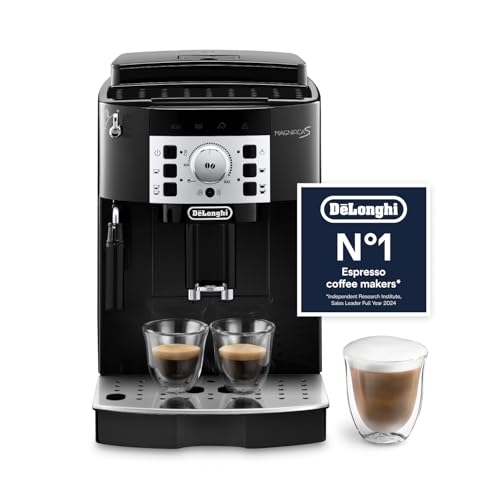
De’Longhi Magnifica S
Best light-use push-button option
Automatic black coffee; manual milk frother and domestic-use limits

Sage Barista Touch
Best for a tiny espresso-focused team
Manual portafilter workflow despite the touchscreen
On this page
- Comparison at a glance
- The office machines in detail
- Which office needs which machine?
- Running costs and cleaning
- Buy, lease or use a service contract?
- How we chose
- The bottom line
- Frequently asked questions
Comparison at a glance
| Machine | Best for | Coffee style | Main compromise |
|---|---|---|---|
| Jura W8 (supplier route) | Shared workplace; maker’s limit up to 50 drinks/day | Professional one-touch bean-to-cup | Confirm installation, maintenance and support terms |
| Bravilor Novo 2 starter kit | Meetings and teams happy with filter coffee | Brewed coffee by the jug | No espresso or automatic milk; check kit and seller terms |
| De’Longhi Magnifica S | Very small office with modest daily use | Automatic black coffee; manual milk wand | Domestic machine; confirm workplace warranty |
| Sage Barista Touch | Tiny team with a willing coffee owner | Manual espresso with integrated grinder | Grinding, tamping and cleaning slow a shared queue |
| Franke A300 (supplier route) | Busy office needing installation and service | Commercial self-service | Specify configuration and compare contract terms |
Capacity means actual drinks, not headcount. A ten-person team might make twenty coffees on an ordinary day and twice that during meetings. Count peak-hour demand as well as the daily total; even a machine with adequate daily capacity can leave people queueing at 9am.
The office machines in detail
Jura W8: best overall for a shared office
The W8 is a professional workplace machine rather than a domestic bean-to-cup model. Jura recommends a maximum of 50 speciality coffees a day and offers one-touch espresso, coffee and milk drinks. That makes it the strongest match here when several colleagues use the machine without a barista on hand.
Buy through a UK professional supplier after confirming the exact specification, electrical connection, milk setup, installation and service response. The machine still needs a named person to replenish beans and water and follow the cleaning routine. If your office regularly exceeds 50 drinks a day or has a severe peak-time queue, ask for a higher-capacity proposal instead.
- Choose it if: shared self-service drinks and workplace support matter more than the lowest initial outlay.
- Skip it if: demand exceeds the maker’s daily guidance or your team mainly wants batch filter coffee.
- Main compromise: professional installation and support terms need comparing alongside the machine itself.
Bravilor Novo 2 starter kit: best for filter-coffee batches
A jug of freshly brewed filter coffee is often a better answer for meetings than a queue of individually made espresso drinks. The Novo is a manual-fill quick-filter brewer, so it does not need a plumbed water connection. Bravilor’s product brochure describes a 1.7-litre glass decanter. Before ordering a starter kit, check which jugs and filters it includes.
This is the simplest route if most people drink black coffee or add milk separately. It is not a substitute for a flat-white machine, and coffee left warming too long will lose its appeal. Confirm the current seller, UK delivery/import charges, warranty contact and kit contents before paying; those terms matter more than a small difference in headline price.
- Buy it if: several people need coffee together and batch filter suits their tastes.
- Skip it if: individual cappuccinos are the main office request.
- Main compromise: someone must brew fresh batches, replace papers and wash the decanter.
De’Longhi Magnifica S: simple black coffee for light use
The Magnifica S ECAM22.110.B grinds beans and brews espresso or longer coffee at the press of a button, with a manual steam wand for milk. That is easier for several casual black-coffee drinkers than the Sage’s portafilter routine. But it is a home-style machine, not a professional substitute for the W8. Keep it to a small team with modest demand, and confirm that the seller and maker will support your intended workplace use before ordering.
The manual milk wand is the deciding compromise. If everybody expects a one-touch flat white, this is the wrong machine. If most colleagues take black coffee or add cold milk, the basic workflow may be enough. Our bean-to-cup guide explains how it compares with other domestic options.
- Buy it if: a few people want convenient fresh-bean black coffee.
- Skip it if: you need automatic milk drinks, high daily throughput or assured commercial service.
- Main compromise: a domestic machine’s support terms may not suit business use.
Sage Barista Touch: best for a tiny team that enjoys espresso
The Barista Touch brings an integrated grinder, touchscreen drink settings and automatic milk texturing into one machine. But it is still a portafilter espresso machine: every drink requires coffee preparation, a used puck to clear and a short cleaning routine. Sage lists a 2-litre tank and 250g bean hopper for this range. That is workable for a tiny office, but it is not a shortcut to high-volume self-service.
Choose it only when one or two regular users care about espresso quality and are happy to own the setup. In an anonymous shared kitchen, a touchscreen will not stop the portafilter, drip tray and milk wand becoming someone else’s job. Compare the workflow with our bean-to-cup versus espresso guide before buying.
- Buy it if: a handful of people actively enjoy making espresso and milk drinks.
- Skip it if: staff need one-button coffee or a low-maintenance shared kitchen.
- Main compromise: better control comes with more user skill and cleanup.
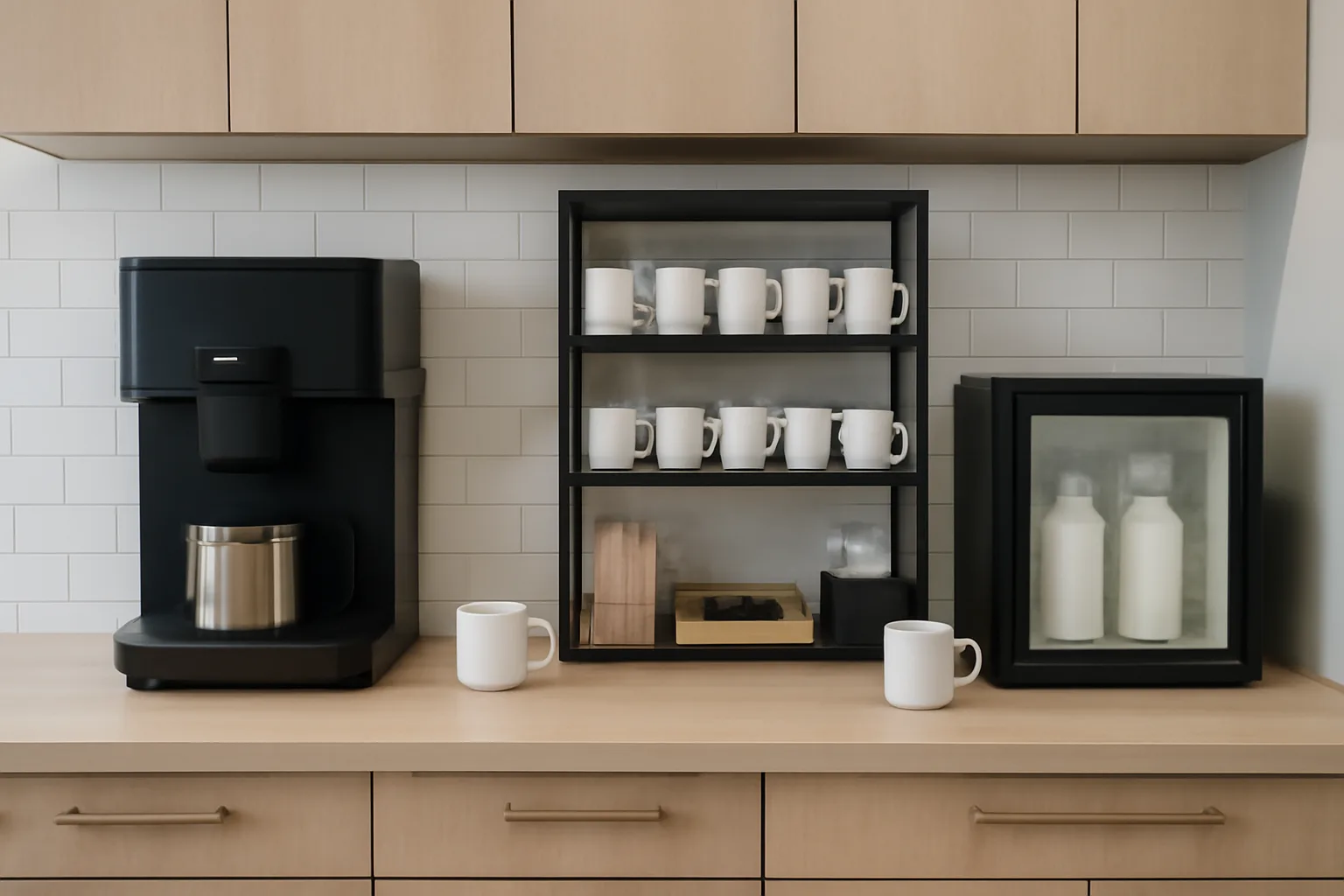
Which office needs which machine?
A handful of regular users
For one to five users, choose by drink style. The Sage suits an espresso enthusiast; the Magnifica S suits simple push-button black coffee; the Bravilor makes more sense for regular group filter coffee. Check domestic-machine business-use terms before purchase.
A small shared kitchen
For a team making roughly 15–50 speciality drinks daily, the professional W8 is easier to share than the domestic alternatives. Match the machine to the actual peak and agree who handles consumables and the maker’s cleaning routine. If nobody wants to manage milk care, a black-coffee setup with milk kept separately may be the better fit.
A busy floor, reception or hospitality area
Above the W8’s recommended 50-drink daily output, get quotes for higher-capacity machines. The Franke A300 is an example of a compact professional platform; its milk, water and service configuration need specifying for the actual site. Compare installed capacity at peak times, not only the brochure’s drinks menu. A used or refurbished commercial unit can be sensible only when the seller can demonstrate service history, parts availability and repair cover.
Running costs and cleaning
A useful cost-per-cup estimate needs your own bean, milk, filter and service costs. Calculate the monthly total from your expected drink count, coffee dose, milk demand, cleaning products, water treatment and any service contract. Add the cost of staff time if the machine needs a daily manual routine. Our coffee-machine running-cost guide separates the power bill from the consumables that usually matter more.
For bean-to-cup, plan a named cleaning owner and a backup person. Milk lines require particular care; follow the machine’s instructions, not a generic weekly rota. Filter machines avoid milk-system cleaning but still need fresh papers, decanter washing and sensible batch sizes. The cleaning guide explains the basic routine, while the water-filter guide helps with hard-water decisions.
Measure the actual station too: overhead clearance for beans or water, access to remove a drip tray, a nearby socket and somewhere hygienic for milk. Lifespan depends heavily on use and maintenance, so a domestic machine’s lower purchase price is not a fair comparison with a supported commercial setup for a heavily used office.
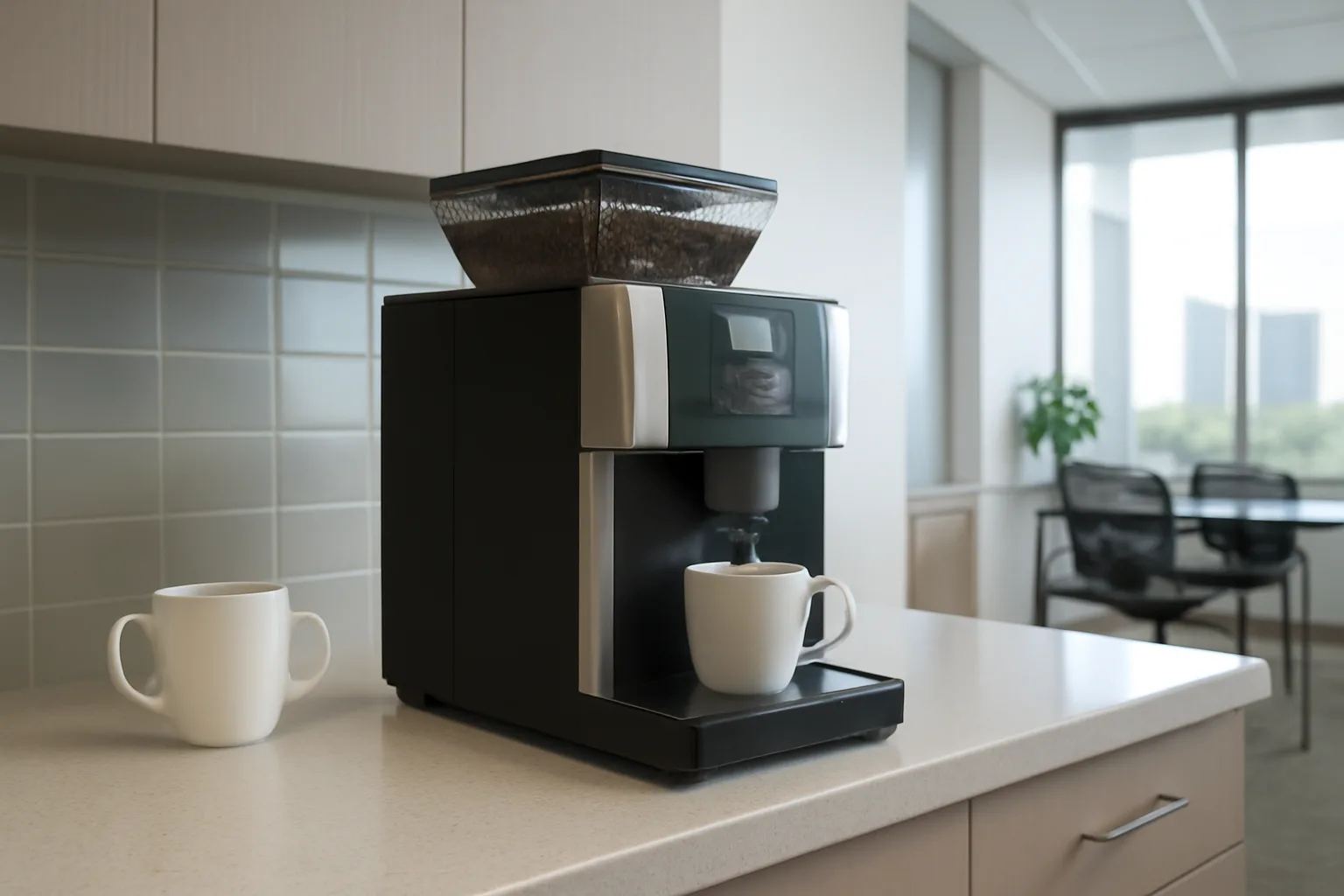
Buy, lease or use a service contract?
Buying gives you control over the machine but leaves you arranging repairs and supplies. A lease spreads the equipment cost; a rental or service contract may also cover installation, servicing and a replacement when the machine is down. Compare the whole contract: term, minimum bean purchases, call-out time, cleaning obligations, consumables, early-exit charges and what happens if the office moves. A low weekly figure can hide expensive commitments.
Before committing, ask for a written quote using your expected drinks per day and peak-hour pattern. Request the exact machine configuration, water and power requirements, included milk fridge or filtration, warranty and response time. If your office serves clients, downtime may be more costly than the difference between two machine prices.
How we chose
We matched machines to four different jobs: professional self-service, batch filter coffee, light-use automatic coffee and hands-on espresso for a tiny team. We checked the specified capacity, water and bean handling, drink workflow and cleaning burden against maker information, then considered how those demands change in a shared workplace. We have not installed or long-term tested these machines in an office. Heavy workplace use calls for a machine and support arrangement built for it.
The bottom line
For a shared office making up to around 50 speciality coffees daily, start with the Jura W8 through a UK professional supplier. The Bravilor Novo 2 is the practical choice for meeting-room filter coffee. For a very small team, choose the De’Longhi Magnifica S for simple automatic black coffee or the Sage Barista Touch for hands-on espresso. Above the W8’s recommended output, get a higher-capacity commercial proposal.
Frequently asked questions
How many daily drinks can the Jura W8 handle?
Jura recommends a maximum of 50 speciality coffees a day for the W8. Count your real daily and peak-hour demand before choosing it.
Is filter coffee a good choice for an office?
Yes, when several people drink coffee at once and do not need individual espresso or milk drinks. Brew fresh batches rather than leaving a jug warming for hours.
Can a domestic espresso machine work in an office?
It can suit a very small team with someone responsible for preparation and cleaning. Check whether the warranty covers workplace use and do not expect commercial throughput.
Should we buy or lease an office coffee machine?
Compare the full cost and service terms over the period you expect to use it. A service contract can reduce repair disruption; a lease spreads the equipment cost. Check exactly what each includes, plus minimum purchases and early-exit charges.
Who should clean an office coffee machine?
Name an owner and backup. Follow the maker’s daily milk, grounds and water routines, with a clear plan for holidays and staff changes.
What should a busy office choose instead?
Ask commercial suppliers for a machine sized to the actual daily and peak-hour drink count, with written installation, maintenance and repair terms.