The coffee water ratio guide most people need is simpler than the internet makes it sound: weigh the coffee, weigh the water, then adjust one thing at a time. For most filter brewing, start around 1:16, which means 1g of coffee for every 16g of water. From there, your brew method, grind size and taste buds decide the fine tuning.
In This Article
- Coffee Water Ratio Guide: The Starting Numbers
- Why Weight Beats Scoops and Cups
- Ratios by Brew Method
- How to Scale a Recipe Without Ruining It
- How to Adjust Strength Without Guesswork
- Kit Worth Buying in the UK
- Common Ratio Mistakes
- Frequently Asked Questions
Coffee Water Ratio Guide: The Starting Numbers
A coffee ratio is just coffee weight compared with water weight. A 1:16 ratio means 15g coffee to 240g water, 20g coffee to 320g water, or 30g coffee to 480g water. Water is friendly for home brewing because 1ml is close enough to 1g, so 250ml of water is roughly 250g on your scale.
The useful home-brewing range
For normal hot filter coffee, the practical range is:
- 1:15: richer, heavier, better for milk or beans that taste thin.
- 1:16: balanced starting point for V60, Chemex, batch filter and many AeroPress recipes.
- 1:17: lighter and clearer, useful for darker roasts or naturally heavy coffees.
- 1:18: mild, tea-like, sometimes lovely with delicate light roasts but easy to make watery.
The Specialty Coffee Association publishes coffee standards around brewing performance and shared technical language, which is why you will often see professional recipes cluster near this range rather than wandering all over the place. You do not need a lab chart on the kitchen wall. You do need a repeatable starting point.
Quick reference table
Those numbers are not moral law. They are the first brew, not the final answer. If your coffee tastes sour, bitter, thin or muddy, the ratio is only one of the levers.
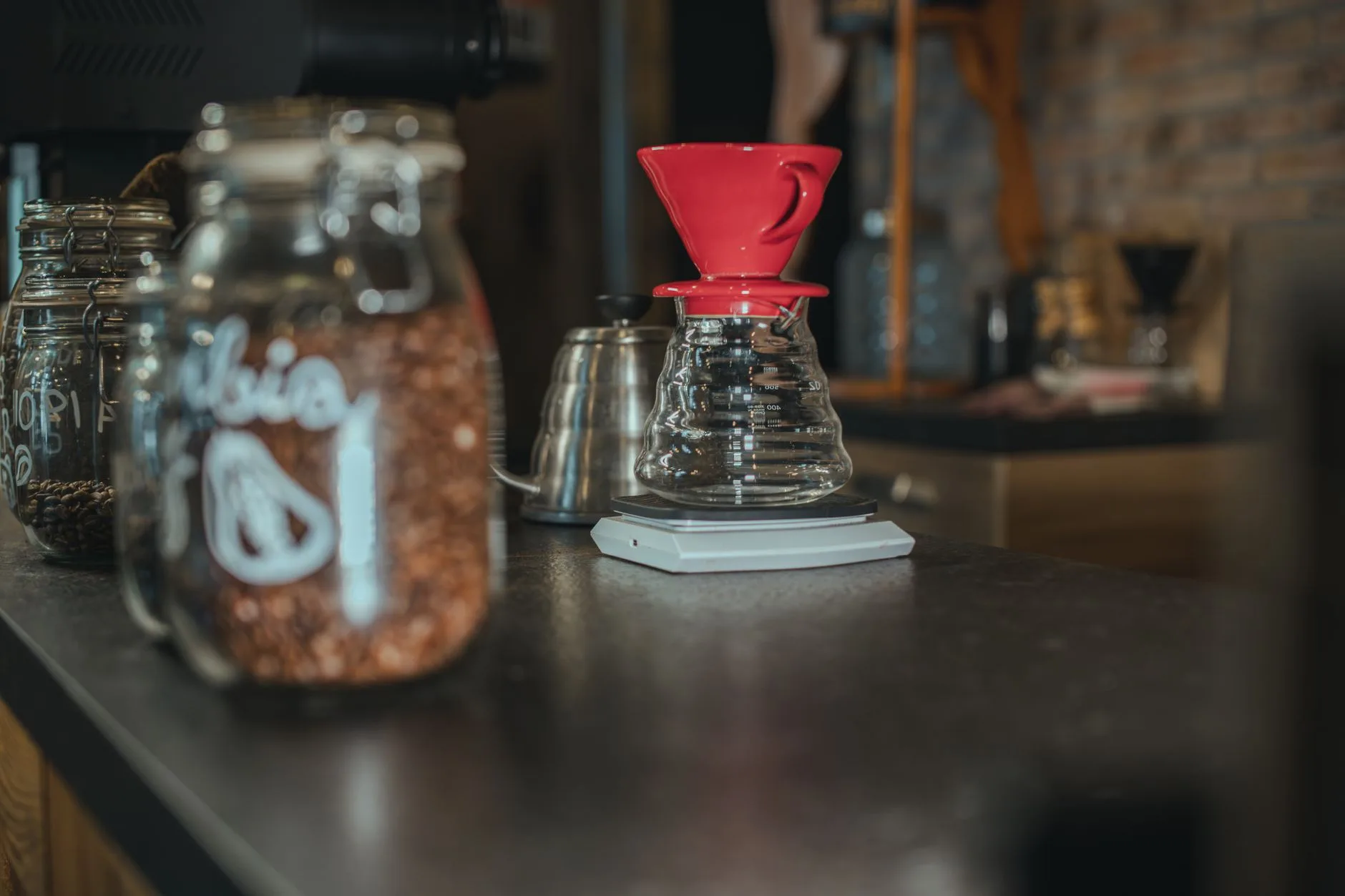
Why Weight Beats Scoops and Cups
Scoops are fine for camping or a hotel room. At home, they are why two brews with the same “recipe” can taste nothing alike.
Beans do not scoop evenly
Dark roasts are brittle and less dense. Light roasts are harder and often denser. A scoop of one coffee can weigh 8g while the same scoop of another lands closer to 11g. Ground coffee is worse because grind size changes how it settles. Fine grounds pack into a spoon. Coarse grounds sit loosely with more air between the particles.
That is why a ratio written as “two scoops per mug” is not really a recipe. It is a habit. Sometimes habits make good coffee, but they are difficult to diagnose when the cup goes wrong.
A scale fixes the boring part
A basic 0.1g coffee scale means you can repeat the good brews and change the bad ones on purpose. Our coffee scale guide covers dedicated models, but you do not need the most expensive option just to follow ratios.
For a normal UK kitchen setup:
- Budget: a generic 0.1g kitchen scale from Amazon UK is usually £10-£18. It works for cafetiere and batch brew, though the response can lag during pour-over.
- Mid-range: Timemore Black Mirror Basic 2.0 sits around £49-£72 from UK coffee retailers, with a timer and fast enough response for pour-over.
- Premium: Acaia Pearl is about £185-£216 from UK roasters such as Horsham, Origin or Ozone. Lovely kit, but overkill unless you enjoy data or brew a lot.
The mid-range Timemore is the one I would buy for most homes. The Acaia is nicer, but the cup improvement from spending the extra £130 is tiny compared with buying fresher beans or a better grinder.
Water weight keeps the maths clean
If a recipe says 20g coffee to 320g water, put the brewer on the scale, tare it, add 20g coffee, tare again, then pour until the scale reads 320g. You do not need to convert tablespoons, cups or ounces. You also avoid the classic mistake of measuring water in a jug, losing some to pre-wetting or retained slurry, then wondering why the final drink is weak.
Ratios by Brew Method
Different brewers need different starting points because they extract coffee in different ways. Immersion methods such as French press let the coffee sit in water. Percolation methods such as V60 and Chemex pass water through a bed of grounds. Espresso uses pressure and a much tighter ratio.
Pour-over, V60 and Kalita
Start at 1:16 for V60 and Kalita. For one large mug, that means 20g coffee to 320g water. If the cup tastes sharp and thin, grind a touch finer before adding more coffee. If it tastes dry or harsh, grind coarser or move towards 1:17.
Our Chemex, V60 and Kalita comparison is better for choosing the brewer. This section is just about making the ratio behave once you already own one.
Chemex
Chemex usually likes 1:15.5 to 1:16.5. The thicker filters hold back oils and fine particles, so a slightly richer ratio can stop the cup feeling too delicate. For a two-mug morning brew, I would start with 32g coffee to 500g water.
If you use a six-cup Chemex, resist filling it just because it looks roomy. A very large brew needs steadier pouring and a coarser grind. Our Chemex guide goes into the full recipe detail.
French press
French press is forgiving. Start at 1:15, so 30g coffee to 450g water or 40g to 600g. Because the grounds stay in contact with water, you can get body without grinding fine. Coarse to medium-coarse is usually safer than fine.
If your cafetiere coffee tastes silty, the answer is rarely more water. Use a coarser grind, pour gently, and leave the last muddy centimetre in the jug. For method detail, use the French press guide.
AeroPress
AeroPress ratios vary because people use it for everything from short strong cups to longer filter-style coffee. The official UK store says AeroPress brews with a pour, stir, steep and press process, and the AeroPress Original is currently listed at £39.99. For ratio work, treat it as flexible rather than magical.
For a clean mug, start with 15g coffee to 240g water, then adjust. For a stronger short brew to dilute, try 18g coffee to 120g water, press, then top up with hot water to taste. Our AeroPress guide has the recipe variations; here the important bit is knowing whether you are brewing the final drink or a concentrate.
Moka pot
Moka pots are awkward because you normally fill the basket rather than weighing a precise ratio. Still, the principle holds: do not tamp the coffee, fill the lower chamber to just below the valve, and use a consistent grind each time. A three-cup moka pot often takes about 15g-18g coffee and around 150g-180g water.
The drink is concentrated, not true espresso. If it tastes too heavy, dilute the finished coffee with hot water rather than underfilling the basket and making extraction uneven. The Turkish coffee guide is a useful contrast because that method keeps fine grounds in the cup on purpose, while moka pot brewing should not.
Cold brew
Cold brew is the outlier. For ready-to-drink cold brew, start around 1:8 to 1:10. For concentrate, use 1:4 or 1:5, then dilute with water, milk or ice. That means 100g coffee to 500g water for a concentrate, or 60g coffee to 600g water for a lighter jug.
This is where many people waste beans. They brew a strong concentrate, drink it neat, decide cold brew is harsh, then abandon the jar. Concentrate is meant to be diluted. If you want a low-effort summer option, a Hario Mizudashi is usually about £18-£25 from UK coffee shops or Amazon UK, while a larger cold brew jug tends to sit around £25-£40.
Espresso
Espresso ratios are drink output, not water poured into the machine. A common starting point is 18g ground coffee in and 36g espresso out, which is a 1:2 ratio. A shorter 1:1.5 shot can taste heavier. A longer 1:2.5 shot can taste clearer but may run bitter if the grind is wrong.
Do not mix espresso ratio advice with filter brewing maths. A 1:16 espresso would be soup. Our espresso dialling-in guide covers shot timing, grind and yield properly.
How to Scale a Recipe Without Ruining It
Scaling coffee is not just doubling everything and hoping. It often works, but bigger brews drain differently, hold heat differently and punish sloppy pouring more than a one-mug recipe.
The formula
Use this:
- Coffee dose: water weight divided by ratio number.
- Water amount: coffee dose multiplied by ratio number.
- Example: 500g water at 1:16 needs 31g coffee.
You can round to the nearest gram. Nobody at breakfast needs 31.25g coffee unless they enjoy making mornings slower.
One mug
For a normal UK mug, 240g-320g water is the useful range. Try 15g to 240g for a smaller cup or 20g to 320g for a large mug. If your mug is huge, measure the actual water once. Some “standard” mugs take 350ml when filled near the top.
Two mugs
For two mugs, 30g-32g coffee to 480g-520g water is a good starting point. Pour-over becomes fussier here because the bed is deeper. If the drawdown gets slow, grind a little coarser rather than weakening the ratio.
Batch brew
For a filter machine, start around 60g coffee per litre of water. A 1.25-litre jug would take about 75g coffee. If the machine has a showerhead that does not wet the bed evenly, pause halfway through the first brew and look at the grounds. Dry pockets mean uneven extraction, not a ratio problem.
Concentrates
Cold brew concentrate and AeroPress bypass recipes need a second line in your notes: the dilution. Write “100g coffee, 500g water, dilute 1:1” rather than only “1:5”. Otherwise you will forget what tasted good and blame the beans next week.
How to Adjust Strength Without Guesswork
Strength and extraction are not the same thing. Strength is how concentrated the drink feels. Extraction is what flavours came out of the grounds. You can make strong coffee that tastes sour, weak coffee that tastes bitter, and a balanced coffee that is too intense for your mood.
If it tastes weak
Move from 1:17 to 1:16 or from 1:16 to 1:15. That means more coffee for the same water. If it is weak and sour, adjust grind finer first, because the water may not be extracting enough flavour. This is where our coffee grind size guide helps more than another spoon of beans.
If it tastes too strong
Move the other way: 1:15 to 1:16, or 1:16 to 1:17. If the flavour is pleasant but intense, dilution is fine. Add hot water to the finished drink. That is not cheating; it is how many AeroPress and long black recipes work.
If it tastes sour
Sourness often points to under-extraction, especially with light roasts. Keep the ratio the same and grind finer, use hotter water, increase brew time, or pour more slowly. Changing several things at once makes the next cup harder to read.
If it tastes bitter or dry
Bitterness and dryness often mean over-extraction, roast bitterness, or too much fine sediment. Grind coarser, shorten contact time, or move to a slightly lighter ratio. If you are using supermarket dark roast beans, the ratio cannot remove roast character. It can only stop you making it worse.
Keep a tiny brew log
You do not need an app. A note like “V60, 20g/320g, medium-fine, 3:00, a bit dry” is enough. Next time, grind one click coarser or pour slightly faster. Change one variable, taste, then decide. This is boring advice. It also works.
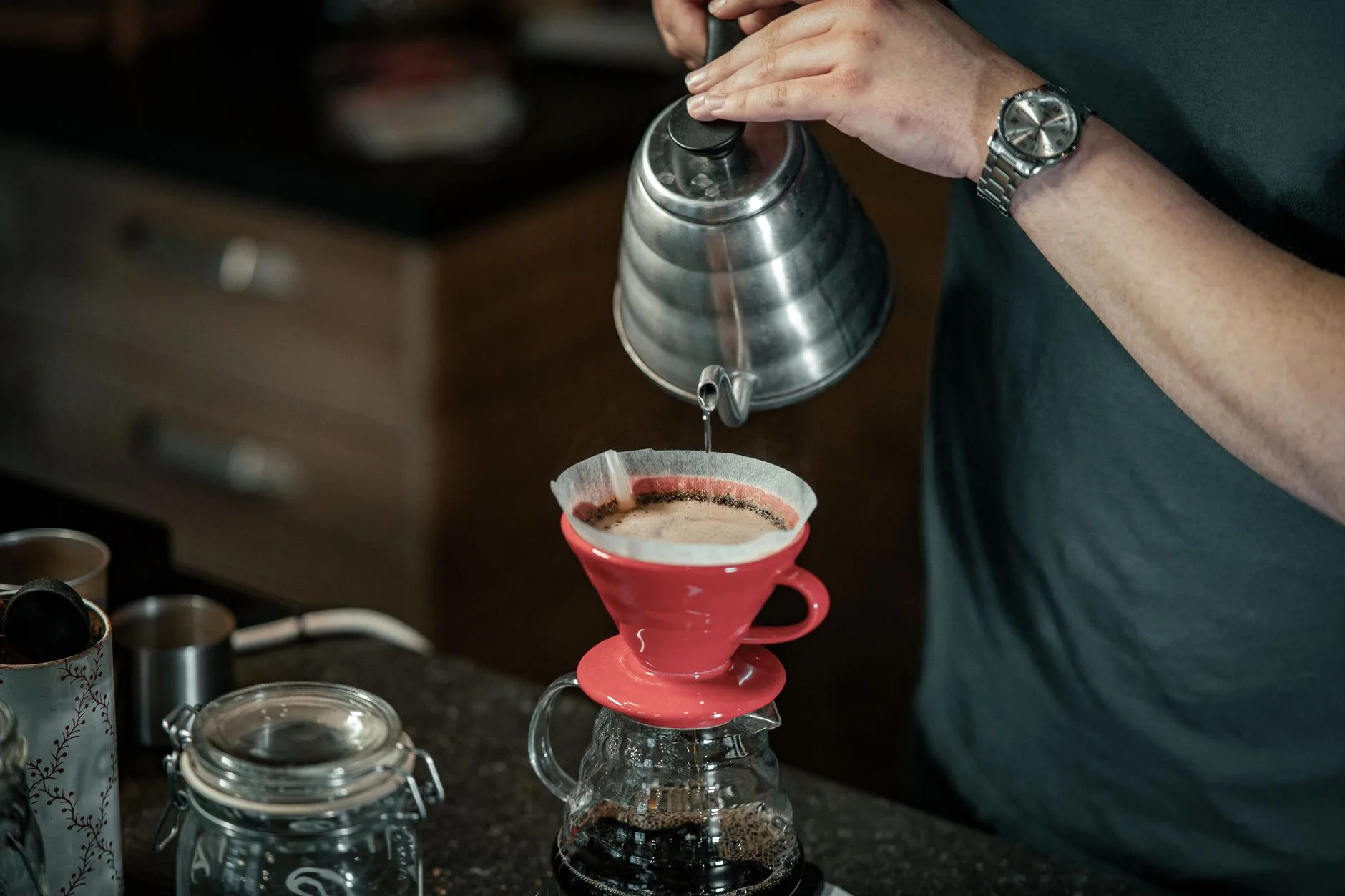
Kit Worth Buying in the UK
Ratios do not demand a show-off coffee bar. Spend money where it improves repeatability.
Scale first
Buy the scale before the fancy kettle. A £15 scale gets you closer to repeatable coffee than a £90 kettle with no scale. If you brew pour-over several times a week, the Timemore Black Mirror Basic 2.0 around £49-£72 is the sensible upgrade. If you mostly use French press, a cheap 0.1g scale is enough.
Kettle second, if you pour by hand
For V60, Kalita and Chemex, a gooseneck kettle makes pouring calmer. Hario’s V60 Drip Kettle AIR often appears around £39-£53 in UK bundles, while a Fellow Stagg EKG is closer to £150-£180. I would buy the Hario or a basic electric gooseneck before spending Stagg money, unless the kettle will live on display and get daily use.
Brewers and filters
A plastic Hario V60 02 is usually £6-£10. Ceramic versions are about £18-£25. AeroPress Original is about £30-£40 depending on retailer. Cafetieres vary wildly, but a decent 8-cup Bodum usually lands around £25-£40.
Filters matter more than people expect:
- V60 papers: usually £4-£7 per 100 depending on size and retailer.
- Chemex bonded filters: often £10-£14 per 100, so mistakes cost more.
- AeroPress papers: about £5-£8 for a pack of 350.
- French press: no paper cost, but you may want a replacement mesh filter after a year or two for £5-£12.
Where I would spend first
If starting from scratch, I would buy a plastic V60, a pack of papers, a £15-£50 scale depending on budget, and good beans from a UK roaster. That setup can make excellent coffee for under £60 if you already own a kettle. Spend the next upgrade on a grinder, not on a prettier dripper.
Common Ratio Mistakes
Most ratio problems are not advanced. They are small misunderstandings repeated every morning.
Measuring coffee by volume and water by weight
This is the classic half-measure. If you weigh water but scoop coffee, the ratio is still drifting. Weigh both. If you refuse to weigh both, at least weigh your favourite scoop once so you know what it roughly holds.
Treating every method as 1:16
French press, V60 and batch filter can all start near 1:16. Espresso and cold brew cannot. Espresso uses output yield. Cold brew often uses concentrate ratios. Moka pot mostly follows basket capacity. One ratio guide cannot flatten every brewer into the same number.
Fixing sourness with more coffee
More coffee makes the drink stronger. It does not automatically make it better extracted. If a V60 is sour at 20g to 320g, adding 2g more coffee may make it stronger and still sour. Grind, water temperature and contact time deserve attention.
Forgetting retained water
French press sludge, AeroPress pucks and pour-over beds all hold some water. That is normal. Do not panic because 320g water in does not produce 320g drink out. Recipes are based on brew water, not final liquid in the mug.
Copying cafe recipes without checking roast
A cafe recipe may be built around a particular grinder, water profile, roast age and batch size. Use it as a clue, not a command. If your beans are darker, older or ground on a different grinder, your best ratio may shift.
Frequently Asked Questions
What is the best coffee-to-water ratio for filter coffee? Start at 1:16, so 1g coffee to 16g water. For one large mug, that is 20g coffee to 320g water. Move to 1:15 for a stronger cup or 1:17 for a lighter one.
How much coffee do I need for 500ml of water? For balanced filter coffee, use about 31g coffee for 500g or 500ml water at 1:16. Use 33g for a richer 1:15 brew or 29g for a lighter 1:17 brew.
Is a coffee scoop accurate enough? It is good enough for a rough cafetiere, but not for repeatable brewing. Different beans and grind sizes change how much coffee fits in a scoop, so a cheap 0.1g scale is better.
Does espresso use the same coffee water ratio guide? No. Espresso ratios compare dry coffee dose with liquid espresso yield. A common starting point is 18g coffee in and 36g espresso out, which is 1:2.
Should I change ratio or grind size first? If the coffee tastes weak but balanced, change the ratio. If it tastes sour, bitter, dry or hollow, adjust grind size, brew time or water temperature before blaming the ratio.
What ratio should I use for cold brew concentrate? Start around 1:4 or 1:5, such as 100g coffee to 500g water, then dilute the finished concentrate with water, milk or ice. For ready-to-drink cold brew, 1:8 to 1:10 is usually easier.