If your cafetiere coffee tastes muddy even when the beans are fresh, the mesh filter is usually the first place to look. The whole cleaning job is really about two things: getting fine grounds out of the mesh and stopping old coffee oils drying into the screen. Leave it a few days and that stale, bitter film gets into every brew.
In This Article
- Cafetiere Cleaning: Mesh Filter Care and Old Coffee Oils
- Why Mesh Filters Hold Old Coffee Oils
- How to Deep Clean the Mesh Filter
- What Cleaning Products Are Worth Buying?
- When to Replace the Mesh, Plate or Glass Beaker
- Mistakes That Make Cafetiere Coffee Taste Stale
- Bottom Line: The Routine I Would Stick To
- Frequently Asked Questions
Cafetiere Cleaning: Mesh Filter Care and Old Coffee Oils
The best daily routine is boring, quick and much more useful than an occasional heroic scrub. Empty the grounds, rinse the beaker, run hot water through the plunger, then leave the parts apart so the mesh dries properly. That is enough for most days.
The problem with a cafetiere is that the plunger looks clean from above. Underneath, the mesh, spiral plate and cross plate trap fine grounds and oil. You only notice it when the next coffee tastes flat, smoky or oddly bitter.
The two-minute after-brew routine
Do this as soon as you pour the last cup:
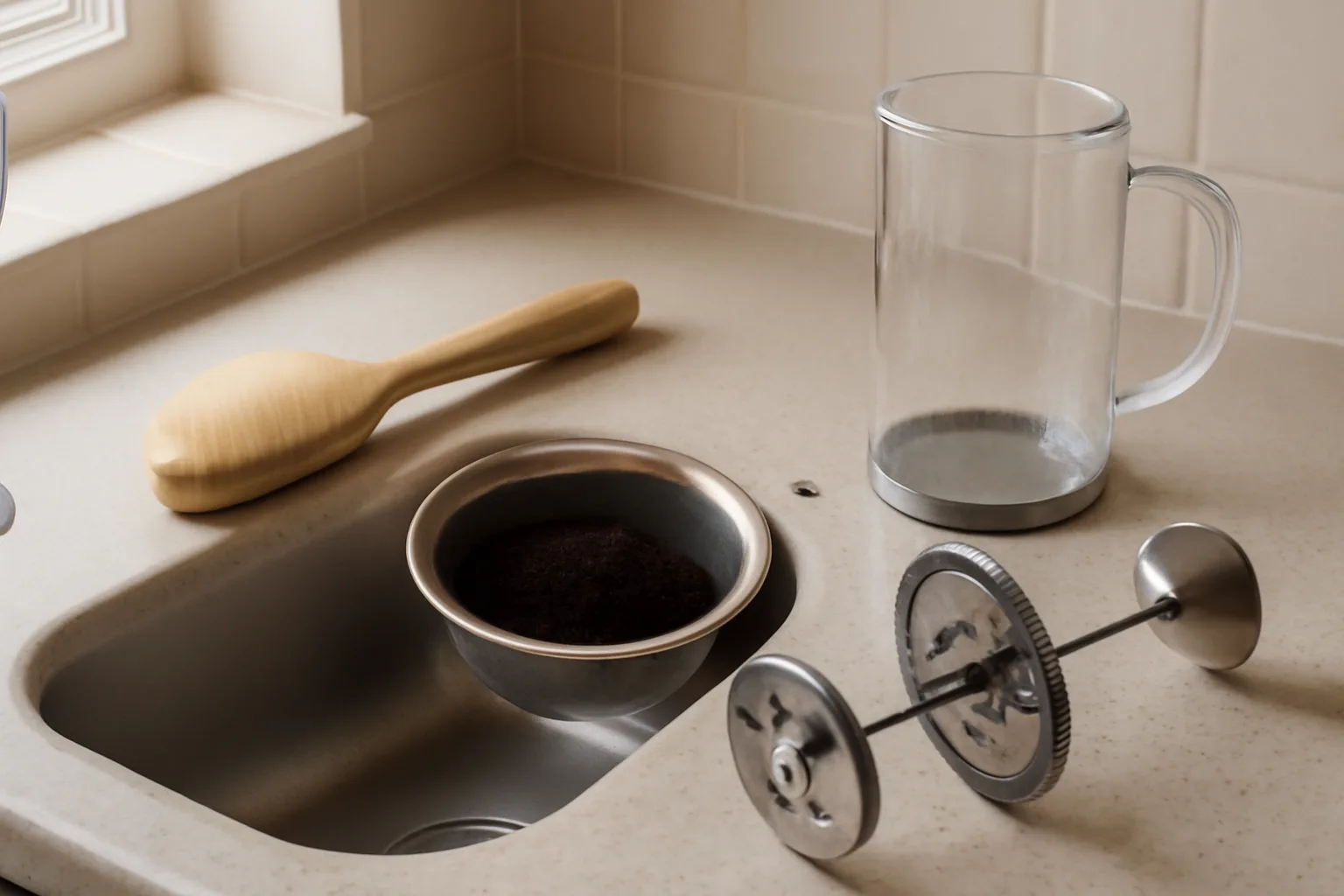
- Scoop out the wet grounds: use a spoon or silicone spatula, not the sink plughole. Coffee grounds block drains beautifully. Ask me how I know.
- Rinse the beaker with hot water: swirl it once, pour through a fine sink strainer, then wipe the inside with a soft sponge.
- Rinse the plunger from both sides: hold the mesh under running water and move the plunger gently so trapped fines loosen.
- Wash with a little washing-up liquid: a pea-sized amount is enough. Too much soap creates its own taste problem if you rinse badly.
- Air-dry the parts separately: do not trap moisture by pushing the plunger back into the beaker while everything is still wet.
That daily routine matters more than buying a special cleaning powder. If you clean immediately, the oils are soft. If you wait until tomorrow, they turn sticky. If you wait until next weekend, you are basically restoring a small museum exhibit.
What not to do every day
Do not bash the plunger against the bin, scrape the glass with a metal spoon, or shove a cloth through the mesh. A cafetiere is simple, but the filter assembly is still easy to bend. Once the mesh warps, it lets more sediment into the cup and pressing starts to feel uneven.
If you brew cafetiere coffee daily, give the plunger a proper strip-down once a week. If you only use it at weekends, a fortnightly deep clean is usually fine.
Why Mesh Filters Hold Old Coffee Oils
French press coffee is naturally oilier than paper-filtered coffee because the mesh lets oils and fine particles through. That is part of the style. The problem is not oil in the cup; it is old oil left in the filter.
The National Coffee Association’s French press guidance says the whole press should be cleaned after each use, including disassembling and washing the filter, because grounds and coffee oil left behind can make the next cup taste bitter. That matches real use. A dirty cafetiere does not just look grubby; it changes flavour.
Where the residue hides
The worst spots are:
- The mesh edge: fine grounds lodge where the mesh meets the metal rim.
- The spiral plate: the spring-like edge catches sludge and brown oil.
- The underside of the cross plate: it often looks clean until you wipe it with kitchen roll.
- The pouring lip: dried coffee collects where the beaker spout curves.
- The lid slot: steam and splashes carry oil into small gaps.
If you use darker roasts, the oily film builds faster. If you use a fine grind, more silt gets stuck in the mesh. If you leave brewed coffee sitting in the press for an hour, you get both problems at once.
Why stale oils taste so obvious
Fresh coffee oil can add body. Old coffee oil tastes heavy, bitter and dull. It also clings to stainless steel and plastic, so a quick rinse may not remove it. That is why a cafetiere can make a newly opened bag of beans taste tired.
If you are already using decent beans and a sensible grind, cleaning is the cheap fix. Before blaming your grinder, read the existing French press brewing guide and then deep clean the mesh. A surprising number of “bad recipe” problems are actually dirty-filter problems.
How to Deep Clean the Mesh Filter
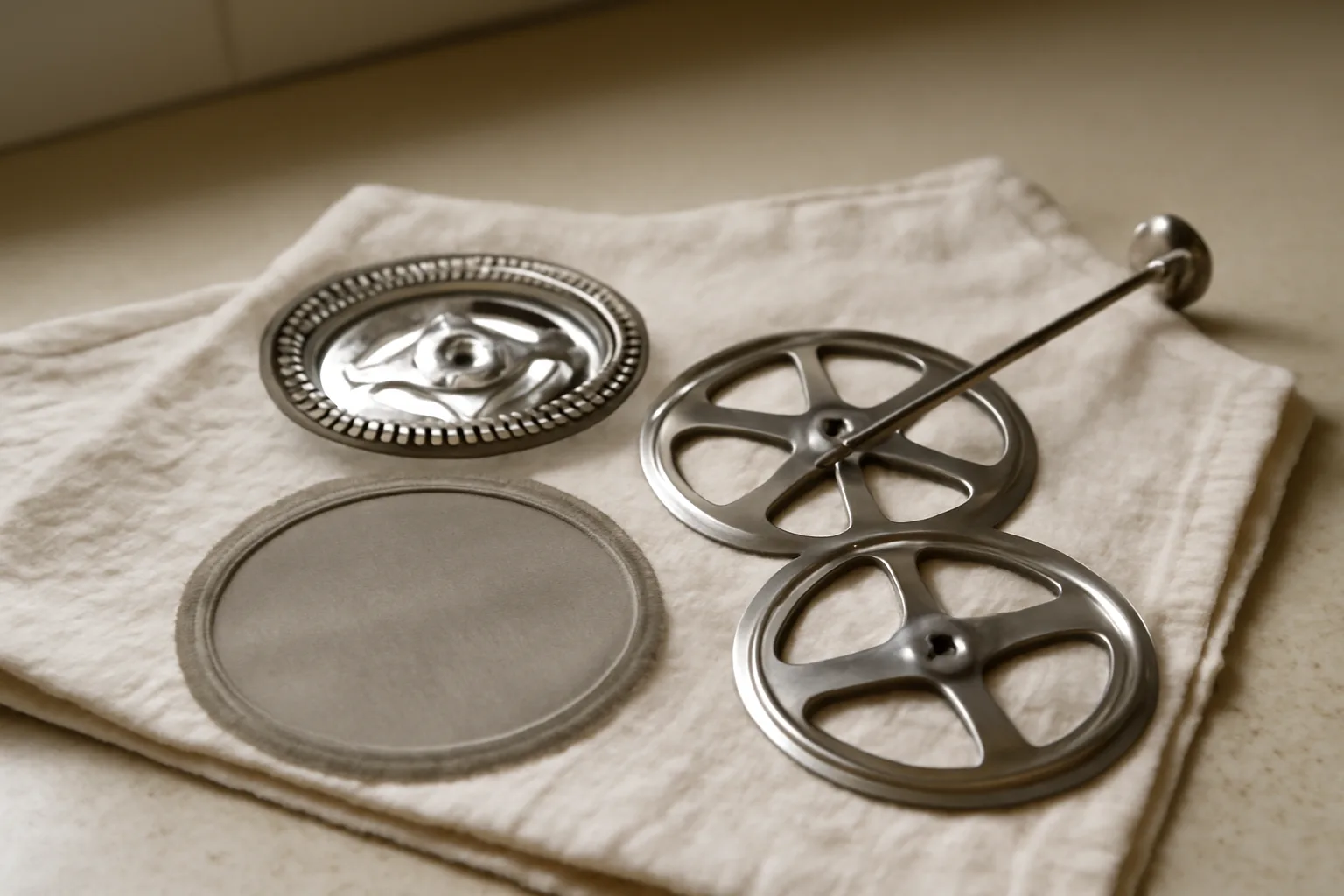
A deep clean means taking the plunger apart, not just waving it under the tap. Most cafetieres unscrew at the bottom of the plunger rod. You will usually find a top plate, mesh screen and spiral plate stacked together.
Take a quick photo before you dismantle it if you are likely to forget the order. No shame. Every cafetiere owner has had a moment of staring at three metal discs and wondering which way round civilisation goes back together.
Step-by-step deep clean
Use this weekly if you brew every day:
- Unscrew the plunger assembly: hold the rod firmly and turn the base nut or plate by hand.
- Separate the mesh and plates: lay them on a towel in order so reassembly is obvious.
- Rinse away loose grounds: use hot water first so you are not scrubbing grit into the mesh.
- Soak for 10-15 minutes: use hot water with a drop of washing-up liquid, or a coffee-equipment cleaner if the oil film is stubborn.
- Brush gently: use a soft toothbrush, bottle brush or coffee brush. Push across the mesh, not hard into it.
- Rinse until the water runs clean: smell the parts. If they still smell like old coffee, keep rinsing.
- Dry fully before reassembly: trapped moisture encourages stale smells and makes the next brew taste flat.
The important bit is gentle pressure. If you dent the mesh, you have created a sediment problem. A clean but warped filter is not a win.
Dishwasher or hand wash?
Check the manufacturer’s instructions first. Glass beakers and some stainless parts may be dishwasher-safe, but wooden handles, painted frames, copper finishes and cheaper plastic lids often dislike dishwasher heat.
Even when the beaker can go in the dishwasher, I still hand-wash the plunger. Dishwashers are good at broad surfaces and less reliable inside mesh layers. They can also bake residue into awkward corners if the parts are stacked badly.
Removing stubborn brown film
For a stubborn oil line, soak the plunger parts in hot water with a coffee cleaner, then rinse very thoroughly. Cafetto says its EVO cleaner removes coffee oils, grounds and stains from espresso equipment; you do not need that exact product for every cafetiere, but it explains why coffee-specific cleaners work better on oil than plain water.
Use vinegar for limescale only if your cafetiere maker allows it, and rinse properly afterwards. Vinegar smell in coffee is grim. It is also not the right tool for oily residue.
What Cleaning Products Are Worth Buying?
You do not need a cupboard full of barista cleaning kit for a cafetiere. Spend money where it solves a real annoyance: stuck grounds, bent mesh, broken glass or oily residue that normal washing will not shift.
The cheap kit that earns its place
My practical cafetiere cleaning kit would be:
- Soft toothbrush: £1-£3 from any supermarket; good for mesh edges and lid grooves.
- Narrow bottle brush: about £3-£8 from Lakeland, Amazon UK or supermarkets; useful for tall beakers.
- Sink strainer: about £2-£6; stops grounds going down the drain.
- Microfibre cloth: about £2-£5; dries the beaker without scratching.
- Coffee cleaner: around £6-£12 for small tubs/tablets if you want an occasional oil-removal soak.
If I were buying only one thing, I would buy the sink strainer. It is not glamorous, but blocked kitchen pipes are less fun than any cleaning routine. If you already have an espresso setup beside the cafetiere, the same logic applies to coffee station mats and drip trays: small bits of cleaning kit stop old coffee mess becoming permanent.
Replacement mesh prices in the UK
Replacement mesh is cheap if your cafetiere uses standard sizes. Recent UK prices I checked include:
- Judge 60mm mesh: about £2.85 for a 3-cup compatible mesh.
- La Cafetière replacement mesh: about £2.50 for 3-cup, £3.99 for 4/6/8-cup and £4.50 for 12-cup sizes from Salt & Pepper.
- Harts of Stur La Cafetière small 2-pack: about £1.99 when available.
- ShopCoffee La Cafetière mesh: around £4.68 for a mesh-only option, with full replacement sets costing more.
- Redber premium/specialist spares: can be much higher, such as about £21.99 for some branded mesh parts.
Measure before buying. A 3-cup mesh will not magically stretch into an 8-cup press, and “universal” listings are often less universal once you read the diameter.
When a cleaner is overkill
Do not buy espresso backflush powder just because a forum says it makes everything sparkle. For a normal cafetiere, hot water, washing-up liquid and a brush do most of the work. Use coffee cleaner occasionally if:
- The mesh still smells stale after washing.
- Dark brown oil remains around the rim.
- You use oily dark roasts every day.
- The beaker has a tea-coloured film that will not wipe away.
If a cleaner is designed for espresso machines, read the label before using it on plastic, painted or coated cafetiere parts. Stronger is not automatically better.
When to Replace the Mesh, Plate or Glass Beaker
Cleaning has a limit. If the mesh is bent, frayed or permanently stained with rancid oil, replacement is often cheaper than fighting it.
A replacement mesh at £2-£5 is usually worth trying before you replace the whole cafetiere. A new glass beaker may cost £10-£25 depending on brand and size. A full decent cafetiere can be anywhere from about £15 for a basic supermarket model to £38 for a La Cafetière Pisa at Lakeland, and more for premium stainless designs.
Replace the mesh if this happens
Look for:
- Frayed edges: tiny wires sticking out are a cleaning and drinking hazard.
- Warped shape: if the mesh no longer sits flat, it will let more sediment past.
- Loose fit: grounds escaping around the edge mean the seal is poor.
- Permanent smell: if it smells stale after a proper soak, retire it.
- Rust or pitting: uncommon on decent stainless mesh, but a clear replacement sign.
Sediment is not always the mesh’s fault. If you grind too fine, even a good filter will pass sludge. Check the French press grinder guide before blaming the cafetiere.
Replace the beaker if this happens
A cracked glass beaker goes. No debate. Small chips near the rim also make pouring unpleasant and cleaning less safe. If the frame is loose or the handle wobbles, check whether the screws can be tightened; if not, replace the beaker or the whole press.
Stainless cafetieres last longer, but they can hide residue because you cannot see the film as easily. Wipe the inside with white kitchen roll after washing. If it comes away brown, it was not clean.
Mistakes That Make Cafetiere Coffee Taste Stale
Most stale cafetiere coffee comes from small cleaning shortcuts repeated for weeks. None looks disastrous on its own. Together, they make every brew taste a bit tired.
Leaving coffee in the press
Once brewing is done, pour the coffee out. Leaving liquid and grounds in the beaker keeps extracting bitterness and leaves more oil on the filter. If you want a second mug later, decant into a thermal jug.
This is also where brew method choice matters. If you routinely want coffee sitting around for hours, a cafetiere is the wrong tool. A batch brewer or insulated server is less needy.
Rinsing but never dismantling
Rinsing the assembled plunger is better than nothing, but it misses the trapped line between mesh and plate. If the filter looks clean but smells stale, this is probably why.
Add one weekly strip-down to your routine. It takes five minutes once you know how the parts fit together.
Using too much soap and not rinsing
Soap residue is just as annoying as coffee oil. Use a small amount, rinse thoroughly, and smell the mesh before you reassemble it. If it smells perfumed, keep rinsing.
Ignoring water marks and limescale
Hard-water marks do not taste like old coffee oil, but they make the beaker look permanently dirty. If you are in a hard-water area, occasional limescale cleaning may be needed. Keep that separate from oil cleaning: descale for mineral marks, wash or coffee-clean for oils.
If your water is making every brew taste dull, the broader water quality and coffee guide is worth reading too. For the same reason, do not ignore the grinder: stale fines in the burr chamber can undo a clean cafetiere, so the grinder burr cleaning guide is the next maintenance job to check.
Bottom Line: The Routine I Would Stick To
My cafetiere routine is simple: rinse straight after brewing, wash the beaker properly, rinse the mesh from both sides, and strip the plunger once a week. That stops old coffee oils becoming part of the flavour.
I would spend about £2-£6 on a sink strainer, £1-£3 on a toothbrush, and keep a spare mesh in the drawer if your cafetiere uses a common size. A £2.50-£4.50 La Cafetière mesh is cheap insurance against sediment and stale taste. I would only buy coffee cleaner if normal washing still leaves the filter smelling old.
The main thing is speed. Clean it while the oils are still warm and soft. Future you, holding a cup that actually tastes like the beans you paid for, will be quietly smug.
Frequently Asked Questions
How often should you clean a cafetiere mesh filter? Rinse it after every brew and dismantle the plunger for a proper clean about once a week if you use the cafetiere daily.
Why does my cafetiere coffee taste bitter even with fresh beans? Old coffee oils trapped in the mesh or spiral plate can make fresh coffee taste bitter, stale or heavy. Deep clean the plunger before changing your recipe.
Can you put a cafetiere in the dishwasher? Some glass beakers and stainless parts are dishwasher-safe, but check the manufacturer’s instructions. I would still hand-wash the mesh filter because dishwashers often miss trapped oils.
What is the best cleaner for old coffee oils? For most cafetieres, hot water, washing-up liquid and a soft brush are enough. Use a coffee-equipment cleaner occasionally if the mesh still smells stale after washing.
How much does a replacement cafetiere mesh cost? Common UK replacement mesh filters are often about £2-£5, though specialist branded parts can cost £10-£22. Measure the mesh diameter before buying.
Should I replace the whole cafetiere or just the mesh? Replace the mesh first if the glass and frame are fine. Replace the whole cafetiere if the beaker is cracked, the handle is loose, or the correct spare parts are hard to find.