The Baratza Encore is the best coffee grinder for French press in this UK shortlist if you make several cups regularly: its electric operation and 40-step adjustment are a more useful combination than a grinder designed mainly for espresso. For one or two cups, Timemore’s C3S Max offers a smaller, quieter manual route. The De’Longhi KG79 costs less than the Encore, while the 1Zpresso Q suits a travel bag rather than a large cafetière.
These choices are based on manufacturer specifications, customer feedback and UK availability; we have not tested their grind output side by side. A coarse setting is a starting point: your beans, recipe and taste decide the final adjustment.
Our top 4 picks

Best overall electric — Baratza Encore, black.
40 stepped settings with a range suited to French press and other filter brews.

Best manual for daily use — Timemore Chestnut C3S Max, black.
30g maker-stated capacity, steel burrs and a folding handle.
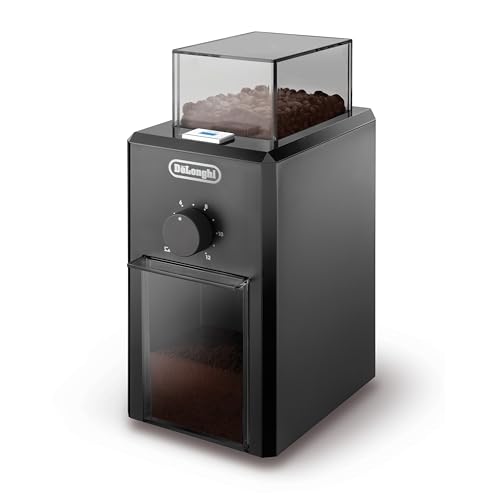
Best lower-cost electric — De’Longhi KG79, black.
A 16-setting burr grinder for a household that prefers a button to a hand crank.

Best compact travel pick — 1Zpresso Q.
A small steel-burr hand grinder for single servings; allow for its limited capacity.
In this guide
- Comparison at a glance
- French-press grinders reviewed
- What matters for a cafetière grind
- Manual versus electric
- Dial in your grind
- How we chose
- The bottom line
- Frequently asked questions
Comparison at a glance
| Grinder | Best use | Burr / settings | Dose fit | Main trade-off |
|---|---|---|---|---|
| Baratza Encore black | Regular electric French press | Steel conical / 40 steps | Hopper for repeat doses | Costs more than a basic electric |
| Timemore C3S Max black | Daily manual brewing | Steel conical / adjustable | Up to 30g beans | Hand effort; check stock |
| De’Longhi KG79 black | Lower-cost electric | Burr wheels / 16 steps | Cup selector; separate grounds bin | Fewer adjustment steps |
| 1Zpresso Q | Travel and single servings | Steel conical / adjustable | About 15–20g beans | Small batches; limited buyer feedback |
Choose by the number of beans you grind at once, not by a nominal “cup” count alone. The small 1Zpresso hopper is useful on a trip, but it means refilling for a family-size press. If you switch between brewing methods, note a separate setting for each rather than assuming one coarse position suits every bean.
French-press grinders reviewed
1. Baratza Encore, black: best overall electric
Baratza confirms that the standard Encore has 40 stepped settings and is suited to filter and French-press grinding. That combination makes it the strongest everyday choice here when a household brews several doses or switches between immersion and pour-over. Its repeatable dial is easier to return to than an unmarked hand adjustment.
This is the standard Encore, not the Encore ESP; compare the ESP separately if espresso is your priority. Nor can a setting count alone prove which grinder produces the fewest fines. Start in the coarse half of the range, then tune by taste. The larger counter footprint and higher outlay are its clear costs.
2. Timemore Chestnut C3S Max, black: best manual for daily use
Timemore lists a 30g capacity for the C3S Max, a steel conical burr set and a handle that folds for storage. It is a strong fit for a one- or two-person cafetière when counter space and electrical sockets are scarce. You can grind just before brewing, then put the grinder away.
Hand grinding is less appealing if you brew a large press several times a day. Stock of the black model may be limited, so check availability before ordering.
3. De’Longhi KG79, black: best lower-cost electric
De’Longhi specifies 16 grind settings, a cup selector and a removable upper grinding wheel for cleaning. It is the practical lower-cost electric pick if avoiding hand cranking matters more than having a large adjustment range. Its separate grounds container keeps the process tidy enough for daily use.
The cup selector is a convenience control, not a substitute for weighing beans when you want repeatable recipes. The 16 positions offer fewer steps than the Encore’s 40. More settings do not, on their own, promise less sediment.
4. 1Zpresso Q: best compact travel pick
1Zpresso describes its Q-series travel grinder as holding about 15–20g of beans. The Q is a compact steel-burr option for one mug, office storage or camping. Its small dose is a benefit when you want little equipment on a trip.
Expect to refill it for a full-size French press. Buyer feedback for the Q is thinner than for the other picks, so check its small capacity against your usual dose before ordering.
What matters for a cafetière grind
Coarse, but not blindly at the end of the dial
A French press uses a metal mesh rather than paper, so fine particles can make the cup silty. Baratza’s brew-method guidance recommends evenly coarse grounds for the method. That is a useful aim, not a universal number: different grinders use different scales. If the cup is thin, try a little finer before changing several other variables at once.
- Burrs over blades: adjustable burr spacing gives you a repeatable setting; a blade grinder relies on chopping time.
- Dose: match the grinder’s bean capacity to the coffee you actually put in your cafetière.
- Cleaning: old grounds and oils affect flavour; follow the maker’s burr-cleaning instructions.
Our French-press brewing guide covers the whole recipe, while the broader grinder comparison explains burr types beyond this one brew method.
Manual versus electric
Choose around the batch, not a slogan
The Timemore makes sense if you enjoy a small daily dose and want a grinder that disappears into a cupboard. The 1Zpresso Q is smaller still. For repeat 30g-plus brews, the Encore saves effort; the KG79 is the less expensive electric alternative with fewer adjustment positions. Choose around how much you grind and how often, rather than assuming a hand grinder will suit every batch.
If the purchase is mainly about a tighter budget, our grinders-under-£100 guide provides wider options. For the general choice, see manual versus electric grinders; the right answer changes with dose size and how often you brew.
Dial in your grind
Change one variable at a time
Start with the grinder maker’s coarse-range recommendation, then brew a familiar bean and dose. If the cup is unpleasantly thin, move a little finer; if it is harsh or unusually silty, move a little coarser. Sediment is partly inherent to a metal-filter brew, so no grinder promises a paper-filter-clear cup. Write down the setting that works for that bean. Our grinder-adjustment guide explains how to make those small changes consistently.
- Keep dose and water constant: otherwise you cannot tell what the grind changed.
- Do not force the plunger: a stuck filter can indicate excess fines or too much coffee.
- Clean between batches: follow the maker’s instructions before disassembling a burr set.
How we chose
We compared the grinders by their burr type, adjustment range, bean capacity, cleaning access, footprint, UK availability and customer feedback. Manufacturer specifications support the model-specific details; they do not prove comparative flavour or longevity. The four choices cover regular electric brewing, compact daily hand grinding, a lower-cost electric option and travel doses, so you can choose by batch size and effort.
The bottom line
Buy the Baratza Encore black for regular French-press brewing if its cost and space suit you. Choose the Timemore C3S Max black for a compact hand grinder and smaller daily batches; check stock first. The De’Longhi KG79 black is the lower-cost electric compromise, while the 1Zpresso Q belongs in a travel or single-serving setup. The common buying mistake is choosing by advertised grind-setting count without checking capacity and whether the coarse end gives you an adjustment you can repeat.
Frequently asked questions
Which grinder is best for French press at home? The Baratza Encore is the best overall choice in this shortlist for regular electric grinding. Its 40-step range is suited to French press and other filter methods; choose a hand grinder if space or small doses matter more.
Can I use a blade grinder for a cafetière? You can, but its chopping time is harder to repeat than a burr grinder setting. An adjustable burr grinder is the more useful choice when you want to tune and return to a coarse grind.
Is a hand grinder practical for a full-size French press? It depends on your batch size. The Timemore C3S Max holds up to 30g of beans; larger brews may need a refill, and repeated batches take more effort than an electric grinder.
Do I need the coarsest possible setting? Not necessarily. Start in the maker’s coarse range, taste the coffee and move one step at a time. Beans, dose and steeping method affect the result.
How much coffee can the 1Zpresso Q hold? 1Zpresso describes the Q series as holding about 15–20g of beans. That suits one serving but usually requires refilling for a larger French press.
Will a burr grinder remove all sediment? No. A French press has a metal mesh and normally leaves some fine particles in the cup. An adjustable burr grinder helps you control the grind, but a paper-filter-clear result is not its purpose.