You’re standing in front of two coffee grinders at Bella Barista, one costs £45 and has a hand crank, the other costs £200 and plugs into the wall. Both grind coffee beans. Both produce drinkable espresso. And yet the person behind the counter is telling you the choice matters more than you think. They’re right — but probably not in the way you’d expect. The expensive electric grinder isn’t automatically better, and the cheap manual one isn’t just for hipsters who like suffering.
The manual vs electric grinder debate has been going on in coffee circles for years, and the answer genuinely depends on how you make coffee, how much you make, and whether you’d rather spend money or effort. I’ve used both daily for long enough to know that each has situations where it wins outright — and situations where it’s the wrong choice entirely.
In This Article
- The Quick Answer
- How Manual Coffee Grinders Work
- How Electric Coffee Grinders Work
- Grind Quality Comparison
- Speed and Convenience
- Noise: The Early Morning Factor
- Cost Comparison
- Durability and Maintenance
- Portability and Travel
- Which Grinder for Which Brew Method
- Best Manual Grinders for the Money
- Best Electric Grinders for the Money
- Frequently Asked Questions
The Quick Answer
Buy a manual grinder if: you make 1-2 cups per day, you’re on a budget under £100, you want the best grind quality per pound spent, you travel with your coffee gear, or you need to grind quietly at 6am without waking the house.
Buy an electric grinder if: you make 3+ cups per day, you grind for espresso regularly, you value speed and consistency over everything else, or you simply can’t be bothered hand-cranking before your first coffee of the morning.
How Manual Coffee Grinders Work
The Mechanics
A manual grinder is beautifully simple. Two burrs — a fixed outer ring and a rotating inner cone — sit inside a cylindrical body. You put beans in the top, turn the handle, and gravity feeds the beans between the burrs. The ground coffee falls into a collection chamber below. A stepped or stepless adjustment dial changes the distance between the burrs, which controls grind size from Turkish-fine to French press-coarse.
Why They’re Better Than You’d Expect
The assumption most people make is that manual means inferior. In coffee grinding, the opposite is often true. A £50 manual grinder typically uses the same quality 38mm steel burrs found in £150-200 electric grinders. The money you’d spend on a motor, housing, and electronics in an electric grinder goes directly into burr quality in a manual one. That’s why the 1Zpresso JX at £65 produces grind consistency that rivals electric grinders costing three times as much.
The Physical Reality
Let’s not pretend hand grinding is effortless. Grinding 18g of beans for espresso takes about 45-60 seconds of sustained cranking. For a coarser French press grind, it’s about 30 seconds. The effort is roughly equivalent to using a pepper mill — not exhausting, but noticeable. First thing in the morning, before any caffeine, some people find this meditative. Others find it deeply annoying. Know which camp you’re in before buying.
How Electric Coffee Grinders Work
The Mechanics
Electric grinders use a motor to spin burrs at high speed — typically 400-1,600 RPM depending on the design. You load beans into a hopper, press a button or flip a switch, and ground coffee appears in a container or portafilter in seconds. Grind adjustment works the same way as manual grinders — turning a dial changes the burr distance.
Flat Burrs vs Conical Burrs
Electric grinders come in two main burr configurations:
- Conical burrs — the most common in home grinders. A cone-shaped inner burr sits inside a ring-shaped outer burr. Generally quieter, cooler-running, and more forgiving of different bean types
- Flat burrs — two parallel disc burrs face each other. Produce more uniform particle sizes at the cost of more noise, heat, and retention. Preferred by espresso enthusiasts
Our complete grinder guide covers the differences in detail. For most home users, conical burrs are the right choice.
Speed vs Heat
Faster motors grind quicker but generate more heat, which can affect delicate flavour compounds in the beans. High-end electric grinders use slow-speed motors (400-600 RPM) to minimise heat transfer — but these cost £300+. Budget electric grinders spin at 1,000+ RPM, which is fine for most people but noticeable to serious coffee tasters.
Grind Quality Comparison
Consistency Is King
The most important measure of grinder quality is consistency — how uniform are the ground particles? Inconsistent grinds (a mix of fine powder and coarse chunks) produce uneven extraction: the fines over-extract (bitter), the coarse bits under-extract (sour), and the cup tastes muddy.
Manual vs Electric at the Same Price
At the £50-100 price point, manual grinders produce noticeably more consistent grinds than electric ones. The 1Zpresso Q2 (about £60) outgrinds the Sage Smart Grinder Pro (about £200) in particle uniformity tests conducted by coffee reviewers. This seems counterintuitive, but the reason is simple: all the budget goes into the burrs rather than the motor.
At the £200-400 price point, good electric grinders catch up and eventually surpass manuals — the combination of precision manufacturing, low-speed motors, and large burr sets produces exceptional consistency. The Eureka Mignon range is a good example of where electric grinders start to pull ahead.
Espresso vs Filter
For espresso, where tiny changes in grind size matter enormously, electric grinders with stepless adjustment are generally better. They allow micro-adjustments that most manual grinders’ stepped dials can’t match. For filter methods (pour-over, French press, AeroPress), manual grinders perform equally well or better than electric at any price point.
Speed and Convenience
Time Per Grind
- Manual grinder: 30-60 seconds for a single dose (15-20g)
- Electric grinder: 5-15 seconds for the same dose
If you make one cup of pour-over coffee each morning, the time difference is trivial — 40 extra seconds won’t change your routine. If you’re making espresso for four people after Sunday lunch, hand-grinding four doses (nearly four minutes of cranking) gets old fast.
Workflow Integration
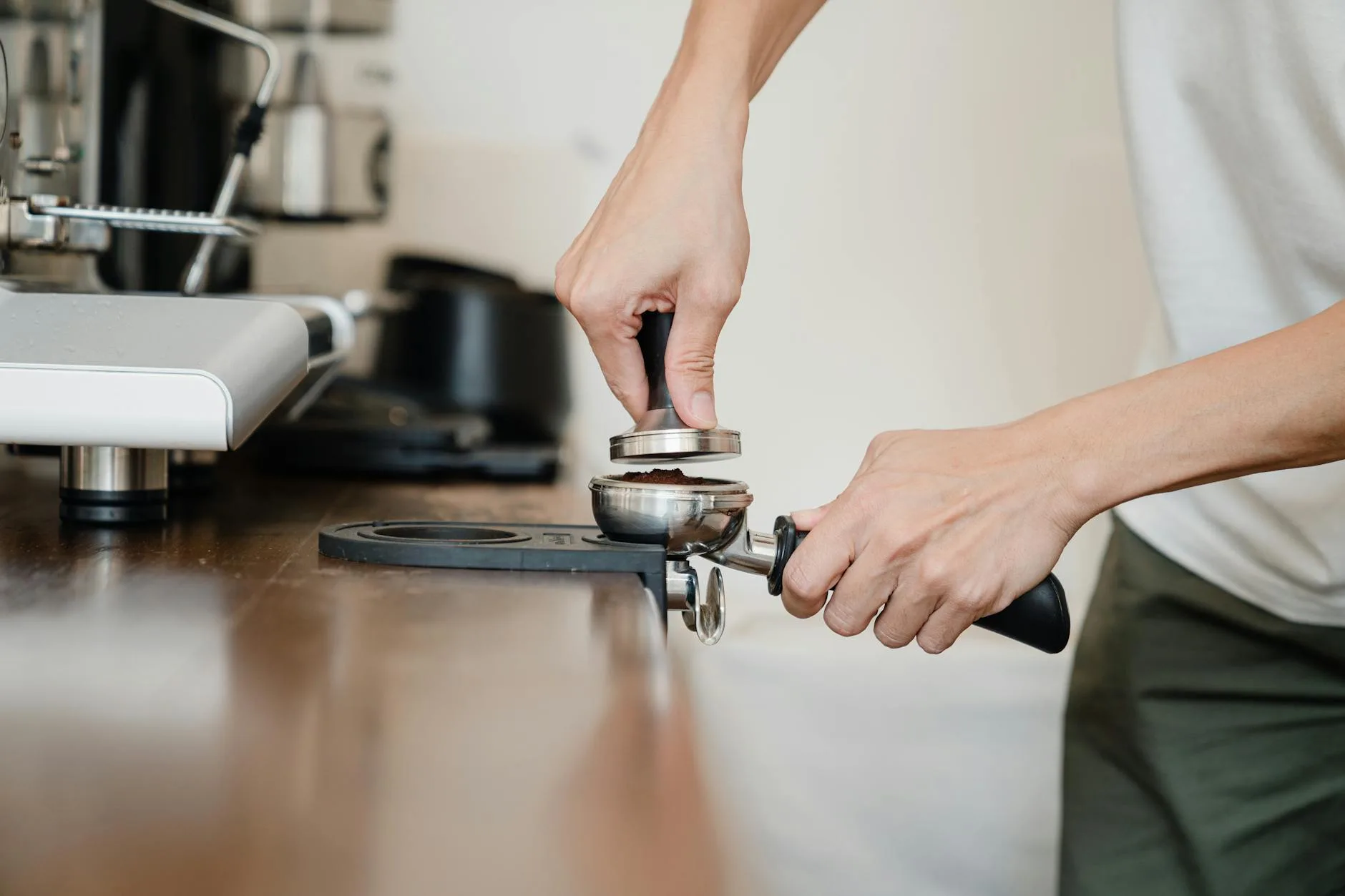
Electric grinders fit into an espresso workflow more naturally. Grind into the portafilter, tamp, pull the shot — it’s a smooth sequence. Manual grinders add a step: grind into the catch cup, transfer to the portafilter, tamp, pull. Not a big deal, but espresso people care about workflow.
Noise: The Early Morning Factor
Manual: Nearly Silent
A manual grinder makes about 50-60 dB — roughly the volume of a quiet conversation. You can grind coffee at 6am in a flat with thin walls and nobody will hear you. This is the single biggest reason many people buy manual grinders. If your coffee station is near bedrooms, a manual grinder is a courtesy to everyone sleeping.
Electric: Loud
Most electric grinders produce 70-90 dB — somewhere between a vacuum cleaner and a food blender. Even the quieter ones (Eureka Mignon Silenzio, for example) are noticeably louder than a manual grinder. At 6am, an electric grinder announces your coffee habits to the entire household.
The Sage Dose Control Pro is one of the quieter electric options, but “quiet for an electric grinder” still means “louder than any manual grinder.”
Cost Comparison
Upfront Cost
- Budget manual: £30-50 (Timemore C2, Hario Skerton)
- Mid-range manual: £60-120 (1Zpresso JX, Timemore Chestnut C3)
- Premium manual: £150-250 (Comandante C40, 1Zpresso J-Max)
- Budget electric: £50-100 (Baratza Encore, Wilfa Svart)
- Mid-range electric: £150-300 (Sage Smart Grinder Pro, Eureka Mignon Crono)
- Premium electric: £300-600 (Niche Zero, Eureka Mignon Specialità, DF64)
Cost Per Quality
At every price bracket up to about £150, manual grinders deliver better grind quality per pound spent. A £65 1Zpresso JX measurably outperforms a £150 Sage Smart Grinder Pro in grind consistency. Above £200, electric grinders offer capabilities that manual grinders can’t match — programmable dosing, stepless adjustment, and speed.
Running Costs
Manual grinders have zero running costs — no electricity, no motors to burn out. Electric grinders add a tiny electricity cost (pennies per year) but motors and electronics eventually fail. A good manual grinder lasts decades with only occasional burr replacement (every 5-10 years). Electric grinders typically last 5-8 years before needing motor or electronic repairs.
Durability and Maintenance
Manual Grinder Care
- Clean weekly — brush out retained grounds from the burrs
- Deep clean monthly — disassemble burrs, wipe with a dry cloth, reassemble
- Burr replacement — every 5-10 years with daily use (burrs cost about £15-30)
- Common failure point — basically none; the adjustment mechanism can loosen over years but is easily tightened
Electric Grinder Care
- Clean weekly — brush out the grind chamber and chute
- Deep clean monthly — run grinder cleaning tablets through (about £5 per pack)
- Burr replacement — every 3-7 years depending on use (burrs cost £20-60)
- Common failure points — motor burnout (usually 5-8 years), electronics failure, static buildup clogging the chute
Follow a proper grinder maintenance schedule regardless of which type you choose — clean burrs produce better coffee.
Portability and Travel
Manual Grinders Win Entirely
If you travel with coffee gear — hotel rooms, camping, holiday rentals — a manual grinder is the only practical option. The 1Zpresso Q2 weighs 400g and fits in a jacket pocket. The Timemore C2 is similarly compact. Pack a grinder, an AeroPress, and a bag of beans, and you’ve got café-quality coffee anywhere.
Electric grinders are heavy (1-3 kg), need mains power, and are fragile. Nobody packs a Eureka Mignon in their hand luggage.
Which Grinder for Which Brew Method
Espresso
Winner: Electric (above £200). Espresso demands precision — a few microns of grind adjustment can mean the difference between a 25-second extraction and a 40-second one. Stepless electric grinders allow the micro-adjustments that espresso requires. Manual grinders work for espresso (the 1Zpresso J-Max is popular among espresso home baristas), but the workflow is clunkier and adjustment is less precise.
Pour-Over (V60, Chemex, Kalita)
Winner: Either. Medium-fine grinds for pour-over are well within both types’ capabilities. A £60 manual grinder produces excellent pour-over results. If you only make pour-over, save your money and buy manual.
French Press
Winner: Manual. Coarse grinding is quick and easy by hand — about 25-30 seconds. The grind consistency at the coarser end is comparable between manual and electric at all price points. Our French press grinder guide has specific recommendations.
AeroPress
Winner: Manual. Similar reasoning to French press — the medium grind is quick to produce by hand, and the AeroPress is forgiving enough that minor consistency differences are irrelevant.
Best Manual Grinders for the Money
- Under £50: Timemore C2 (about £45) — the best budget manual grinder. Stainless steel burrs, aluminium body, comfortable to grind. Ideal for filter methods.
- £50-100: 1Zpresso JX (about £65) — punches way above its price. 48mm steel burrs produce espresso-capable grinds. The standard recommendation for anyone serious about manual grinding.
- £100-200: Comandante C40 (about £200) — the benchmark. German-made, incredible build quality, the smoothest grinding action of any manual grinder. Worth it if you value the tactile experience.
Best Electric Grinders for the Money
- Under £100: Baratza Encore (about £95) — the entry-level electric grinder that coffee people actually respect. 40mm conical burrs, 40 grind settings, reliable motor. Best for filter methods.
- £150-250: Sage Smart Grinder Pro (about £200) — good all-rounder for espresso and filter. Digital display, 60 settings, dosing timer. Available at Currys and John Lewis.
- £250-400: Niche Zero (about £300) — the single-dose electric grinder that changed the market. Near-zero retention, beautiful design, excellent for espresso and filter. Worth every penny if espresso is your thing.
Frequently Asked Questions
Is a manual coffee grinder as good as electric? At the same price point (under £150), manual grinders typically produce more consistent grinds than electric ones because the budget goes into burr quality rather than motors. Above £200, electric grinders catch up and eventually surpass manuals in precision and convenience. For filter coffee, a good manual grinder is all you need at any budget level.
How long does it take to grind coffee by hand? About 30-60 seconds for a single dose of 15-20g, depending on the grind size and grinder quality. Coarser grinds (French press) take less time than fine grinds (espresso). After a few days, you develop a rhythm and it becomes automatic.
Can I use a manual grinder for espresso? Yes, but choose carefully. Budget manual grinders (under £50) often lack the fine adjustment needed for espresso. The 1Zpresso JX-Pro (about £85) and J-Max (about £150) are designed specifically for espresso grinding. They take more effort to grind fine, but the results rival electric grinders costing much more.
Do electric grinders overheat the coffee? High-speed electric grinders (1,000+ RPM) can warm the grounds slightly, which theoretically affects flavour. In practice, the temperature increase is small and most people can’t taste the difference. Slow-speed grinders (400-600 RPM) and manual grinders produce no measurable heat. If heat concerns you, grind in short bursts or choose a slow-speed model.
Which lasts longer, manual or electric? Manual grinders last longer because there are fewer components that can fail — no motor, no electronics, no power supply. A well-made manual grinder with replaceable burrs can last 15-20+ years. Electric grinders typically last 5-8 years before needing motor or electronic repairs, though burrs and basic maintenance can extend this.