You’ve just paid £4.50 for a flat white that took thirty seconds to make, and you’re wondering — for the hundredth time — whether you could make something this good at home. The short answer is yes. The longer answer involves understanding what “barista quality” actually means, what equipment gets you there, and where the real skill gap lies between your kitchen and the coffee shop counter.
The coffee industry has a vested interest in making you think café-quality espresso requires a £3,000 machine and a barista certificate. It doesn’t. What it does require is decent equipment, fresh beans, and about two weeks of practice. After that, you’ll be pulling shots that match or beat most high-street chains. Here’s exactly what’s involved.
In This Article
- What Barista-Quality Actually Means
- The Three Pillars: Machine, Grinder, Beans
- Realistic Budget for Café Quality at Home
- The Skills You Need to Learn
- Milk Texturing: The Real Differentiator
- Bean-to-Cup Machines: A Shortcut Worth Considering
- Common Mistakes That Kill Home Espresso
- How Long Before You’re Making Great Coffee?
- Frequently Asked Questions
What Barista-Quality Actually Means
Before we get into equipment, let’s define the target. “Barista quality” isn’t one thing — it’s three things working together.
The Espresso Shot
A good espresso has a rich, syrupy body with a layer of crema on top. It should taste balanced — sweet, slightly bitter, with the flavour characteristics of the bean coming through clearly. A bad espresso tastes sour (under-extracted), bitter and ashy (over-extracted), or thin and watery (wrong dose or pressure).
The technical standard from the Speciality Coffee Association defines espresso as 7–9g of coffee per single shot, extracted at 9 bars of pressure and 90–96°C water temperature, producing 25–35ml in 25–30 seconds. These numbers matter — they’re what separates real espresso from hot brown water pushed through grounds.
The Milk
Café drinks like flat whites, lattes, and cappuccinos are mostly milk. The difference between a good and bad milk drink comes down to texture — silky microfoam versus stiff, bubbly froth. Achieving microfoam requires a steam wand with enough power and the technique to use it properly. Our guide to the best milk frothers covers your options at every price point.
The Consistency
A barista makes the same drink, the same way, fifty times a day. Consistency is what separates a professional from someone who occasionally nails a great shot. At home, you’re making 2–4 drinks per day. Consistency comes faster than you’d expect because you’re using the same beans, the same water, the same machine — fewer variables than a café dealing with hundreds of customers.
The Three Pillars: Machine, Grinder, Beans
These three elements determine 95% of your coffee quality. Get any one of them wrong and the others can’t compensate.
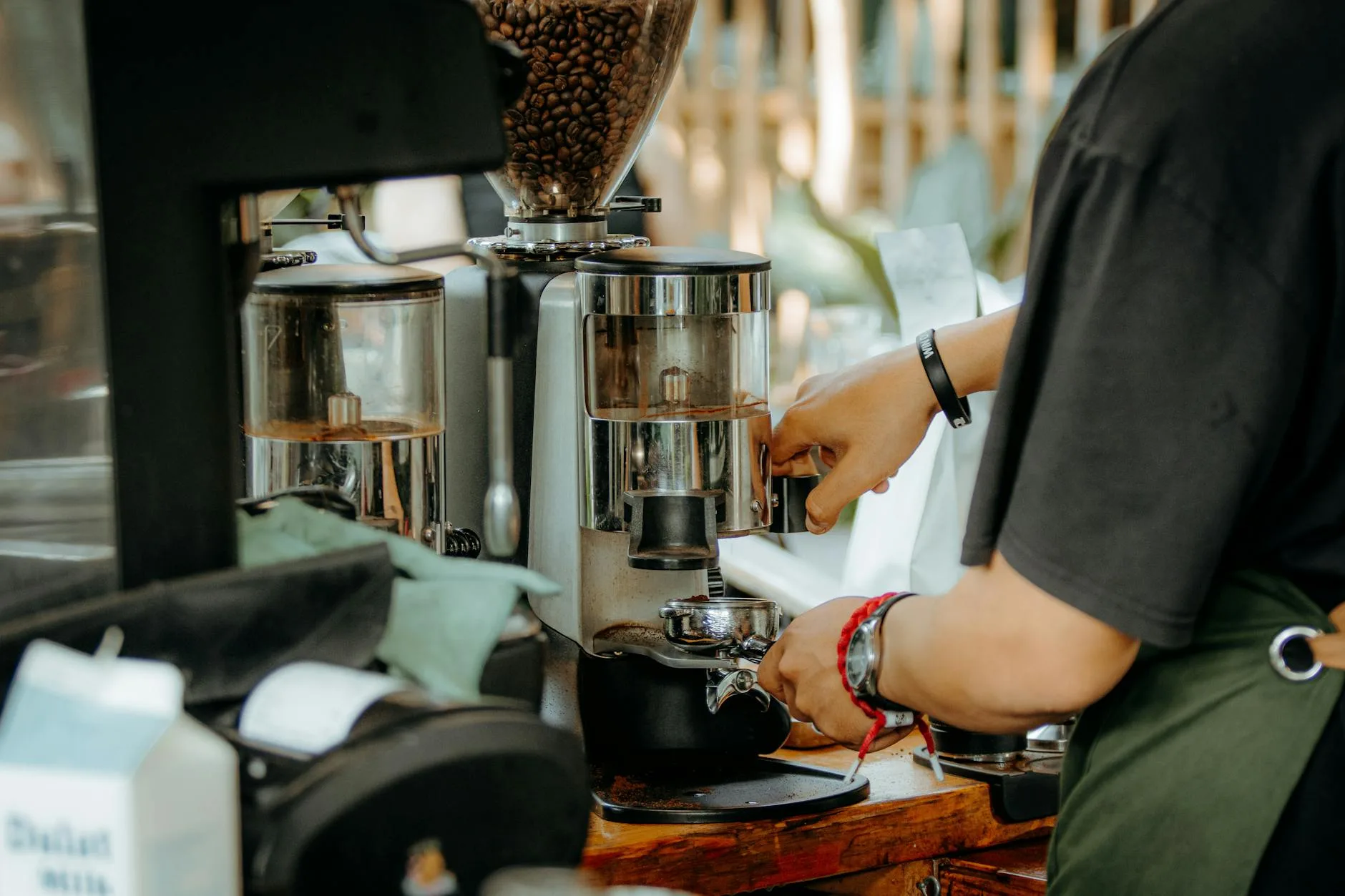
The Grinder (Most Important)
This surprises most people, but the grinder matters more than the machine. A £200 grinder paired with a £300 machine will produce better espresso than a £500 machine paired with a £100 grinder. Every time.
Why? Espresso extraction is controlled by grind size. Too coarse and water rushes through, producing a sour, thin shot. Too fine and it chokes, producing bitter sludge. The grinder needs to produce a consistent particle size — no big chunks mixed with dust — and offer fine enough adjustment that you can dial in precisely.
A good entry-level burr grinder costs about £100–200. The Sage Smart Grinder Pro and similar options in this range will serve you well. If you’re serious about espresso, the single-dose grinder comparison covers the step up.
The Machine
For genuine espresso, you need a pump-driven machine that delivers 9 bars of pressure with temperature stability. Moka pots, AeroPress, and pour-over make excellent coffee — but they don’t make espresso. The distinction matters because milk drinks need a real espresso base.
Entry-level machines like the Sage Bambino (about £300) deliver legitimate 9-bar espresso with a steam wand. Our espresso machine guide covers the full range, but for most home baristas, a semi-automatic machine between £300–600 hits the sweet spot of quality and control.
The machine type breakdown helps you decide between manual control and automation.
The Beans
Fresh, properly roasted beans are the cheapest variable to get right — and the one most people get wrong. Supermarket beans sit on shelves for months. By the time you grind them, the volatile compounds that create flavour and crema have largely evaporated.
Buy from a UK roaster and use beans within 2–6 weeks of the roast date (printed on the bag). Expect to pay £7–12 per 250g for good quality beans. That’s roughly 30–50p per double shot — still a fraction of café prices.
Realistic Budget for Café Quality at Home
Let’s be honest about what this costs, because “you can make café coffee at home for less” only works if you factor in the upfront investment.
The Minimum Viable Setup
- Grinder: £100–150 (Sage Smart Grinder Pro, Baratza Encore ESP, or a hand grinder for less)
- Machine: £250–350 (Sage Bambino, DeLonghi Dedica, or similar)
- Accessories: £30–50 (tamper, knock box, milk jug, scales)
- Beans: £8–12 per 250g bag (lasts about 2 weeks for 2 drinks per day)
Total upfront: £380–550. Ongoing costs: roughly £20–25 per month on beans.
The Break-Even Calculation
If you’re buying two coffees per day at £4 each, that’s £240 per month. Your home setup costs about £25 per month in beans after the initial investment. Even factoring in the upfront cost, you break even within 2–3 months.
The Sweet Spot
For most people, £500–700 total (grinder + machine + accessories) produces coffee that matches or exceeds most high-street chains. Going beyond £1,000 gets you into specialty café territory, but the improvements are incremental rather than transformative. Check our guide to how much to spend on a grinder for a detailed breakdown.
The Skills You Need to Learn
Equipment gets you to the starting line. Technique gets you to the finish.
Dialling In (Week One)
“Dialling in” means adjusting your grinder and dose until the espresso tastes right. It’s the single most important skill in home espresso. The variables are:
- Dose — how much coffee goes in (typically 18g for a double shot)
- Grind size — finer = slower extraction, coarser = faster
- Yield — how much liquid comes out (typically 36g for a 1:2 ratio)
- Time — how long the shot takes (target 25–30 seconds)
Our full dialling-in guide walks through this step by step. Most people nail it within 3–5 attempts once they understand the relationship between grind size and extraction time.
Dosing and Tamping
Weigh your coffee dose on scales (a kitchen scale accurate to 0.1g costs about £10). Level the grounds in the portafilter and tamp with even, firm pressure — about 15kg of force. Inconsistent tamping is the most common cause of channelling, where water finds a path of least resistance through the puck and over-extracts one area while under-extracting the rest.
Tasting and Adjusting
Learn to taste the difference between sour (under-extracted, grind finer) and bitter (over-extracted, grind coarser). This sounds subjective, but it’s surprisingly learnable. After a dozen shots, most people can identify the problem by taste and know which direction to adjust.
Milk Texturing: The Real Differentiator
If you drink black espresso, skip this section. If you drink flat whites, lattes, or cappuccinos, this is where café quality lives or dies.
What Good Milk Texture Looks Like
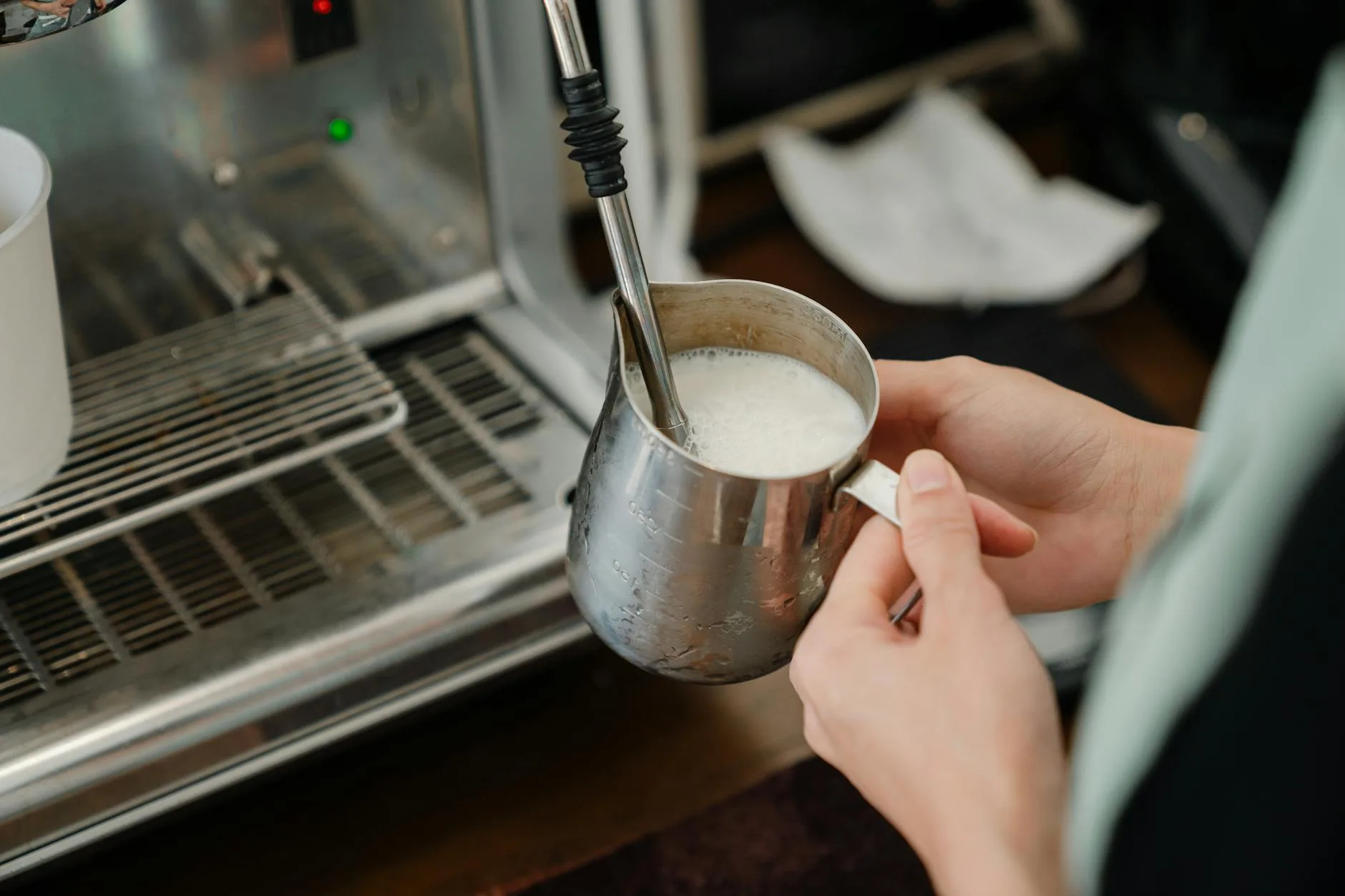
Microfoam — milk that’s been steamed to incorporate tiny air bubbles that you can barely see. It should look like wet paint: glossy, smooth, slightly thickened. When you pour it, it flows in a way that lets you make latte art (or at least a vaguely round blob).
Bad milk texture is stiff, bubbly meringue. It sits on top of the espresso in a dry lump and tastes like hot milk with bubbles. The difference is entirely technique.
The Technique
- Start with cold, fresh whole milk (semi-skimmed works but produces less body)
- Purge the steam wand to clear condensation
- Submerge the tip just below the milk surface and turn on full steam
- Lower the jug slightly so the tip sits at the surface — you should hear a gentle “tsch-tsch” sound as air is drawn in
- After 2–3 seconds, raise the jug so the tip is submerged and swirl the milk. The goal is to heat it to about 65°C while incorporating the air you just introduced
- When the base of the jug is too hot to hold comfortably (about 65°C), stop
- Tap the jug on the counter to burst any large bubbles, then swirl to integrate
This takes 3–5 attempts to learn and maybe 20 to get consistent. It’s the most physical skill in home espresso and the most satisfying to master.
Bean-to-Cup Machines: A Shortcut Worth Considering
Not everyone wants to weigh doses and dial in grind sizes. If you want good coffee with minimal effort, a bean-to-cup machine does everything automatically — grinding, dosing, tamping, and extracting at the touch of a button.
What You Gain
- Consistency — the machine makes the same drink every time
- Speed — 60 seconds from bean to cup
- Simplicity — no technique required
- Self-cleaning — most run automated cleaning cycles
What You Lose
- Maximum quality — even the best bean-to-cup can’t match a skilled person on a semi-automatic, because the machine can’t adjust to the specific bean as precisely
- Milk quality — automated frothers produce decent foam but rarely achieve true microfoam
- The craft — some people enjoy the process. If that’s you, semi-automatic is more rewarding
For busy households where multiple people drink coffee and nobody wants to learn barista skills, bean-to-cup is the practical choice. The De’Longhi, Sage, and Jura comparison covers the main brands.
Common Mistakes That Kill Home Espresso
Using Pre-Ground Coffee
Pre-ground coffee starts going stale within 15 minutes of grinding. By the time you use a bag from the supermarket, it’s been ground for weeks or months. Fresh grinding is non-negotiable for espresso — it’s the single biggest quality difference between home and café coffee. Understanding grind sizes helps you get the most from fresh grinding.
Ignoring Water Quality
Coffee is 98% water. If your tap water tastes bad, your coffee will taste bad. Hard water also scales up your machine, reducing its lifespan and performance. A water filter or filtered jug makes a noticeable difference — particularly in hard water areas like London, the Home Counties, and East Anglia.
Skipping Machine Maintenance
Backflushing, descaling, and group head cleaning take five minutes and prevent flavour contamination from old coffee oils. Our machine maintenance guide covers the schedule. Skip it and your espresso develops a rancid, oily aftertaste within weeks.
Buying Cheap Beans
There’s a floor below which beans aren’t worth using for espresso. Below about £5 per 250g, you’re getting old, low-grade commodity coffee that’s been dark-roasted to hide defects. Spend £8+ and buy from a roaster with a roast date on the bag. Storing them properly extends freshness.
How Long Before You’re Making Great Coffee?
Week One
Your shots will be inconsistent. Some will be great, some terrible. You’re learning to dial in — adjusting grind size, dose, and timing. By the end of week one, you should be producing drinkable espresso most of the time.
Week Two
Dialling in becomes faster. You’ll start recognising the taste of under- and over-extraction instinctively. Milk texturing goes from “wall of bubbles” to “occasionally smooth.”
Month One
You’re making coffee that’s consistently better than most chain cafés. Milk art is hit-and-miss but the texture is reliably good. You’ve stopped buying takeaway coffees on the way to work.
Month Three
Friends comment on your coffee. You’ve developed preferences for specific beans and roast levels. The process takes 4–5 minutes including cleanup. It’s muscle memory now.
The honest truth: if you enjoy the process, you’ll get there faster. If you see it as a chore, buy a bean-to-cup and enjoy good-enough coffee with zero effort.
Frequently Asked Questions
Can you make good espresso with a cheap machine? You can make acceptable espresso with machines starting at about £250 (Sage Bambino, DeLonghi Dedica). Below that price, machines lack the pressure consistency and temperature stability for true espresso. The grinder matters more — pair a decent £150 grinder with a £300 machine and you’ll be surprised at the quality.
Is it cheaper to make coffee at home? In the long run, massively. After the initial equipment cost (£400–600), ongoing costs are about £20–25 per month on beans. If you currently buy two coffees a day at £4 each, you’ll save over £200 per month. The equipment pays for itself in 2–3 months.
Do I need a separate grinder or is built-in OK? Separate is better. Built-in grinders on machines under £1,000 are generally mediocre — they lack the adjustment precision and burr quality of a standalone grinder. A dedicated grinder at any given price will outperform a built-in one at the same price point.
What’s the biggest difference between home and café coffee? Freshness. Cafés use beans within days of roasting and grind to order. If you do the same at home — buy fresh beans and grind immediately before brewing — you eliminate the biggest quality gap. The remaining differences are technique and equipment, both of which are solvable.
Can a Nespresso make barista-quality coffee? Nespresso makes convenient, consistent coffee that’s better than instant and worse than fresh espresso. It cannot produce true espresso (the pressure profile is different) or proper milk microfoam. If convenience is your priority, Nespresso is fine. If quality is your priority, a semi-automatic setup wins.